

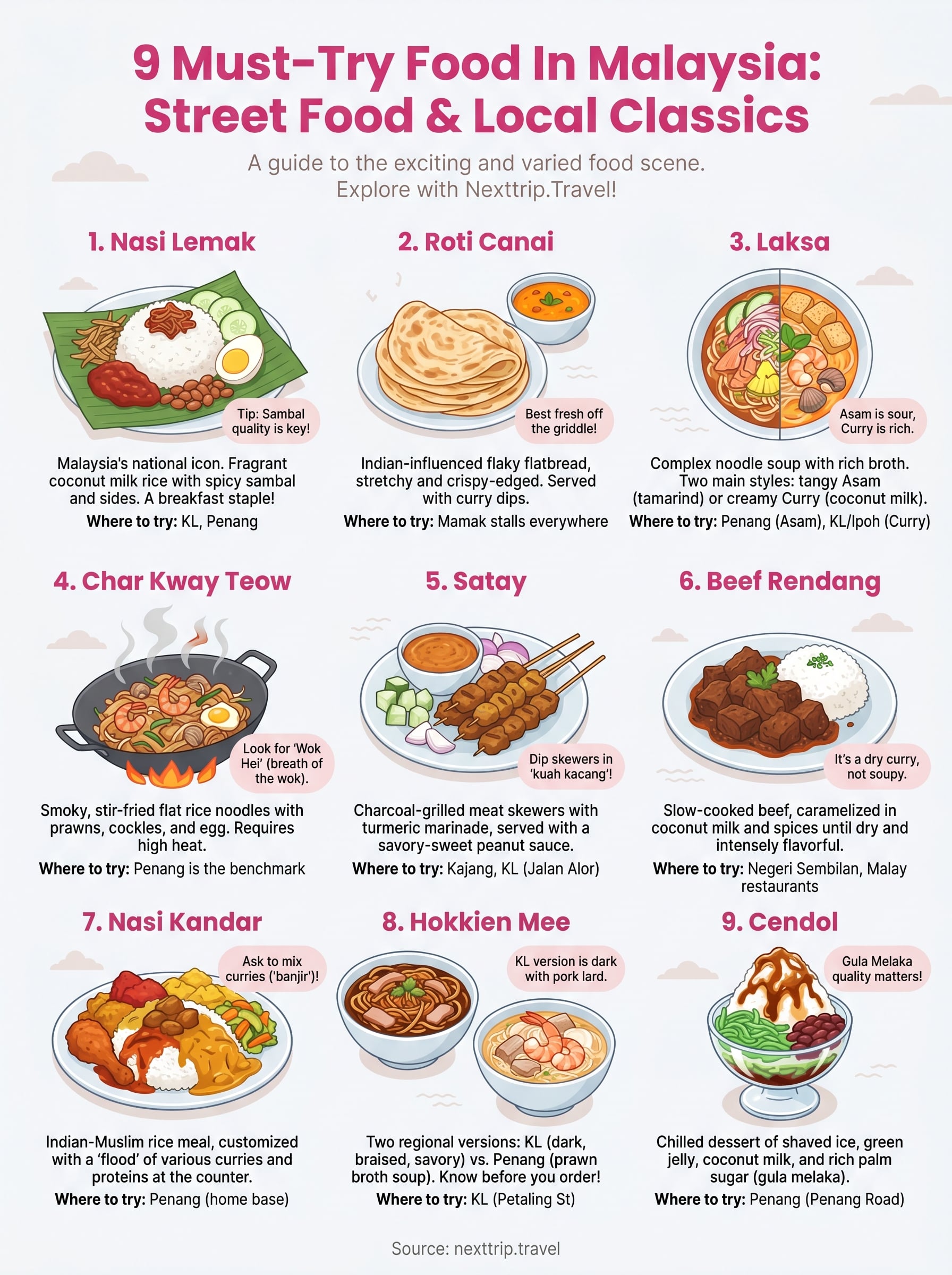
Malaysia is one of those destinations where the food alone justifies the plane ticket. Between the bustling hawker stalls, the aromatic night markets, and the kopitiams tucked into every neighborhood, the must-try food in Malaysia reads like a greatest hits of Southeast Asian cuisine. Chinese, Malay, Indian, and indigenous flavors collide here, and the result is one of the most exciting food scenes you'll ever eat your way through.
At Nexttrip.Travel, we build trips around exactly these kinds of experiences, the ones where a single bite at the right street stall changes how you remember an entire city. Our concierge team and local insiders know where to eat, what to order, and which spots the travel guides haven't caught up to yet. Because eating well in Malaysia isn't hard, but eating like a local takes a little guidance.
This list covers nine dishes you absolutely need to track down, from iconic plates like nasi lemak to lesser-known street food gems that locals line up for. Whether you're planning your first trip or your fifth, consider this your eating checklist for Malaysia.
1. Nasi Lemak
Nasi lemak is Malaysia's most recognized dish in everything but official title. You'll find it at roadside stalls at 6 AM wrapped in banana leaves, and at sit-down restaurants plating it with grilled chicken and extra sambal. No list of must-try food in Malaysia is complete without it leading the way.
What it is and why it's iconic
The dish centers on rice cooked in coconut milk, which gives it a rich, slightly creamy texture that sets it apart from any plain rice dish. Pandan leaf added during cooking layers in a subtle fragrance you'll notice immediately. Nasi lemak originated in Malay home kitchens but has been fully adopted by every community in the country, and that cross-cultural reach is exactly why it matters.
You'll see it sold everywhere from petrol station forecourts to five-star hotel breakfast buffets, and the quality range is genuinely wide. Finding a stall that nails its sambal is the difference between a forgettable plate and one you'll talk about for years.
The sambal is what separates a great nasi lemak from an average one, so always taste it first.
What to expect in a "classic" plate
A standard nasi lemak plate comes with a consistent set of components that you should always expect:
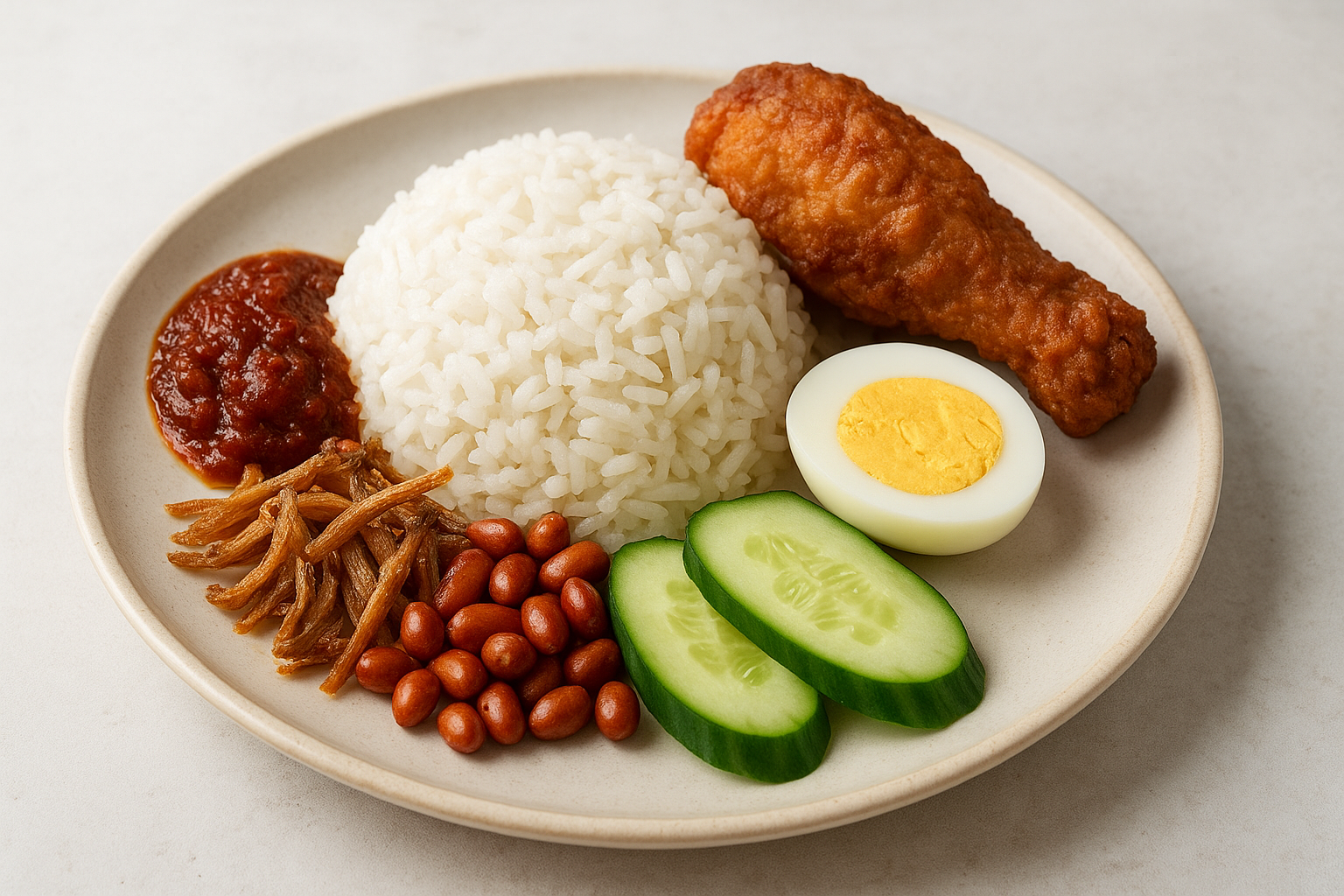
- Sambal (spicy chili paste, the backbone of the dish)
- Ikan bilis (crispy fried anchovies)
- Roasted peanuts
- Hard-boiled or fried egg
- Cucumber slices to balance the heat
Best times to eat it and common add-ons
Nasi lemak is primarily eaten at breakfast, and the morning versions tend to carry the freshest sambal and crispiest ikan bilis. Most stalls offer add-ons like fried chicken, beef rendang, or sambal squid that turn it into a full meal without much extra cost.
Where to try it in Malaysia
In Kuala Lumpur, the stalls around Kampung Baru draw consistent crowds and deliver reliable quality. Penang versions tend to run hotter with their sambal, and the Klang Valley has dedicated nasi lemak spots that stay open around the clock.
Dietary notes and easy swaps
The base dish is naturally gluten-free, but it is not vegetarian due to the anchovies and most common protein add-ons. Many stalls will serve a vegetarian sambal on request, and skipping the sides entirely still leaves you with a satisfying plate.
2. Roti Canai
Roti canai earns its spot on every must-try food in Malaysia list because it combines simplicity with serious skill. The dough is stretched, folded, and flipped repeatedly on a hot griddle until you get a flaky, crispy-edged flatbread with a soft, layered center. It's Indian-influenced Malaysian comfort food at its most accessible.
What it is and why it's iconic
This dish traces its roots to South Indian Tamil cuisine and arrived in Malaysia with early Indian migrants. Today it's a staple at mamak stalls, the open-air Muslim Indian eateries that operate virtually around the clock across the country. Few dishes cut across racial and cultural lines the way this one does.
How to order it at a mamak
Walk up to the counter and simply say "roti canai" and point to your preferred dhal or curry. Most mamaks keep it straightforward: you get your roti, you pick your dip, and you pay after eating. No menu browsing required.
Eat it fresh off the griddle. Roti canai that sits for ten minutes loses most of its texture.
Best dips and popular variations
The classic pairing is dhal curry, but fish curry and chicken curry both work well. Popular variations include roti telur (with egg folded in) and roti bawang (with onion), both worth ordering at least once.
Where to try it in Malaysia
Mamak stalls in Kuala Lumpur and Penang are your best starting points. Any stall with a line before 9 AM is usually worth joining.
Dietary notes and easy swaps
The base roti is vegetarian-friendly, and dhal is the natural vegan-friendly dip pairing. Avoid egg variations if you need a fully plant-based option.
3. Laksa
Laksa sits firmly on any must-try food in Malaysia list because it packs more complexity into a single bowl than most dishes manage across an entire meal. It's a noodle soup built on a rich, aromatic broth, and the regional variations across Malaysia make it worth trying in more than one city.
What it is and why it's iconic
This dish combines rice noodles with a deeply layered broth that draws from both Chinese and Malay cooking traditions. The result is a bowl rooted in Peranakan culture, which explains why it tastes like nothing you'd find anywhere else in the world.
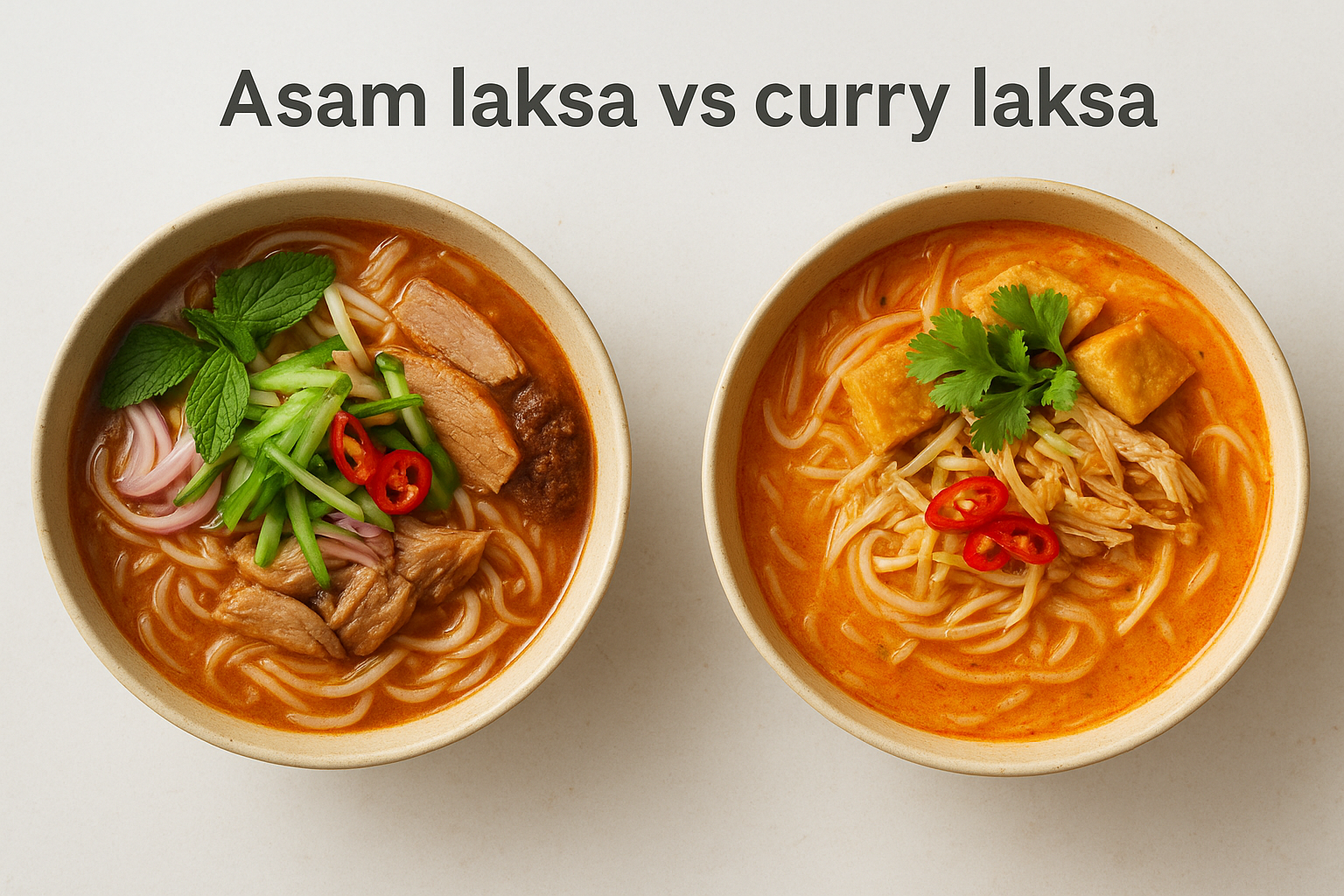
Asam laksa vs curry laksa
These are the two main versions you'll encounter. Asam laksa uses a sour, tamarind-based fish broth that's tangy, bold, and polarizing in the best way. Curry laksa, by contrast, relies on coconut milk and curry paste for a richer, creamier experience.
Penang asam laksa consistently ranks among the world's best soups, so don't skip it if you're in the north.
How to customize your bowl
Most laksa stalls let you adjust spice levels on request. Adding a spoonful of prawn paste (hae ko) into your asam laksa intensifies the depth considerably, and most vendors leave it on the table for you to use freely.
Where to try it in Malaysia
Penang is the benchmark for asam laksa, while Kuala Lumpur and Ipoh both deliver excellent curry laksa. Ipoh's version runs notably smoother and is worth the detour if your itinerary allows.
Dietary notes and easy swaps
Most laksa broths contain seafood or meat-based stock, making them unsuitable for vegetarians without modification. Some specialty stalls in Kuala Lumpur now offer vegetable-based curry laksa, so asking ahead saves you the disappointment.
4. Char Kway Teow
Char kway teow is one of the most satisfying street food dishes you'll find in Malaysia, and it earns its spot on any must-try food in Malaysia checklist. This is hawker cooking at its most precise, where the skill of the person behind the wok determines whether your plate is good or genuinely unforgettable.
What it is and why it's iconic
The dish is built around flat rice noodles stir-fried over intense heat with prawns, cockles, Chinese lap cheong sausage, bean sprouts, and egg. It originated within the Hokkien Chinese community in Penang and spread across the country as hawker culture expanded. Few dishes carry as much regional pride as this one.
Key flavors and the role of wok hei
The defining quality of great char kway teow is wok hei, the smoky, slightly charred character that comes only from cooking over very high flame. Without it, the dish tastes flat. Dark soy sauce provides sweetness and color, while chili paste adds heat that cuts through the richness.
A hawker who cooks one plate at a time over a traditional charcoal flame almost always produces a better result than one running a high-volume gas setup.
What to look for in a great plate
Look for visible charring on the noodles and cockles that are plump and freshly cooked. A good plate should smell smoky from arm's length.
Where to try it in Malaysia
Penang is the undisputed benchmark, particularly the stalls around Lorong Selamat. Kuala Lumpur also has strong options in Chow Kit and Old Klang Road.
Dietary notes and easy swaps
The standard version contains shellfish, pork sausage, and sometimes lard, so it is not suitable for Muslims, vegetarians, or shellfish-allergic travelers without modifications. Many stalls will cook a halal or seafood-free version on request if you ask clearly before ordering.
5. Satay
Satay belongs on every must-try food in Malaysia list because it delivers something that very few dishes can: great flavor and a social eating experience all at once. Skewers arrive at your table hot off the charcoal grill, and the combination of smoky meat with a peanut-based dipping sauce is genuinely hard to walk away from.
What it is and why it's iconic
Satay consists of small pieces of marinated meat threaded onto bamboo skewers and grilled over charcoal. The marinade typically contains turmeric, lemongrass, and galangal, which gives each skewer a warm, golden color and a layered savory flavor before the grill adds its own smokiness.
The charcoal is not optional. Gas-grilled satay exists, but it never produces the same depth of flavor.
How to eat it and what the sauces mean
You eat satay by dipping each skewer into a thick peanut sauce called kuah kacang. This sauce is savory, slightly sweet, and mildly spicy. Most stalls also serve compressed rice (ketupat), raw onion, and cucumber alongside, which help balance the richness between skewers.
Common proteins and regional twists
Chicken and beef are the standard options, but mutton and rabbit appear at certain stalls. Kajang, a town in Selangor, has a dedicated reputation for satay and is worth a specific detour.
Where to try it in Malaysia
Kajang and Kuala Lumpur's Jalan Alor are your two most reliable starting points, both offering consistent quality with high turnover.
Dietary notes and easy swaps
Satay is not suitable for pork-free diets at non-halal stalls, so confirm before ordering. Halal-certified stalls are widely available and serve chicken and beef versions without any substitutions needed.
6. Beef Rendang
Beef rendang earns its place on any must-try food in Malaysia list because it represents the full depth of Malay cooking. This is a dish that rewards patience, built through hours of slow-cooking that produces something far more complex than it looks on the plate.
What it is and why it's iconic
Rendang starts as a wet curry-style braise but cooks down until the liquid evaporates and the meat is coated in an intensely spiced caramelized paste. The combination of lemongrass, galangal, coconut milk, and dried chilies creates a flavor profile that's simultaneously rich, aromatic, and deeply savory.
How it differs from "curry" and what to pair it with
Unlike a curry, rendang contains very little to no sauce by the time it reaches your plate. The spice paste clings directly to the meat rather than pooling beneath it. Rice is the standard pairing, and both nasi lemak and plain white rice absorb the coating beautifully without competing with the spice.
Rendang that looks wet or soupy has been undercooked. A proper plate should have dry, coated meat with visible caramelized edges.
What to look for in a good rendang
Look for dark, deeply colored meat with a slightly crispy exterior on each piece. The coating should stick firmly without falling off when you pick it up.
Where to try it in Malaysia
Negeri Sembilan serves one of the most respected regional versions in the country, and Kuala Lumpur's Malay restaurants offer consistent quality throughout the year.
Dietary notes and easy swaps
Rendang is naturally gluten-free and dairy-free. It contains beef, so it does not suit vegetarians or those avoiding red meat without a direct protein substitution from the kitchen.
7. Nasi Kandar
Nasi kandar deserves its place on any must-try food in Malaysia checklist because the entire meal is built around your preferences at the counter. This is Indian-Muslim rice culture at its most expressive, with a full spread of curries and sides waiting for you to point at whatever looks best.
What it is and why it's iconic
This dish originated in Penang's Indian Muslim community, where vendors once carried rice and curries balanced on a shoulder pole called a "kandar." Today the pole is gone, but the tradition of loading rice with multiple curries and proteins remains the defining experience.
How to order at the counter without stress
Walk up, hold out your plate, and point at what you want. The staff ladles curries over your rice in the order you select. Most regulars request two or three curries at once, letting the sauces blend across the rice in a technique locals call "banjir" or "flood."
Mixing your curries together rather than keeping them separate is exactly how most regulars eat nasi kandar, and it genuinely improves the overall flavor.
Classic curry combinations and sides
Chicken curry, prawn sambal, and dhal are the most common trio. Popular additions include:
- Fried chicken for crispy protein contrast
- Squid curry for a bolder, darker sauce
- Boiled egg as a simple, affordable filler
Where to try it in Malaysia
Penang is the home base for nasi kandar, with Line Clear and Nasi Kandar Pelita both offering reliable, high-turnover versions. Kuala Lumpur has solid options around Brickfields and Bangsar.
Dietary notes and easy swaps
Nasi kandar stalls are halal by default, but the dish is not vegetarian given the range of meat-based curries on offer. Request vegetable or egg-only options and most counters will accommodate without issue.
8. Hokkien Mee
Hokkien mee rounds out this must-try food in Malaysia list as one of the most misunderstood dishes in the country. The name refers to at least two completely different dishes depending on where you are, and knowing which version you're ordering makes the difference between landing exactly what you want and being surprised when the bowl arrives.
What it is and why it's iconic
Hokkien mee traces its roots to the Hokkien Chinese community and has evolved differently across Malaysian cities over generations. The dish centers on thick yellow egg noodles, but the cooking method and flavor profile shift significantly by region.
If someone in Kuala Lumpur and someone in Penang both recommend Hokkien mee, they are almost certainly describing two entirely different dishes.
KL-style vs other versions you'll see
KL-style Hokkien mee is braised, not stir-fried. Thick yellow noodles are cooked in a dark soy-based sauce with pork lard, cabbage, and sliced pork until everything turns glossy and deeply savory. Penang's version, by contrast, is a prawn and pork broth noodle soup that shares the name but almost nothing else.
How to order and what condiments to add
Order KL Hokkien mee by asking for it directly at the wok station. Most stalls keep sambal and sliced fresh chilies on the table for you to add heat according to your preference.
Where to try it in Malaysia
Petaling Street and Old Klang Road in Kuala Lumpur are the strongest starting points for the braised version, with several long-running stalls that draw consistent weekday crowds.
Dietary notes and easy swaps
The traditional KL version contains pork and lard, making it unsuitable for halal diets. Some stalls offer a chicken or seafood alternative cooked without pork products, so asking directly before you sit down saves the awkward conversation after.
9. Cendol
Cendol closes this must-try food in Malaysia list as the dessert that best captures the country's tropical character. It's cold, sweet, and built from ingredients you'd struggle to find combined anywhere else, which is exactly what makes it worth seeking out even after a heavy meal.
What it is and why it's iconic
This chilled dessert layers shaved ice over green rice flour jelly strands, coconut milk, and gula melaka (palm sugar). The palm sugar delivers a deep, caramel-like sweetness that distinguishes it from any generic sweet treat, and the combination of textures keeps every spoonful interesting.
Gula melaka made from actual palm sap tastes noticeably richer than versions made with refined sugar substitutes, so stalls that source it properly are worth the extra walk.
What to expect in a traditional bowl
A proper cendol arrives in a deep bowl with thick coconut milk poured generously over shaved ice and pandan-flavored green jelly strands. The palm sugar drizzle sits on top, and you mix everything together before eating to distribute the sweetness evenly through the ice.
Popular variations to try once
Some stalls add red kidney beans or sweet corn for texture contrast, while durian cendol is a regional specialty worth trying if you enjoy the fruit. Both versions stay true to the original base while giving you something new to work through.
Where to try it in Malaysia
Penang's cendol stalls along Penang Road draw long queues throughout the afternoon and are widely regarded as the benchmark for the dish across the country.
Dietary notes and easy swaps
Cendol is naturally vegan and gluten-free in its traditional form, making it one of the most inclusive desserts on this list. You won't need to ask for modifications at any standard stall.
Ready to Eat Your Way Through Malaysia
The nine dishes on this must-try food in Malaysia list give you a strong starting point, but the real experience happens when you sit down at the right stall, at the right time, with someone who knows exactly where to point you. Malaysian food rewards curiosity, and every city, every neighborhood, and every hawker center holds something worth discovering beyond what any list can cover.
Your best meals here will come from following locals, eating where the lines are longest, and staying open to ordering something you can't fully pronounce yet. The gap between a good trip and a great one often comes down to knowing which stall is worth the detour.
If you want those decisions handled before you land, plan your Malaysia food experience with Nexttrip.Travel and let our local insiders build an itinerary around exactly the kind of eating you came here for.