

Bali draws millions of visitors every year, but picking the best time to visit Bali depends on more than just grabbing the cheapest flight. The month you arrive shapes everything, from the weather you'll wake up to, to how crowded the beaches and temples will be, to how much you'll actually spend on accommodation and activities.
The island runs on two distinct seasons: a dry season (April through October) and a rainy season (November through March). Each brings a different version of Bali, with real trade-offs in pricing, surf conditions, ceremony schedules, and overall vibe. Choosing the right window means aligning your priorities, whether that's sunshine, savings, or solitude.
At Nexttrip.Travel, we design curated Bali itineraries built on first-hand destination knowledge and local insider insights, so our travelers show up at the right place at the right time. This guide breaks down Bali's weather, tourist crowds, and travel costs month by month, giving you everything you need to decide exactly when to book your trip.
Quick answer: the best months for most trips
If you want the short version: July, August, and September are the strongest overall months to visit Bali. You get dry, sunny weather, calm seas, and a full calendar of activities. The trade-off is that prices and crowds hit their peak during this window, especially in July and August when European and Australian school holidays push tourism numbers up sharply. For most travelers, that trade-off is worth it, but knowing your alternatives gives you real options.
The peak months: July and August
July and August sit at the height of Bali's dry season, with daily temperatures between 26°C and 32°C and almost no rainfall. You can count on clear skies for beach days, reliable surf conditions on the west coast, and strong underwater visibility for diving around Nusa Penida and Amed. These are also the months when Bali's outdoor activities and temple ceremonies are most accessible to visitors.
The downside is straightforward. Ubud, Seminyak, Canggu, and Kuta fill up fast, and accommodation prices can run 30 to 50 percent higher than off-peak rates. If you're booking from Malaysia, locking in flights and hotels at least two to three months in advance is not optional. It is necessary.
July and August give you Bali's best weather, but you pay for it in crowds and cost. Book early or expect limited choices across popular areas.
The shoulder months worth considering: April, May, and September
April, May, and September are where many experienced Bali travelers land when they think about the best time to visit Bali. The dry season is either just beginning or winding down, which means you still get mostly clear skies and manageable conditions across the island, but with noticeably fewer tourists and better room rates than the peak summer months.

May sits in a particularly useful spot. Rainfall is low, the rice terraces around Tegallalang are lush from the tail end of the wet season, and popular sites like Tanah Lot and Uluwatu feel far less congested. September follows a similar pattern after the August rush clears out, making it a quiet re-entry into dry season conditions.
What about June?
June is a strong month that often gets overlooked. The dry season is fully established by June, and while crowds build toward the July peak, they have not reached their highest point yet. You get the weather benefits without the full intensity of school holiday tourism hitting the island all at once.
Prices in June sit noticeably below July and August levels, making it a practical option if your travel dates have any flexibility. Water temperatures are comfortable, surf on the Bukit Peninsula is consistent, and cultural events run actively across the island through this period.
A quick look by travel priority
Different priorities point to different months. Here is a straightforward breakdown to help you match your goals to the right window:
| Travel Priority | Best Months |
|---|---|
| Best overall weather | July, August, September |
| Fewer crowds | April, May, September |
| Lower accommodation costs | April, May, October |
| Surfing, west coast | June, July, August |
| Budget-focused trips | October, November |
Use this table as a starting point, then adjust based on the specific activities covered later in this guide. Your ideal timing often depends on whether you're chasing waves, cultural events, or just a quiet beach with a good price.
Bali seasons explained: dry vs rainy season
Bali operates on two seasons, and understanding them is the foundation for figuring out the best time to visit Bali for your specific trip. The island sits just south of the equator, which means it does not experience four seasons. Instead, the entire year splits into a dry season and a wet season, each with a distinct character, trade-off, and travel opportunity.
The dry season (April to October)
The dry season runs from April through October and is what most travelers picture when they imagine Bali. Daily temperatures hover between 26°C and 32°C, humidity stays relatively low compared to the wet months, and rain is rare enough that it rarely disrupts plans. Sunshine is consistent, the ocean is calm along the south and west coasts, and most outdoor activities run without weather-related interruptions.
This is the window when Bali's tourism industry operates at full capacity. Accommodation books up quickly, pricing peaks in July and August, and the most popular sites in Ubud, Seminyak, and Uluwatu see their highest visitor numbers. If you travel during the dry season, you get the most reliable conditions on the island, but you need to plan and book earlier than you might expect.
Dry season gives you the most predictable weather in Bali, but reliability comes with competition for bookings and higher daily costs.
The rainy season (November to March)
The rainy season covers November through March, with December and January bringing the heaviest rainfall. This does not mean it rains all day, every day. In practice, short, intense afternoon or evening showers are the most common pattern, and mornings often stay clear and pleasant. However, the humidity rises noticeably, and some days bring extended downpours that can limit outdoor plans.
The surfing conditions shift significantly during this season. The west coast swells drop, making beaches around Kuta and Seminyak calmer for swimming, while the east coast and the Bukit Peninsula pick up stronger activity. Crowd levels across the island fall sharply outside of the Christmas and New Year spike in late December, and accommodation rates drop by 20 to 40 percent compared to peak dry season pricing. If your budget matters more than guaranteed sunshine, the rainy season has real advantages worth considering.
Bali by month: weather, crowds, and costs
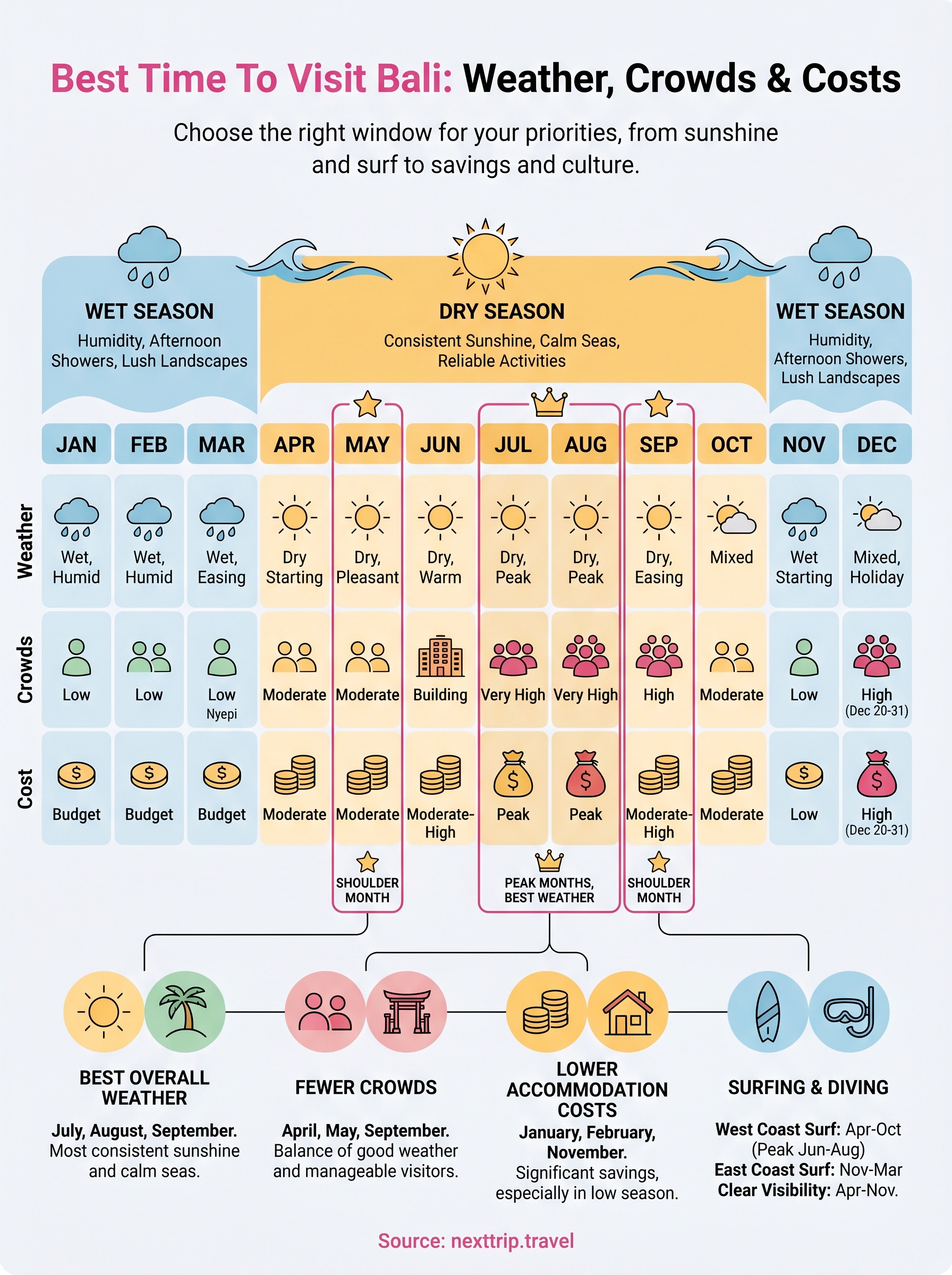
Planning the best time to visit Bali starts with a clear picture of how conditions change across the calendar. Each month carries its own weather patterns, visitor volume, and price levels, and knowing the differences helps you align your budget and travel style to the right window before you book anything.
| Month | Weather | Crowds | Relative Cost |
|---|---|---|---|
| January | Wet, humid | Low | Budget |
| February | Wet, humid | Low | Budget |
| March | Wet, easing | Low | Budget |
| April | Dry starting | Moderate | Moderate |
| May | Dry, pleasant | Moderate | Moderate |
| June | Dry, warm | Building | Moderate-High |
| July | Dry, peak | Very High | Peak |
| August | Dry, peak | Very High | Peak |
| September | Dry, easing | High | Moderate-High |
| October | Mixed | Moderate | Moderate |
| November | Wet starting | Low | Low |
| December | Mixed, holiday spike | High (Dec 20-31) | High (Dec 20-31) |
Dry season months: April to October
April through October delivers the most reliable weather on the island, with minimal rainfall and daily temperatures sitting comfortably between 26°C and 32°C. Crowds build steadily from April, peak sharply in July and August when Northern Hemisphere school holidays push visitor numbers to their highest point, and ease again through September and October. Accommodation prices follow the same curve: a mid-range room in Seminyak or Ubud in peak July can cost 30 to 50 percent more than the same room in April or October. If your travel dates have any flexibility, May and September consistently offer strong conditions at noticeably lower daily costs.
Booking accommodation in July or August at least two to three months in advance is not optional in Bali; popular properties fill completely, especially around Canggu and Ubud.
Wet season months: November to March
November through March is frequently misunderstood by first-time visitors. The wet season does not mean constant rain throughout the day. Most days still open with clear mornings before afternoon showers move through, and the lush rice terraces and jungle landscapes that appear across Ubud and Jatiluwih are a direct result of the seasonal rainfall. Visitor numbers fall significantly outside of the Christmas and New Year spike in late December, which means quieter temples, shorter waits, and accommodation rates that run 20 to 40 percent below peak pricing. January and February sit at the wettest and cheapest point of the year, making them a practical option if you are traveling from Malaysia with a tight budget and flexible dates.
Best time for beaches, island hopping, and hikes
The dry season from April through October gives you the most reliable conditions for outdoor activities across Bali. If beaches, boat trips, and mountain trails form the core of your itinerary, the month you arrive shapes almost every practical detail. Timing these activities correctly separates a trip that flows smoothly from one where weather forces constant adjustments to your plans.
Beaches and swimming
May through September delivers the most dependable beach conditions along Bali's southern coast. Seminyak, Kuta, and Nusa Dua all see calm swells, warm water temperatures around 27°C to 29°C, and consistent sunshine through this window. The beaches around Uluwatu and Padang Padang are particularly rewarding in June and July, before the full intensity of August crowds arrives and access paths start filling up by mid-morning. April also works well if you want fewer people sharing the shoreline, since the dry season is just getting started and tourism numbers have not peaked yet.
If you are planning your beach days around the best time to visit Bali, May and June hit the sweet spot between reliable dry weather and manageable tourist numbers.
Island hopping to Nusa Penida and Nusa Lembongan
April through October is the clear window for island hopping from Bali's southern ports. Boat crossings to Nusa Penida and Nusa Lembongan run on fast ferries from Sanur, and sea conditions stay calm enough for reliable daily departures throughout the dry season. In the wet months, rough swells between December and February can delay or cancel boats entirely, which creates real problems if you are running a fixed itinerary.

Nusa Penida specifically rewards a dry season visit because sites like Kelingking Beach and Crystal Bay require either a short hike or an open-water swim. Slippery trails and reduced underwater visibility during the wet months make both harder and noticeably less enjoyable.
Hiking Mount Batur and the rice terraces
July and August offer the clearest summit views on Mount Batur, with the lowest chance of cloud cover blocking the sunrise and drier trails that are easier to navigate. For the Tegallalang rice terraces near Ubud, the timing reverses: March and April bring the most vivid green after the wet season rains, producing landscapes that photograph far more dramatically than the paler, drier look of peak season months.
Here is a quick guide to match your outdoor priorities to the right months:
| Activity | Best Months |
|---|---|
| South coast beaches | May, June, July |
| Island hopping, Nusa Penida | April through October |
| Mount Batur sunrise hike | July, August |
| Tegallalang rice terraces | March, April |
Best time for surfing, diving, and water sports
Bali's reputation as a water sports destination is well-earned, but the best time to visit Bali for ocean activities depends entirely on which coastline you're targeting and what you want to do once you're in the water. Surf breaks, dive sites, and snorkeling spots all respond differently to the seasonal weather shifts, so knowing the timing before you book saves you from arriving at the wrong spot in the wrong month.
Surfing: west coast vs. east coast
Bali's west-facing breaks at Uluwatu, Padang Padang, and Canggu peak between April and October, when the dry season trades consistent offshore winds and strong southwest swells. June through August sit at the top of this window, with Uluwatu in particular producing some of the most powerful and well-shaped waves in Southeast Asia. Intermediate to advanced surfers will find the most rewarding conditions across these months.
During the wet season from November through March, the swell direction shifts and the east coast picks up, making breaks around Keramas and Nusa Dua far more active. If you are a beginner, the calmer wet season conditions at Kuta actually work in your favor. Kuta's beach break stays manageable and consistent through the rainy months, which makes it a practical learning environment when the more exposed breaks are firing at full strength.
For serious surfers chasing Bali's best waves, June through August at Uluwatu is difficult to beat, but arrive early in the morning to claim your spot in the lineup before it gets crowded.
Diving and snorkeling
April through November gives you the clearest underwater visibility across Bali's most popular dive sites, including the USS Liberty wreck at Tulamben, the manta ray cleaning stations at Nusa Penida, and the colorful reef systems at Amed. Water temperatures stay between 26°C and 29°C through this window, and lower rainfall means less sediment runoff into coastal waters.
Manta ray sightings at Nusa Penida's Manta Point run most reliably between May and October, with July and August producing the most consistent encounter rates. The wet season does not shut diving down entirely, but reduced visibility between December and February makes it a less rewarding time for photography or reef exploration.
Other water sports
White water rafting on the Ayung River near Ubud runs best between November and March, when rainfall swells the river and produces faster, more exciting rapids. Parasailing, jet skiing, and kayaking along the southern beaches operate year-round but deliver the most enjoyable experience from April through September when calm conditions keep the water flat and accessible.
Best time for festivals and cultural experiences
Bali follows both the Gregorian calendar and its own traditional Balinese Pawukon calendar, which means the island runs a near-constant cycle of ceremonies, temple festivals, and public observances throughout the year. If cultural immersion ranks high on your list, knowing when specific events fall helps you align your trip dates to witness Bali at its most ceremonially active. For many travelers, this dimension of the island is what makes it genuinely distinct from other beach destinations in Southeast Asia.
Nyepi: the Day of Silence
Nyepi falls in March, timed to the Balinese New Year on the Saka calendar, and it is one of the most unusual public holidays anywhere in the world. The entire island shuts down for 24 hours: no flights land or depart, streets stay empty, and visitors are required to stay inside their accommodation. The experience is quiet and surprisingly moving, but the more visually striking event happens the night before, when enormous hand-built Ogoh-Ogoh demon effigies are paraded through streets across the island before being ceremonially burned.
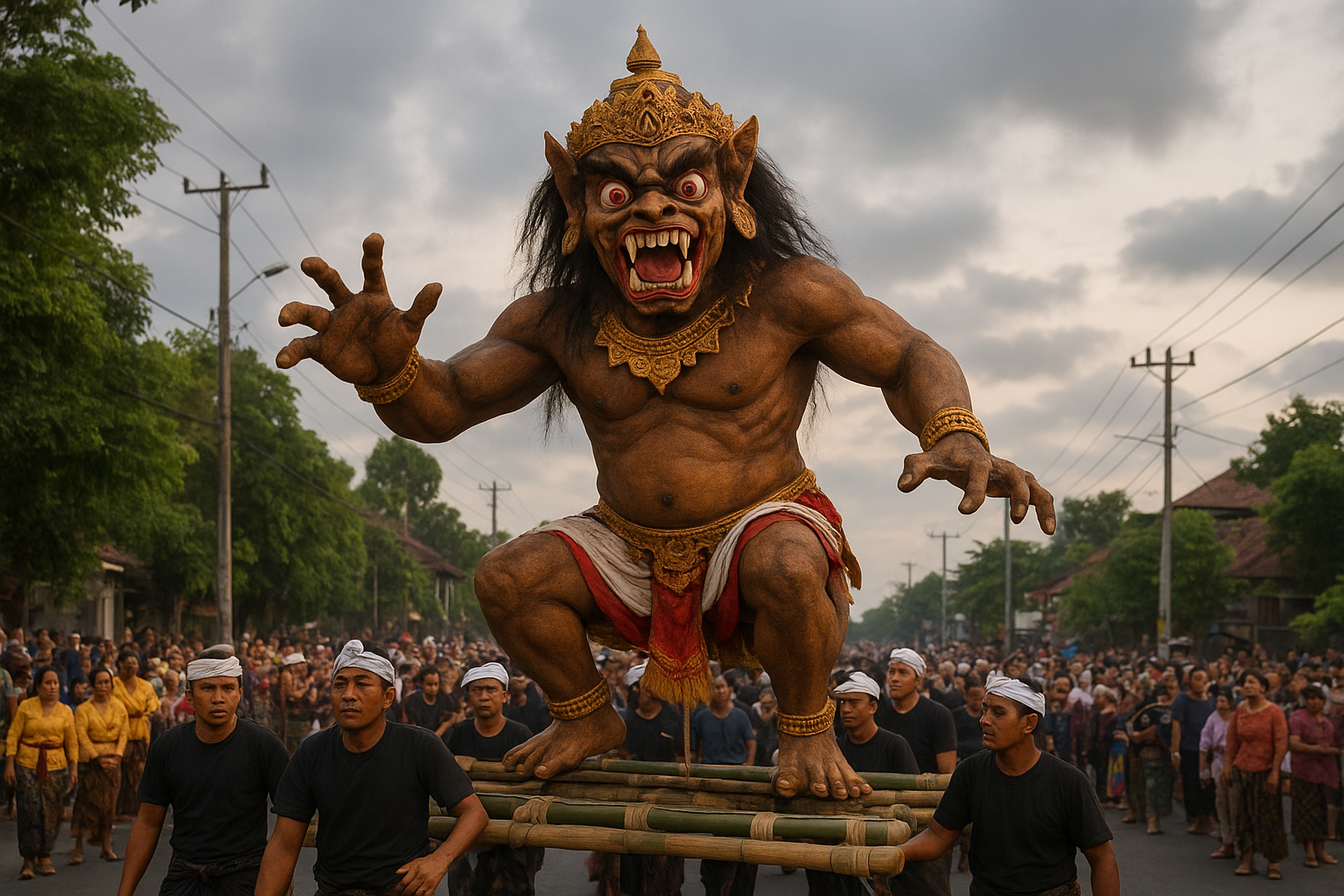
If you plan to be in Bali for Nyepi, book your accommodation well in advance, confirm the hotel has food service during the lockdown period, and treat the quiet day as a genuine cultural experience rather than an inconvenience.
Galungan and Kuningan
Galungan occurs every 210 days on the Balinese Pawukon cycle, which means it lands on different Gregorian dates each year. During Galungan week, every road on the island lines up with tall bamboo penjor poles decorated with woven offerings, and families gather at temples across their villages. Kuningan follows ten days after Galungan, marking the departure of ancestral spirits and wrapping up a period of intense local ceremony. Both events are worth planning around if your schedule allows it, and checking the current Balinese calendar before you book your flights takes less than five minutes.
Temple odalan festivals and daily offerings
Local temples hold their own odalan anniversary festivals throughout the year, and these smaller ceremonies often draw more authentic participation than the island-wide events. Women carrying elaborate tower offerings, gamelan orchestras, and ceremonial dress appear across neighborhoods with almost no advance notice. The best time to visit Bali for this level of cultural depth is honestly any month, but the dry season from April through October makes outdoor ceremonies more accessible and easier to attend without weather interruptions.
Cheapest and quietest times to visit Bali
If your priority is stretching your travel budget without sacrificing the core Bali experience, timing your trip around the island's low season delivers a noticeably different financial picture. January, February, and early November sit at the quietest and most affordable end of the calendar, when international visitor numbers drop and accommodation providers lower rates to maintain occupancy. Traveling from Malaysia during these windows can cut your daily accommodation costs by 20 to 40 percent compared to peak July and August pricing, which adds up quickly across a 7 to 10 day trip.
The best time to visit Bali on a tight budget is January or February, but confirm your hotel includes meals or has a kitchen, since some smaller properties reduce services during the low season.
January and February: the cheapest months on the calendar
January and February are consistently the lowest-priced months across all accommodation categories in Bali, from budget guesthouses in Ubud to mid-range villas in Canggu. Tourist numbers are at their annual low after the Christmas and New Year spike clears out, and you will find popular sites like Tanah Lot, Tegallalang, and Tirta Gangga noticeably less crowded than at any other point in the year. The trade-off is rainfall, which peaks across these two months. Most days still start clear, but afternoon showers are frequent, and some outdoor activities require flexible scheduling.
Travelers who plan beach-heavy itineraries will find the wet season limiting on the west coast, but the east coast around Amed and Candidasa sees calmer conditions and remains a reliable option for snorkeling and diving even in low season.
October and November: quiet conditions before the rain arrives
October sits in a useful transition period where the dry season is winding down but the wet season has not fully established itself yet. Crowds have thinned sharply after the August and September rush, accommodation rates drop back toward moderate levels, and most outdoor activities still run without significant weather disruptions. November follows a similar pattern for the first two to three weeks before heavier rainfall begins pushing in. Travelers who book the first half of November often pick up near-dry-season conditions at rates closer to what low season pricing looks like, which makes it one of the most underused windows on the Bali travel calendar.
Planning checklist from Malaysia: what to book and pack
Traveling from Malaysia to Bali puts you in a genuinely strong position. The flight from Kuala Lumpur to Ngurah Rai International Airport runs between 2.5 and 3 hours, and multiple airlines cover the route daily. That short distance means you can realistically book a 5 to 7 day trip without losing significant time in transit. What you book before departure and what you pack both shift depending on your travel window, so use the guidance below to build your pre-trip routine around the specific month you've chosen to visit.
What to book before you fly
Sort your bookings in this order: flights first, accommodation second, and activities third. During July and August, accommodation in popular areas like Canggu, Ubud, and Seminyak fills up 2 to 3 months out, and waiting until a few weeks before you fly limits your options significantly. Shoulder months like May and September give you more flexibility, but booking early still protects you from price increases as demand builds.
Lock in your accommodation before your flights during peak season. Losing a room to late booking costs far more than any flexibility you gain by waiting.
Here is a straightforward checklist organized by booking category:
| Category | Action | When to Book |
|---|---|---|
| Flights | Compare fares via airline apps | 6 to 8 weeks out in dry season |
| Accommodation | Book directly or via platforms | 8 to 12 weeks out in July or August |
| Airport transfers | Pre-arrange with your hotel | 1 to 2 weeks before arrival |
| Key activities | Reserve Nusa Penida boats, cooking classes, and Mount Batur hikes | 2 to 4 weeks before arrival |
| Travel insurance | Confirm medical and trip cancellation cover | Before any deposits are paid |
What to pack for Bali's seasons
Dry season packing (April through October) keeps things simple: lightweight clothing, reef-safe sunscreen, and a good pair of walking sandals cover most of what you need. Add a light layer for air-conditioned restaurants and temple visits, where covered shoulders and knees are required. A sarong solves both issues and takes up almost no space in your bag.
Wet season packing (November through March) requires one addition: a compact waterproof layer or packable rain jacket. Afternoon showers arrive fast, and a dry bag protects electronics during boat trips or outdoor excursions. Knowing the best time to visit Bali for your chosen activities directly determines whether your bag needs wet-weather gear or stays purely warm-weather light.
Wrap-up and next steps
Choosing the best time to visit Bali comes down to what you actually want from the trip. The dry season from May through September delivers the most reliable weather and the widest range of outdoor activities, with June and September offering the strongest balance between good conditions and manageable costs. If your budget matters more than guaranteed sunshine, January, February, and early November bring genuine savings and quieter temples without shutting down the experience entirely.
Every month on this island has something worth showing up for. Your decision point is matching your priorities, whether that is surf, culture, cost, or crowds, to the right window in the calendar. Now that you have the full picture, the next step is putting it into an actual trip. Browse curated Bali itineraries built by local insiders at Nexttrip.Travel and let us handle the planning while you focus on looking forward to the journey.