

Malaysia gets millions of visitors every year, and most of them hit the same spots, the Petronas Towers, Langkawi beaches, Georgetown street art. Nothing wrong with that. But if you've already checked those boxes (or you just prefer skipping the crowds), the real magic sits in the places nobody's posting about yet. The hidden gems in Malaysia are the kind of destinations that make you pull over, stare, and wonder how you almost missed this.
We built Nexttrip.Travel around exactly this idea, curated travel experiences shaped by creators and local insiders who actually know where to look. Our team and network of travel experts spend real time on the ground in Malaysia, tracking down the places that deserve attention but haven't been overrun by tour buses.
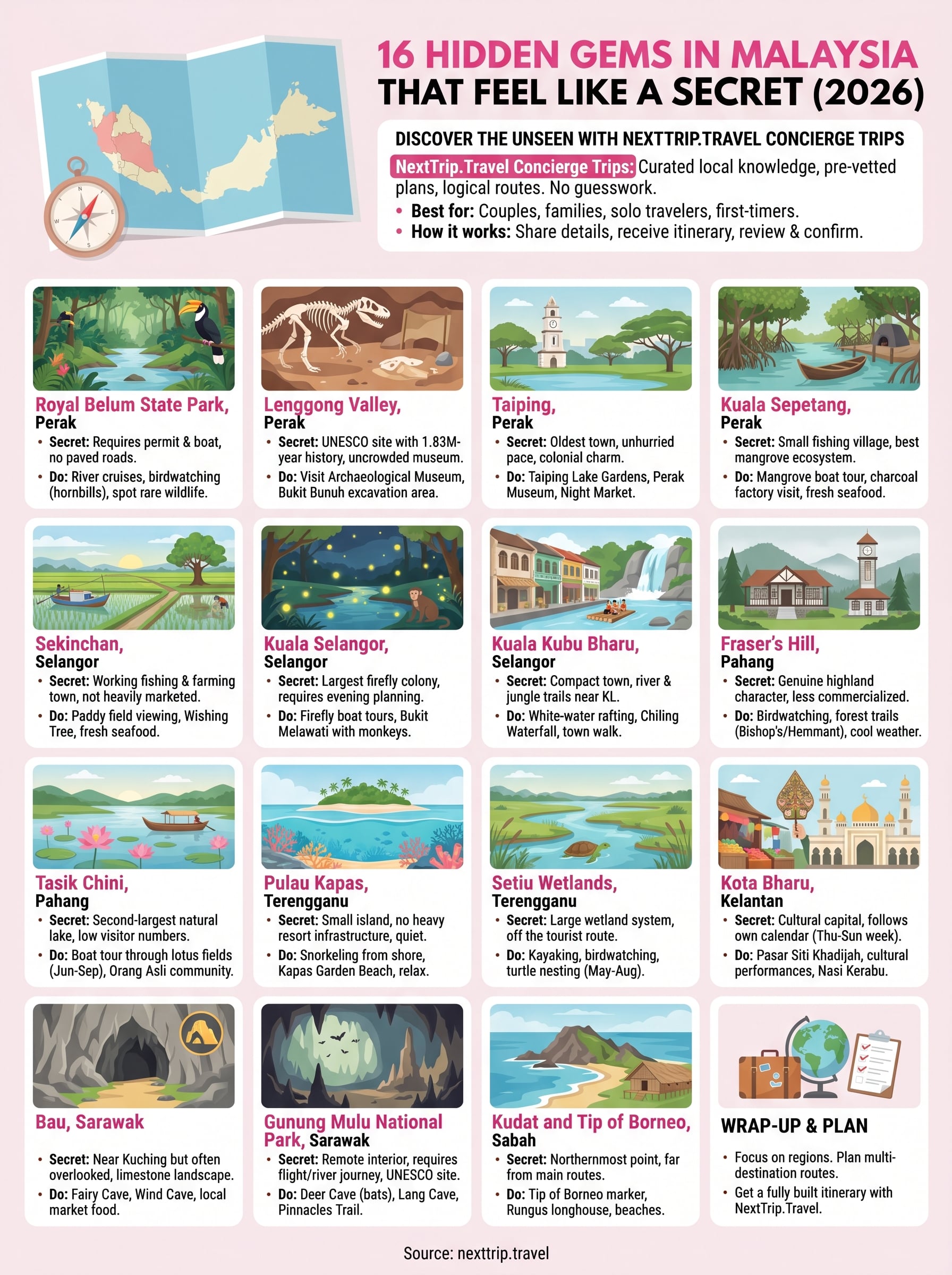
This list covers 16 spots across Malaysia that still feel like a secret in 2026, from jungle-wrapped villages in Sarawak to coastal stretches in Terengganu that barely show up on Google Maps. Each one is here because someone we trust has been there, loved it, and came back saying "you need to see this." Whether you're planning a weekend escape from KL or mapping out a full cross-country itinerary, you'll find something worth adding to your list.
1. NextTrip.Travel Concierge Trips to Hidden Gems
If you want to find the real hidden gems in Malaysia without spending weeks researching them, a NextTrip.Travel concierge trip is the fastest way to get there. Our team works with local insiders, creators, and experienced travelers who know which spots are worth the detour and which ones look better in photos than they feel in person.
What Makes It Different from a DIY Itinerary
A DIY itinerary relies on what shows up in search results, which usually means the same 10 spots everyone else visits. A NextTrip concierge plan is built around curated local knowledge, not an algorithm. You get specific recommendations, pre-vetted accommodations, and a logical route that saves time and removes guesswork.
The difference between a good trip and a great one usually comes down to who gave you the information in the first place.
How the Planning Works from Start to Finish
You start with a short intake where you share your travel dates, group size, and interests. From there, a dedicated travel planner maps your route, handles bookings for hotels, activities, and transport, and delivers a ready-to-use itinerary. You review it, request changes, and confirm. Nothing locks in until you are satisfied with every detail.
Who This Is Best For
NextTrip fits travelers who want a high-quality experience without hours of research. That includes:
- Couples planning a romantic escape with curated dining and stays
- Families who need logistics managed across multiple destinations
- Solo travelers who want a structured route without joining a group tour
- First-timers to Malaysia who do not know where to start
What to Share to Get Better Recommendations
The more specific you are, the better your itinerary turns out. Share your travel pace preference, whether that is slow and relaxed or activity-packed, along with your comfort level in remote locations. Mention whether you want standout visual locations or prefer staying completely off the tourist trail. Dietary needs, mobility limits, and past trips you loved all help the planner sharpen your plan.
Budget Expectations and What Impacts Cost
Pricing depends on destination remoteness, accommodation tier, and how many regions you want to cover. A multi-state trip with four-star stays costs more than a focused weekend with locally run guesthouses. Your planner provides a clear cost breakdown before anything is confirmed, so you know exactly what you are committing to.
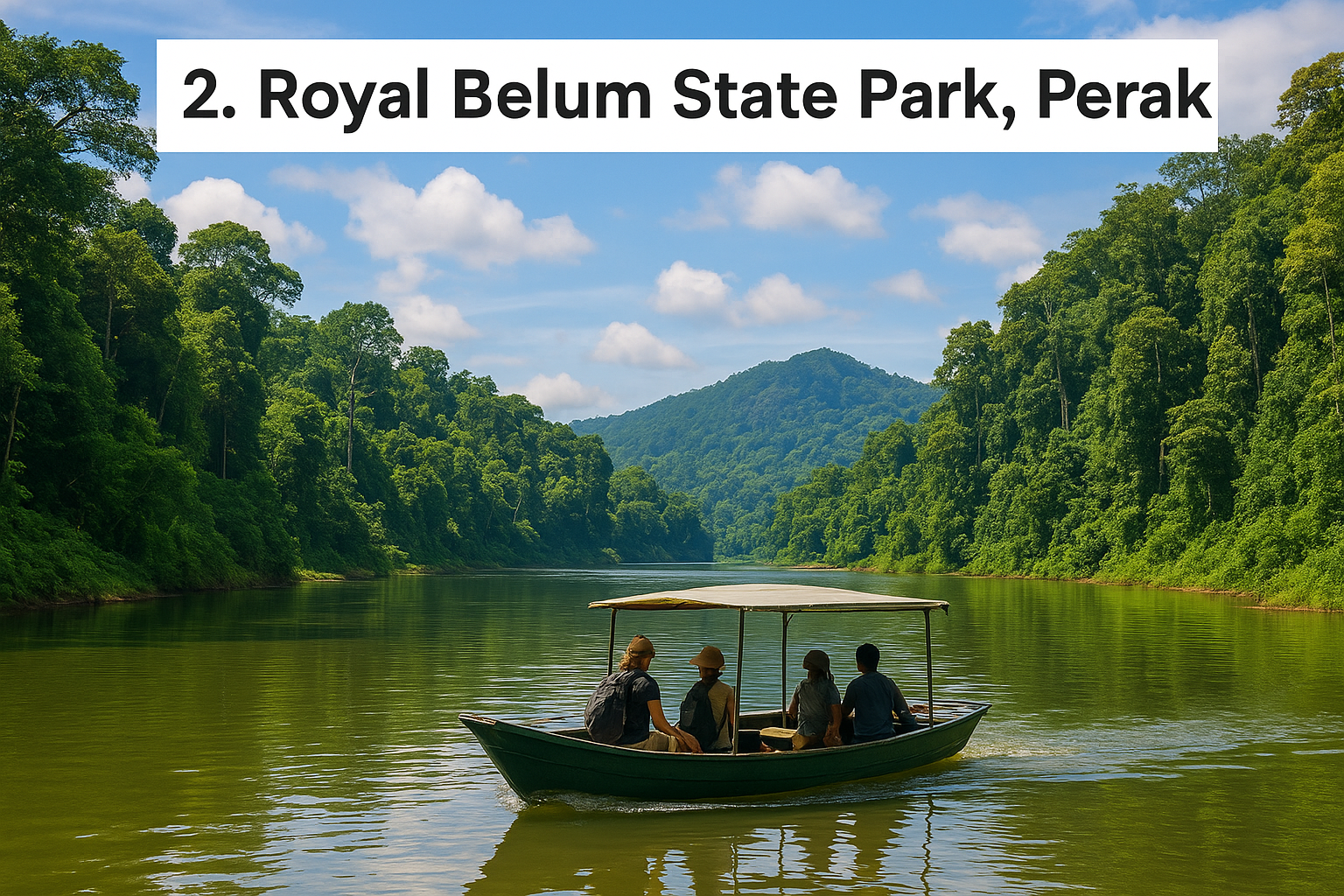
2. Royal Belum State Park, Perak
Royal Belum sits in the far north of Perak and ranks as one of the most rewarding hidden gems in Malaysia for anyone willing to go the extra mile. It covers over 117,500 hectares of rainforest that scientists estimate to be around 130 million years old, making it one of the oldest tropical forests on the planet. Most travelers skip it entirely because it requires a permit and a boat, which filters out anyone expecting easy access.
Why It Feels Like a Secret
Getting into Royal Belum takes deliberate planning, which is exactly why the crowds never show up. There are no paved roads cutting through the park, and you cannot simply drive in and walk around. That barrier keeps the wildlife intact and the experience genuinely remote.
This is one of the last places in Malaysia where you can spot Sumatran rhinos, Malaysian tigers, and Asian elephants sharing the same forest.
Top Things to Do
Patient travelers find plenty to do here. River cruises on Lake Temenggor let you move quietly through flooded forest corridors at dawn, which is when animal activity peaks. Birdwatching is exceptional, with over 300 species recorded including the rare Rhinoceros Hornbill.
Where to Stay and How Permits Work
Your only legal accommodation option inside the park is the Royal Belum Resort, operated under a concession. Permits are mandatory and must be arranged through the Perak State Forestry Department before your visit. The resort can facilitate this process if you book directly with them.
How to Get There
You travel to Gerik town in Perak first, then arrange a boat transfer across Lake Temenggor into the park. Most visitors drive to Gerik from Ipoh, which takes roughly two and a half hours.
Best Time to Visit and What to Pack
March through September gives you the driest conditions and the clearest river crossings. Pack lightweight long sleeves, insect repellent, and waterproof bags, along with sturdy footwear rated for wet terrain.
3. Lenggong Valley, Perak
Lenggong Valley sits in northern Perak and holds a UNESCO World Heritage designation that most Malaysian travelers have never heard of. The valley contains archaeological sites spanning 1.83 million years, making it one of the longest records of continuous human habitation in a single location anywhere in Southeast Asia. It stays quiet, unhurried, and almost entirely free of tourist infrastructure.
Why It Feels Like a Secret
Lenggong never gets the same attention as Ipoh or Cameron Highlands despite sitting in the same state. The Perak Man, one of Southeast Asia's oldest complete human skeletons, was found here, yet the Lenggong Archaeological Museum stays uncrowded nearly every day of the week. Most visitors to Perak follow a predictable route and skip the valley entirely.
Lenggong is one of the few hidden gems in Malaysia where you can stand at a site of genuine global archaeological significance and still have the place almost entirely to yourself.
Top Things to Do
Walk through the museum's organized exhibits to understand what was uncovered and why it matters globally. Then drive out to the Bukit Bunuh excavation area, where a local guide can walk you through the ancient lakeside settlement site firsthand.
Food Stops and Local Specialties
Pick up fresh wild honey from roadside stalls run by local Orang Asli communities on the road toward Gerik. The small town center has a few coffee shops serving nasi campur and roti canai at prices that reflect a genuinely local crowd rather than a tourist one.
How to Get There and Get Around
Drive from Ipoh toward Gerik on Route 76, then turn off toward Lenggong town. The trip from Ipoh takes roughly one hour and fifteen minutes. A car is essential since public transport into the valley runs infrequently and stops early.
Best Time to Visit and How Long to Stay
March through October gives you the most reliable weather for outdoor site visits. A single full day comfortably covers the museum, the excavation sites, and a relaxed lunch without feeling rushed.
4. Taiping, Perak
Taiping holds the quiet distinction of being one of Malaysia's oldest towns, yet it rarely appears on mainstream travel lists. It sits about 45 minutes north of Ipoh and carries an unhurried pace that most Malaysian towns abandoned decades ago. For anyone compiling a list of hidden gems in Malaysia, Taiping earns a place with little debate.
Why It Feels Like a Secret
Taiping never marketed itself aggressively as a tourist destination, and that restraint kept it authentic. The town's colonial-era shophouses and tree-lined streets survived modernization largely intact, giving it a character that most older Malaysian towns have quietly lost.
Taiping receives more annual rainfall than almost any other town in Malaysia, which explains why its greenery stays dense and deeply green all year.
Top Things to Do
Walk through Taiping Lake Gardens, Malaysia's oldest public park, in the early morning before heat builds. The Perak Museum, established in 1883, covers local natural history and the region's tin-mining past in more depth than most regional museums manage.
Where to Stay by Vibe and Location
Budget travelers find reliable value at guesthouses near the town center, within easy walking distance of the morning market and local coffee shops. Those who prefer quiet can find a few heritage homestays closer to the lake gardens that offer a calmer base for an overnight stay.
How to Get There and How to Plan a Day Route
Catch a bus or train from Ipoh, which gets you to Taiping in under an hour. Start at the lake gardens, move through the museum midday, and finish your route at the Jalan Tupai night market.
Photo Spots and Rainy-Day Backups
The lake gardens during light rain produce a soft mist over the water that photographs well without any filtering. If heavier rain arrives, the Perak Museum and the Maxwell Hill lower station both serve as covered alternatives worth the time.
5. Kuala Sepetang, Perak
Kuala Sepetang is a small fishing village on the coast of Perak, roughly 12 kilometers from Taiping. It sits on the edge of one of Malaysia's best-preserved mangrove forests and has never developed into a mainstream stop, which is exactly what keeps it worthwhile.
Why It Feels Like a Secret
Most travelers passing through Perak head straight to Ipoh or Taiping and never hear Kuala Sepetang mentioned. The village lacks flashy infrastructure, and that absence filters out visitors looking for resort-style comfort. For anyone hunting hidden gems in Malaysia, this kind of place delivers more than it advertises.
The mangrove ecosystem here supports hundreds of species of birds, fish, and marine life, and the forest itself remains largely intact because commercial pressure never overwhelmed the area.
Top Things to Do
Book a mangrove boat tour through one of the local operators in the village. The tours run through narrow waterways flanked by dense roots and open into wide tidal channels where egrets and kingfishers move through in large numbers. A charcoal factory visit shows you how traditional production still runs here, which is rare to see anywhere in Malaysia.
What to Eat and Where to Try Seafood
Order fresh cockles steamed simply with ginger and chili at the waterfront restaurants along the main jetty. The local prawn dishes come straight off boats that morning, and pricing reflects a local market rather than a tourist one.
How to Get There and What to Book Ahead
Drive from Taiping, which takes about 20 minutes. Book your mangrove tour at least one day ahead during weekends, since boats fill up faster than the village's low profile suggests.
Best Time to Visit and What to Expect at Night
Visit between March and October for calmer tidal conditions and clearer waterways. At night, the village quiets down quickly, and the waterfront turns dark and still, which is worth staying for if you want to watch fireflies move through the mangrove edge near the river mouth.
6. Sekinchan, Selangor
Sekinchan is a small fishing and farming town on the northwestern coast of Selangor, about 90 kilometers from Kuala Lumpur. It has gradually appeared on more travel radars in recent years, but it still ranks among the more genuine hidden gems in Malaysia compared to the heavily visited spots that dominate most itineraries.

Why It Feels Like a Secret
Sekinchan earns its place on this list because most travelers only know it vaguely, if at all. The town's identity is split between active rice farming and a working fishing harbor, and neither of those things gets marketed aggressively to tourists. That combination of agricultural rhythm and coastal access makes it feel removed from the typical travel circuit.
Walking through active paddy fields at harvest season in Sekinchan is one of those experiences that genuinely surprises people who expected a simple day trip.
Top Things to Do
Spend time at the paddy field viewing area near Jalan Rezab Sekinchan for wide, unobstructed views of the fields during growing and harvest seasons. The nearby Sekinchan Wishing Tree and the old Poh Seng Temple are worth a short stop for anyone interested in the town's longer community history.
What to Eat and Where to Try Seafood
The seafood restaurants along the harbor front serve freshly caught fish, prawns, and clams at straightforward prices. Order the steamed siakap with soy and ginger for a simple and reliable choice that locals consistently recommend.
How to Get There from Kuala Lumpur
Drive north from KL via Federal Route 5, and expect the trip to take roughly 90 minutes depending on traffic. No reliable public transport connects KL directly to Sekinchan, so a car or a hired transfer is your practical option.
Best Time to Visit for Rice Field Views
The best paddy views fall between March and May and again between August and October, which align with the two main growing cycles. Arriving early in the morning gives you softer light across the fields and cooler temperatures before the midday heat sets in.
7. Kuala Selangor, Selangor
Kuala Selangor sits about 65 kilometers northwest of Kuala Lumpur and earns its place among the genuine hidden gems in Malaysia for one specific reason: the firefly colony along the Selangor River remains one of the largest and most consistent in Southeast Asia.
Why It Feels Like a Secret
Most visitors from KL never make the drive because it takes planning. No direct public transport runs there conveniently, and the firefly tours only operate after dark, which puts off travelers who prefer daytime activities. That practical barrier keeps the numbers low and the experience genuinely worthwhile.
Watching thousands of synchronized fireflies light up the mangrove trees along the Selangor River at night is one of the most visually striking things you can do in Malaysia without leaving the peninsula.
Top Things to Do
Beyond the firefly tours, spend some time at Bukit Melawati, a historic hill fort with resident silvered leaf monkeys that will walk right up to you. The Kuala Selangor Nature Park runs along the river estuary and gives you access to coastal mangrove trails with strong birdwatching.
Firefly Tour Basics and How to Choose an Operator
Book through an operator who uses electric or low-emission boats to minimize light and noise disturbance to the colony. Your guide should limit torch use on the water. Avoid tours that allow flash photography, since light stress damages firefly activity over time.
How to Get There and When to Arrive
Drive from KL via Federal Highway Route 5, which takes roughly 75 to 90 minutes. Arrive before sunset so you have time to explore Bukit Melawati before your evening boat slot.
What to Wear and Safety Tips on the Water
Wear dark, muted clothing since bright colors and white fabric reflect light and disrupt the fireflies. Bring a light rain jacket because river conditions change quickly, and always follow your operator's instructions about standing or shifting weight in the boat.
8. Kuala Kubu Bharu, Selangor
Kuala Kubu Bharu sits about 60 kilometers north of Kuala Lumpur in the foothills of the Titiwangsa Range and consistently earns its place among the hidden gems in Malaysia that locals know but rarely mention in writing. The town is compact, easy to walk, and surrounded by rivers and jungle that most KL visitors never realize are this close to the city.
Why It Feels Like a Secret
KKB, as locals call it, stays under the radar because it lacks a single standout attraction that drives traffic. Instead, it offers a combination of colonial shophouses, river access, and jungle trails that rewards travelers who slow down and stay curious. The old town district carries a worn-in quality that feels genuinely lived-in rather than staged for photographs.
KKB is the kind of place where the experience comes from the surroundings, not from a ticketed attraction.
Top Things to Do
Start at the town center for a walk through the old shophouse streets and an early breakfast at one of the long-standing coffee shops. From there, Sungai Selangor offers white-water rafting suited to beginners through intermediate paddlers, with several local operators based nearby.
Easy Nature Add-Ons for a Half-Day or Full-Day
The Chiling Waterfall trail takes roughly 45 minutes each way through secondary forest and crosses the river several times before reaching the falls. Pairing it with a morning rafting session gives you a full day of varied outdoor activity without needing to travel far between stops.
How to Get There and How to Move Around Without a Car
KTM Komuter trains run from KL Sentral directly to Kuala Kubu Bharu station, making this one of the more reachable off-the-beaten-path stops on the peninsula. Once you arrive, renting a bicycle or walking covers the town center and gets you to most trailheads without a vehicle.
Where to Stay and What the Town Feels Like at Night
Accommodation here stays limited to small guesthouses and homestays, which fits the town's unhurried pace well. At night, the streets settle quickly, food stalls near the market serve straightforward local meals, and the river sounds carry further than you expect for somewhere this close to a major city.
9. Fraser's Hill, Pahang
Fraser's Hill sits in the Titiwangsa Range on the Pahang-Selangor border, roughly 1,500 meters above sea level. It earns its place among the hidden gems in Malaysia because it delivers genuine highland character without the commercialization that reshaped Cameron Highlands over the past two decades.
Why It Feels Like a Secret
Most travelers default to Cameron Highlands when they want a Malaysian hill station, leaving Fraser's Hill to a smaller crowd who found it a different way. The colonial bungalows and clock tower at the center still look much as they did 70 years ago, and the roads in see a fraction of the traffic that Cameron handles on any weekend.
Fraser's Hill is what Cameron Highlands looked like before the development caught up.
Top Things to Do
Birdwatching at Fraser's Hill carries international recognition, with over 270 recorded species drawing dedicated birders from across Asia. Walk the Hemmant Trail or Bishop's Trail for forest paths that stay manageable even without serious hiking experience.
Short Hikes and Viewpoints for Non-Hikers
The Pine Tree Trail loops through moss-draped forest at an easy gradient and takes about 45 minutes to complete. If you skip the trails entirely, the viewpoints near the clock tower area give you wide views over the surrounding ridgelines without any climbing required.
How to Get There and Road Tips
Drive via Kuala Kubu Bharu on Route 55, which narrows into a single lane managed by a timed alternating traffic system. Check the gap timing schedule before you leave to avoid a long wait.
Best Time to Visit for Cool Weather
March through September brings the most reliable dry conditions, with temperatures holding between 16 and 25 degrees Celsius. Mornings are the clearest window for birdwatching and trail walks before afternoon cloud cover arrives.
10. Tasik Chini, Pahang
Tasik Chini is Malaysia's second-largest natural lake, located in the interior of Pahang roughly 100 kilometers from Kuantan. It sits within a protected biosphere reserve and holds deep significance for the Jakun Orang Asli community who have lived along its shores for generations. Among the hidden gems in Malaysia, this one carries both natural and cultural weight that most travelers never encounter.
Why It Feels Like a Secret
Tasik Chini never attracted the resort development that other Malaysian lakes received, and its relative inaccessibility keeps visitor numbers low. The lake is technically a system of 12 interconnected lakes fed by the Chini River, which creates a layered landscape most people never see from the road.
Standing in the middle of Tasik Chini surrounded by lotus flowers in bloom is one of those moments that does not photograph the way it feels in person.
Top Things to Do
Hire a boat through the local Jakun community operators to move across the lake and into the lotus fields during peak bloom between June and September. You can also walk the perimeter trails near Kampung Gumum and visit the small Tasik Chini Resort area for elevated views over the water.
How to Visit Respectfully and What to Avoid
Stick to designated boat routes and avoid picking lotus flowers or disturbing the reed beds. The Orang Asli communities here are not a tourism product, so follow your guide's lead and do not photograph people without clear permission.
How to Get There and What to Arrange Locally
Drive from Kuantan toward Maran on Route 12, then follow signs toward Chini. The trip from Kuantan takes roughly 90 minutes. Arrange boat hire on arrival at Kampung Gumum, or contact the resort in advance to confirm availability during busy weekends.
Best Time to Visit and Water-Level Considerations
Visit between June and September for lotus blooms and higher water levels that allow boats to navigate further into the lake system. The dry season between February and April can drop water levels significantly, which limits boat access to parts of the lake.
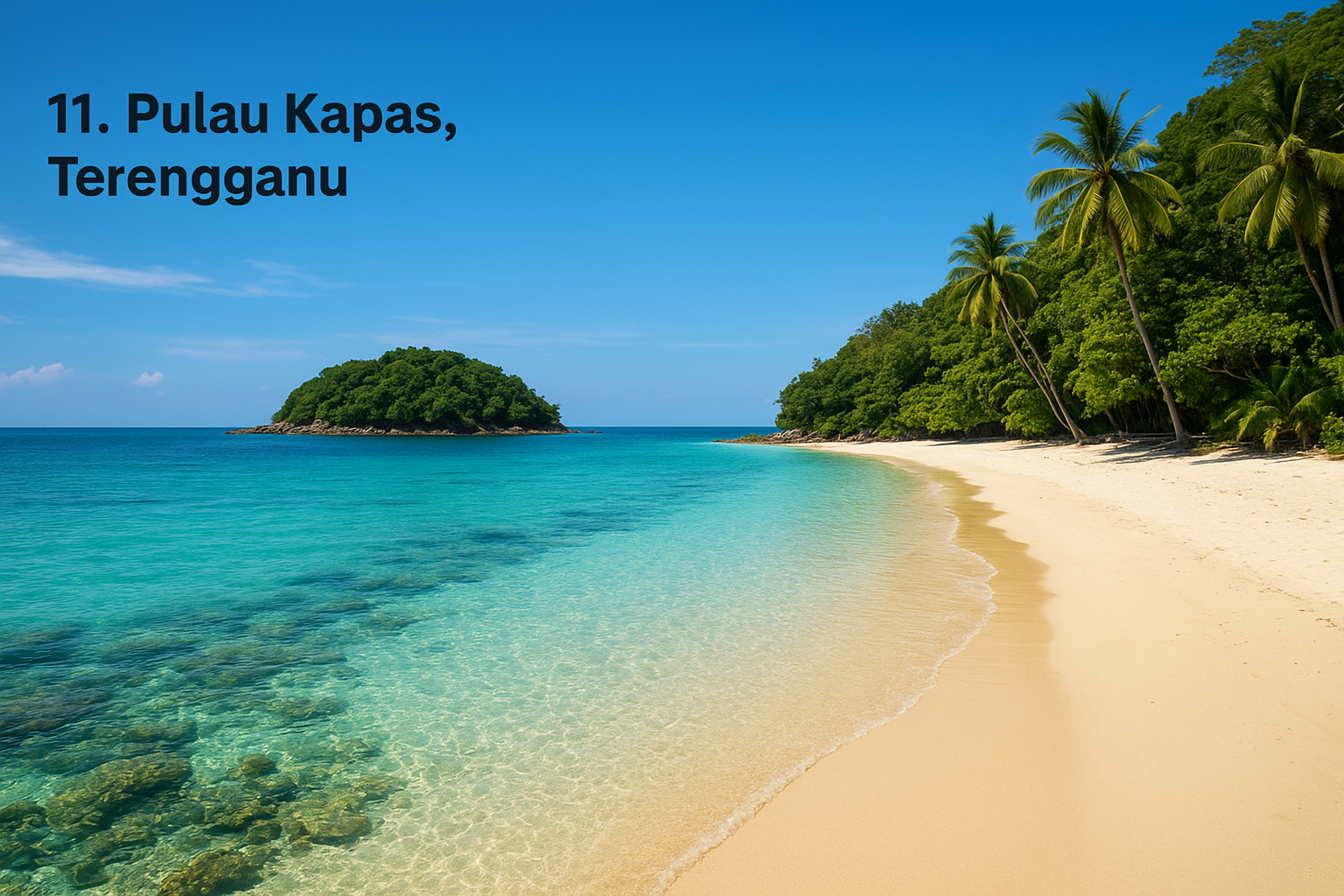
11. Pulau Kapas, Terengganu
Pulau Kapas is a small island off the coast of Terengganu, sitting just 15 minutes by boat from Marang. It covers roughly 1.5 square kilometers and holds some of the clearest shallow water on the east coast of Peninsular Malaysia. While Redang and Perhentian attract larger crowds, Kapas stays quieter and more personal.
Why It Feels Like a Secret
Pulau Kapas rarely appears on mainstream travel lists, which makes it one of the more rewarding hidden gems in Malaysia for travelers who want a beach island without heavy resort infrastructure. The island has no ATMs, no loud bars, and no vehicles, which naturally selects for visitors who came specifically to disconnect.
The coral around Pulau Kapas starts just a few meters from shore, which means you can snorkel without booking a separate boat trip.
Top Things to Do
Snorkeling and basic scuba diving draw most visitors, with several coral patches accessible directly from the main beach. A short trail cuts across the island to Kapas Garden Beach on the quieter eastern side, which offers better shade and calmer water most mornings.
Where to Stay by Budget and Beach Access
Options range from simple wooden chalets at the budget end to small semi-private resorts with beach-facing rooms. Most accommodation sits along the western beach, putting you within easy walking distance of the main jetty and the best snorkel sites.
How to Get There and Boat Timing Tips
Take a boat from Marang Jetty, roughly 15 kilometers south of Kuala Terengganu. Boats typically run between 9am and 5pm, but confirm your return time with the operator directly since the last departure back to the mainland leaves earlier than most visitors expect.
Best Time to Visit and Monsoon Shutdowns
Plan your visit between March and October for calm seas and strong underwater visibility. The northeast monsoon closes the island between November and February each year, and most accommodation shuts down completely during that stretch.
12. Setiu Wetlands, Terengganu
Setiu Wetlands stretches across over 22,000 hectares of coastline, lagoons, and estuarine forest in northern Terengganu, making it one of the largest wetland systems on the Malaysian peninsula. It supports an exceptional range of wildlife and gives you a completely different experience from the island-hopping that dominates most Terengganu itineraries.
Why It Feels Like a Secret
Setiu sits well outside the typical tourist route through Terengganu, and no single landmark pulls visitors toward it. Most travelers heading up the east coast stop at Kuala Terengganu or push on to the islands, which means Setiu stays largely undisturbed. Among the hidden gems in Malaysia, this one rewards patience more than most.
The wetlands support nesting leatherback and green turtles along Setiu Beach, one of the few stretches on the peninsula where nesting still occurs with any regularity.
Top Things to Do
Kayaking through the lagoon channels gives you the most direct access to the ecosystem, moving quietly through narrow waterways lined with nipah palms and mangrove roots. Birdwatching here is genuinely productive, with migratory shorebirds arriving between September and March.
What to Book and What Works as a DIY Visit
Arrange a guided kayak or boat tour through local operators based in Setiu town since navigating the lagoon independently without local knowledge wastes time. The beach walk toward the turtle nesting areas works as a self-guided activity if you time it during the right season.
How to Get There and How to Pair It with Nearby Stops
Drive north from Kuala Terengganu on Route 3, and you reach Setiu in roughly 45 minutes. Pairing it with a stop at Merang Jetty, the departure point for Pulau Redang, turns it into a practical full-day loop.
Best Time to Visit for Wildlife and Weather
Visit between March and October for calm lagoon conditions and accessible beach areas. Turtle nesting activity peaks between May and August, which aligns well with the dry season and gives you the best combination of wildlife access and stable weather.
13. Kota Bharu, Kelantan
Kota Bharu sits at the northeastern tip of Peninsular Malaysia, right against the Thai border, and operates as the cultural capital of Kelantan state. It moves at its own pace, follows its own calendar, and holds onto traditions that most other Malaysian cities quietly dropped decades ago.
Why It Feels Like a Secret
Most travelers who reach the east coast stop at Kuala Terengganu or head straight for the islands, which leaves Kota Bharu largely to people who sought it out deliberately. The city runs on a Thursday to Sunday week because Friday is observed as the rest day in Kelantan, which catches first-time visitors off guard and quietly keeps the tourist numbers manageable. Among the hidden gems in Malaysia, Kota Bharu stands out because its culture is the attraction, not a specific landmark.
Kota Bharu is one of the few places in Malaysia where traditional crafts like batik printing, silverwork, and top spinning are still practiced as active trades rather than staged demonstrations.
Top Things to Do
Walk through Pasar Siti Khadijah, the city's main market, which runs across multiple floors and is staffed almost entirely by women vendors. Spend time at the Gelanggang Seni cultural center, where you can watch top spinning, wayang kulit shadow puppetry, and silat martial arts demonstrations on scheduled evenings.
What to Eat and What to Try for First-Timers
Order nasi kerabu, a Kelantanese rice dish served with raw herbs, salted egg, and coconut-based sides that you won't find prepared this way anywhere else in the country. Ayam percik, grilled chicken brushed with spiced coconut milk, appears at roadside stalls across the city and works well as a starting point if you want something approachable before exploring the wider menu.
How to Get There and How to Plan a One- or Two-Day Stay
Fly directly into Sultan Ismail Petra Airport from Kuala Lumpur, with the flight taking under an hour. One day covers the market, the cultural center, and a few food stops comfortably. A second day lets you extend to Pantai Cahaya Bulan beach and the kampung areas on the city's edge.
Cultural Etiquette and Market Know-How
Dress modestly with covered shoulders and knees when visiting markets and cultural sites, since Kota Bharu observes conservative Islamic norms more strictly than most Malaysian cities. Bargaining at the market is acceptable but keep it respectful, and always greet vendors before asking prices.
14. Bau, Sarawak
Bau is a small town in Sarawak located about 38 kilometers south of Kuching, and it packs more natural variety into a single day than most visitors expect from a destination this size. It sits within a limestone-rich landscape that shaped both its geology and its history, and it remains one of the lesser-known hidden gems in Malaysia for travelers already based in Kuching.
Why It Feels Like a Secret
Bau rarely shows up in travel roundups about Sarawak because Kuching dominates the conversation for visitors to the state. Most people fly in, explore the city, and leave without realizing that a short drive south opens up a completely different set of experiences. The town's gold-mining history and cave systems sit quietly in the background, waiting for anyone willing to make the short trip.
Bau's Fairy Cave and Wind Cave are two of the most visually striking cave systems in Sarawak, yet they see a fraction of the visitors that Mulu receives each year.
Top Things to Do
Spend your morning at Fairy Cave, a massive limestone cavern with a Buddhist shrine built into its interior, followed by Wind Cave, which runs along a riverbank and stays noticeably cooler than the outside air. Both sites are easy to walk independently.
Food Stops and Night Market Ideas
The Bau wet market near the town center opens early and serves fresh produce alongside cooked food stalls with Bidayuh-influenced dishes. Stop for midin fern stir-fried with garlic and belacan, a Sarawak staple that tastes best at a local stall rather than a restaurant.
How to Get There from Kuching
Drive from Kuching city center, which takes roughly 45 minutes on a direct route via Jalan Bau. Grab-style ride services and hired taxis from Kuching cover the route if you prefer not to drive yourself.
What to Know About Caves, Heat, and Timing
Arrive at the caves before 11am to avoid the midday heat inside the limestone chambers, which trap warmth later in the day. Wear closed-toe shoes with grip since cave floors stay wet and uneven, and bring a small torch as a backup even where lighting is installed.
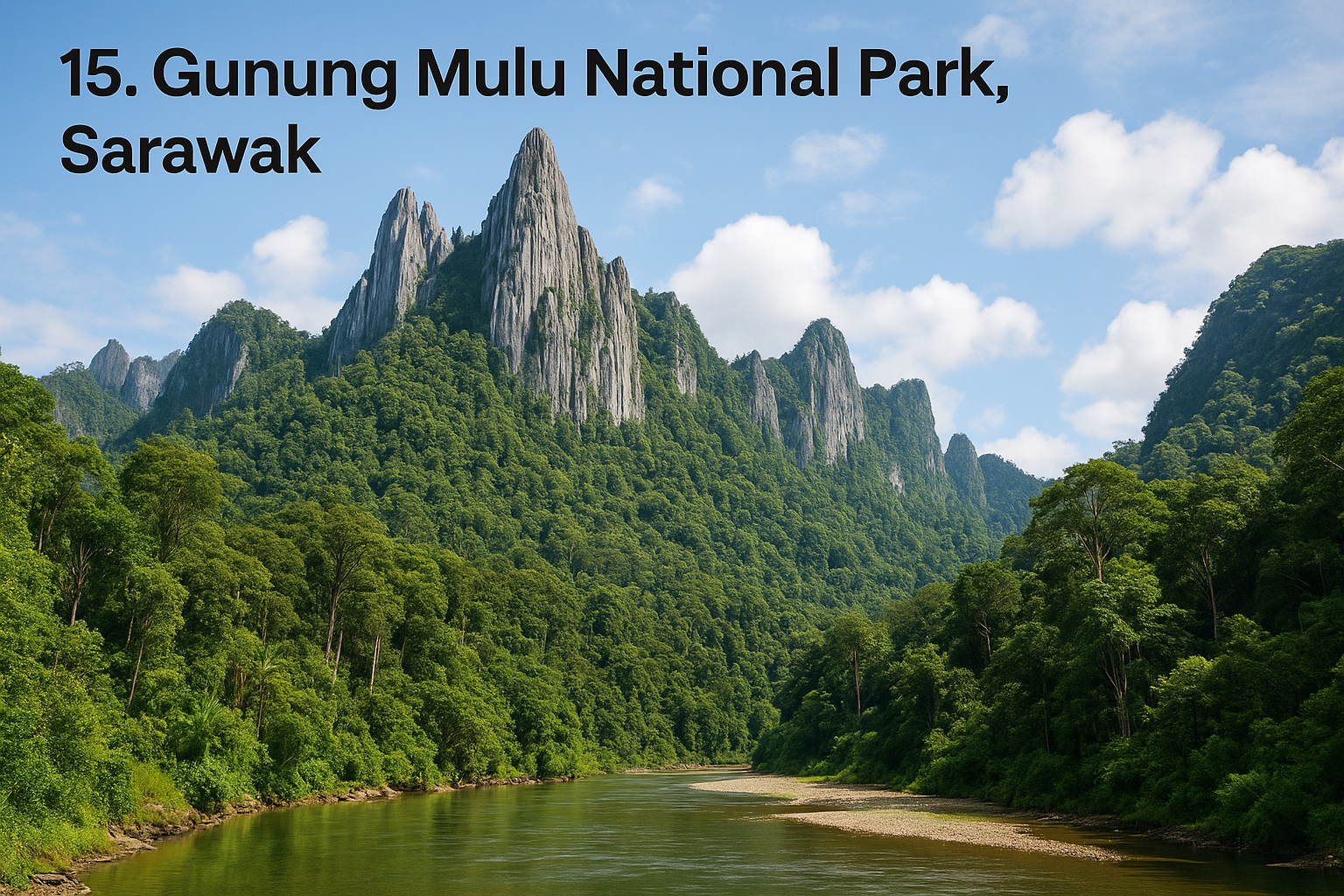
15. Gunung Mulu National Park, Sarawak
Gunung Mulu National Park covers 52,864 hectares of rainforest and karst mountains in northern Sarawak, holding a UNESCO World Heritage designation that most travelers know in theory but never actually visit. Despite its global recognition, it remains one of the genuine hidden gems in Malaysia because the logistics of reaching it filter out casual visitors before they even book a flight.
Why It Feels Like a Secret
Mulu sits in remote interior Sarawak, accessible only by small propeller plane or a long river journey, which keeps visitor numbers well below what its international reputation might suggest. The park holds Sarawak Chamber, the world's largest cave chamber by area, alongside hundreds of kilometers of mapped passages that researchers are still actively documenting.
Deer Cave houses one of the largest bat colonies on Earth, with millions of wrinkle-lipped bats exiting each evening in a spiraling column that takes over 20 minutes to fully pass overhead.
Top Things to Do
The Deer Cave and Lang Cave circuit works as a solid starting point for your visit, running roughly two hours with a mandatory ranger guide. The Pinnacles trail on Mount Api rewards hikers with one of the most striking geological formations anywhere in Southeast Asia.
Routes and Timelines for Different Fitness Levels
Casual visitors can cover the cave circuits in one to two days without serious physical demand. More committed hikers tackle the Headhunters' Trail, a multi-day route connecting Mulu to the Limbang River through dense interior jungle that challenges your endurance.
How to Get There and What to Book Early
Fly from Miri or Kuching on MASwings, with the Miri route taking roughly 40 minutes. Reserve your cave permits and ranger-guided tours through the park well ahead of your arrival since the Pinnacles trek carries strict daily participant limits that fill up fast during peak months.
Best Time to Visit and What to Pack for Caves
Visit between February and October for the most reliable flying weather and fully accessible trail conditions. Pack quick-dry clothing and a headlamp with spare batteries, along with closed-toe shoes that have firm grip since cave floors stay wet and uneven throughout the entire year.
16. Kudat and Tip of Borneo, Sabah
Kudat is a small coastal town at the northernmost point of Sabah, where the South China Sea and the Sulu Sea converge at a single cape. It closes out this list of hidden gems in Malaysia as one of the country's most geographically striking destinations, drawing only a fraction of the visitors who make it to Kota Kinabalu or the wildlife corridors further south.
Why It Feels Like a Secret
Kudat sits over 190 kilometers north of Kota Kinabalu, which places it well outside the itinerary most travelers plan for Sabah. Few visitors push this far north, so the beaches and the landmark at Tanjung Simpang Mengayau stay genuinely uncrowded on most days you visit.
Standing at the northernmost tip of Borneo while two seas converge in front of you is one of the more quietly powerful moments available anywhere in Malaysia.
Top Things to Do
Walk down to the Tip of Borneo marker for wide open water views where the two seas visibly meet. Visit a Rungus longhouse nearby to see how one of Sabah's oldest indigenous communities still maintains its architectural traditions in active daily use.
Beaches, Viewpoints, and Day Trip Planning
Pantai Kelambu stretches long and clean with shallow water suited for swimming without strong currents. Pair your beach stop with a drive to the cape viewpoint in the late afternoon for the best light conditions before sunset.
How to Get There from Kota Kinabalu
Drive north from Kota Kinabalu on Route A1 through Kota Belud. The trip takes roughly three to three and a half hours depending on traffic through the town centers along the route.
Best Time to Visit and Sea Conditions
Visit between March and September for calm waters and clear skies at the cape. The northeast monsoon from October to February brings rougher conditions that reduce visibility and limit the experience at the tip considerably.
Wrap-Up and How to Plan Your Route
Malaysia's most rewarding destinations rarely show up on the first page of a travel search, and that is exactly what makes them worth chasing. The hidden gems in Malaysia on this list span six states and two Borneo territories, so your best approach is to group stops by region rather than trying to connect them all in a single trip. Perak alone can fill four to five days without feeling rushed, and Sarawak deserves at least a week if you plan to reach both Bau and Mulu.
If mapping out a multi-destination route feels overwhelming, let someone who knows the ground do the heavy lifting. Plan your Malaysia hidden gem itinerary with NextTrip Travel and get a fully built route matched to your schedule, group size, and travel style. You focus on showing up. The logistics are already handled.