

So, what is adventure travel, exactly? It's more than zip-lining over a jungle canopy or trekking to a remote summit, though those certainly count. Adventure travel sits at the intersection of physical activity, cultural immersion, and connection with nature, and it's become one of the fastest-growing segments of the travel industry for good reason.
Unlike a standard beach holiday or city break, adventure travel pushes you beyond your comfort zone. It trades predictability for discovery. You might find yourself kayaking through bioluminescent bays in Southeast Asia, hiking ancient trade routes in Morocco, or diving coral walls in the Philippines. The common thread is engagement, you're not just observing a destination, you're physically and emotionally part of it. That shift from passive tourist to active participant changes the entire experience.
At Nexttrip.Travel, we build itineraries around exactly this kind of travel, curated by creators and local insiders who've already done the hard work of finding the best routes, hidden spots, and authentic experiences. Whether you're a first-timer curious about soft adventure or a seasoned traveler ready for something extreme, understanding the full picture of adventure travel helps you plan smarter.
This guide breaks down the definition, walks through real examples across activity types and difficulty levels, and covers the physical, mental, and cultural benefits that make adventure travel worth every bit of effort.
Why adventure travel matters
Understanding what is adventure travel goes hand in hand with understanding why so many people are choosing it over conventional tourism. The global adventure travel market was valued at over $288 billion in 2021 and has continued growing steadily since, driven by travelers who want more than resort pools and scheduled excursions. People are actively seeking experiences that challenge them, connect them to local cultures, and leave a lasting impression rather than a faded souvenir sitting on a shelf.
The mental and physical payoff
Adventure travel does something few other forms of vacation can replicate: it forces you to be fully present. When you're navigating whitewater rapids or scrambling up a volcanic trail, your mind doesn't drift to work emails or unfinished tasks. The physical demands of the activity lock your attention onto what's directly in front of you, which is why many travelers report returning from adventure trips feeling genuinely restored rather than simply rested.
Research consistently links physical activity in natural environments to lower cortisol levels, better sleep quality, and improved mood across multiple studies. A multi-day trek through a national park or a long-distance cycling route delivers all three simultaneously. Beyond the physiology, there's something direct happening: you set a goal, you work toward it under real conditions, and you achieve it. That feedback loop builds a specific kind of confidence that carries into everyday life long after you're back home.
Completing a demanding physical challenge in an unfamiliar environment builds self-assurance that a gym or a comfortable resort simply cannot replicate.
What the research actually shows
The growth in adventure tourism is not a short-lived phase. The Adventure Travel Trade Association consistently reports that adventure travelers spend more per trip, stay longer at destinations, and return to those destinations at higher rates than standard leisure tourists. Soft adventure activities, which include hiking, cycling, snorkeling, and wildlife safaris, account for the largest share of bookings. That means you don't need to be an extreme athlete to participate meaningfully in this travel category.
Industry surveys also show that nature connection and cultural immersion consistently rank higher than adrenaline as primary motivations for adventure travel. Most people choosing this style of trip are chasing meaning and genuine experience, not just a physical feat. That distinction matters because it broadens who adventure travel is really for, and we'll cover that directly later in this guide.
The cultural dimension that shifts your perspective
Staying in a locally owned guesthouse in rural Nepal, learning a traditional cooking method in Vietnam, or joining a community trail led by indigenous guides in Malaysian Borneo, each of these places you directly inside a culture rather than observing it from the window of a tour bus. Cultural exchange is one of the three pillars of adventure travel, and it's frequently the element that travelers describe most vividly when they look back on a trip years later.
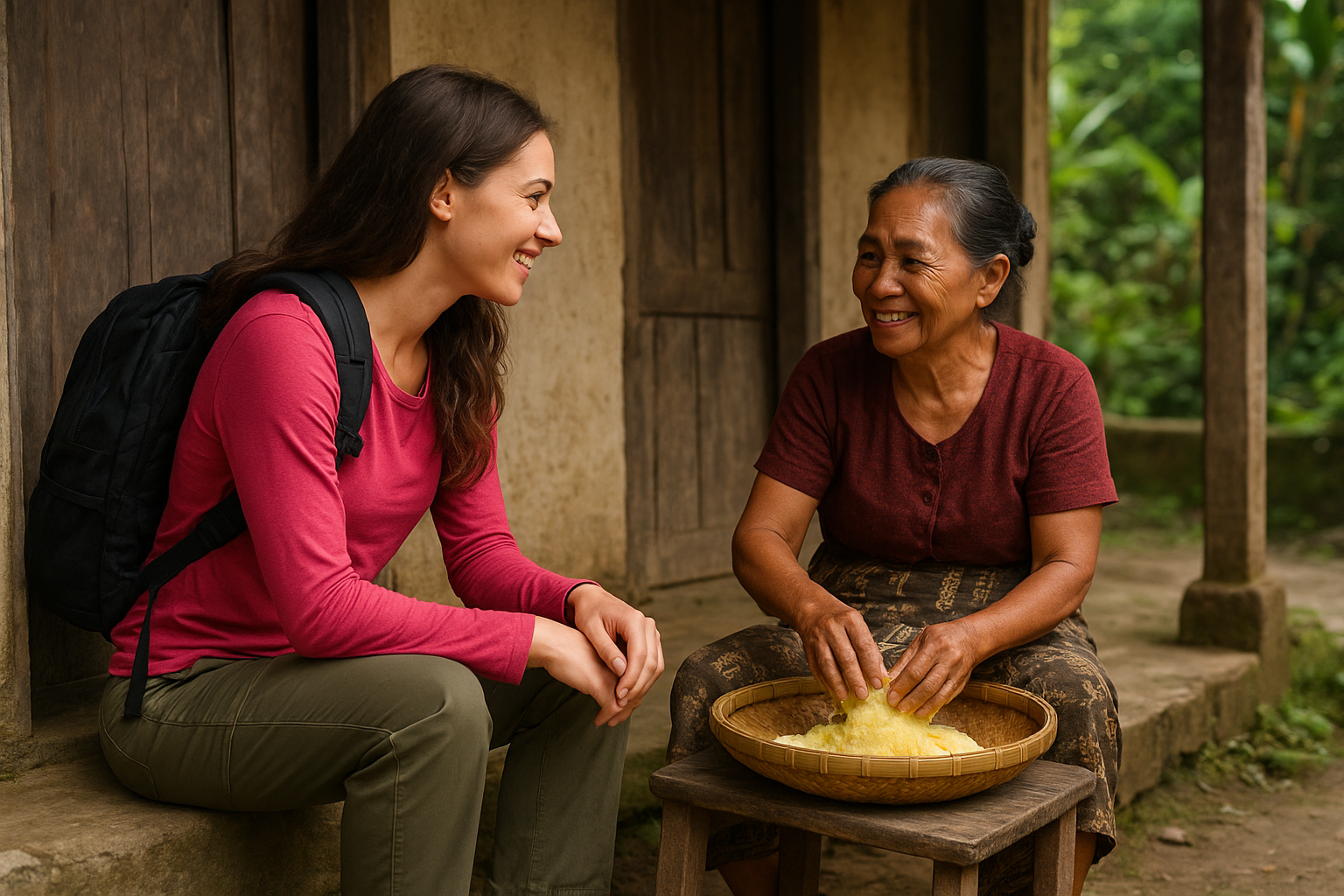
Adventure travel also tends to put spending directly into local economies rather than routing it through large international hotel chains. When you hire a local guide, eat at family-run restaurants, or book a homestay, you contribute to communities that depend on responsible tourism to sustain their livelihoods. That economic relationship changes how you engage with a destination. You're no longer a guest passing through; you're a participant in something that matters to the people who live there. That shift in dynamic is one of the reasons adventure travel tends to produce a deeper sense of connection than almost any other travel format.
The three core elements of adventure travel
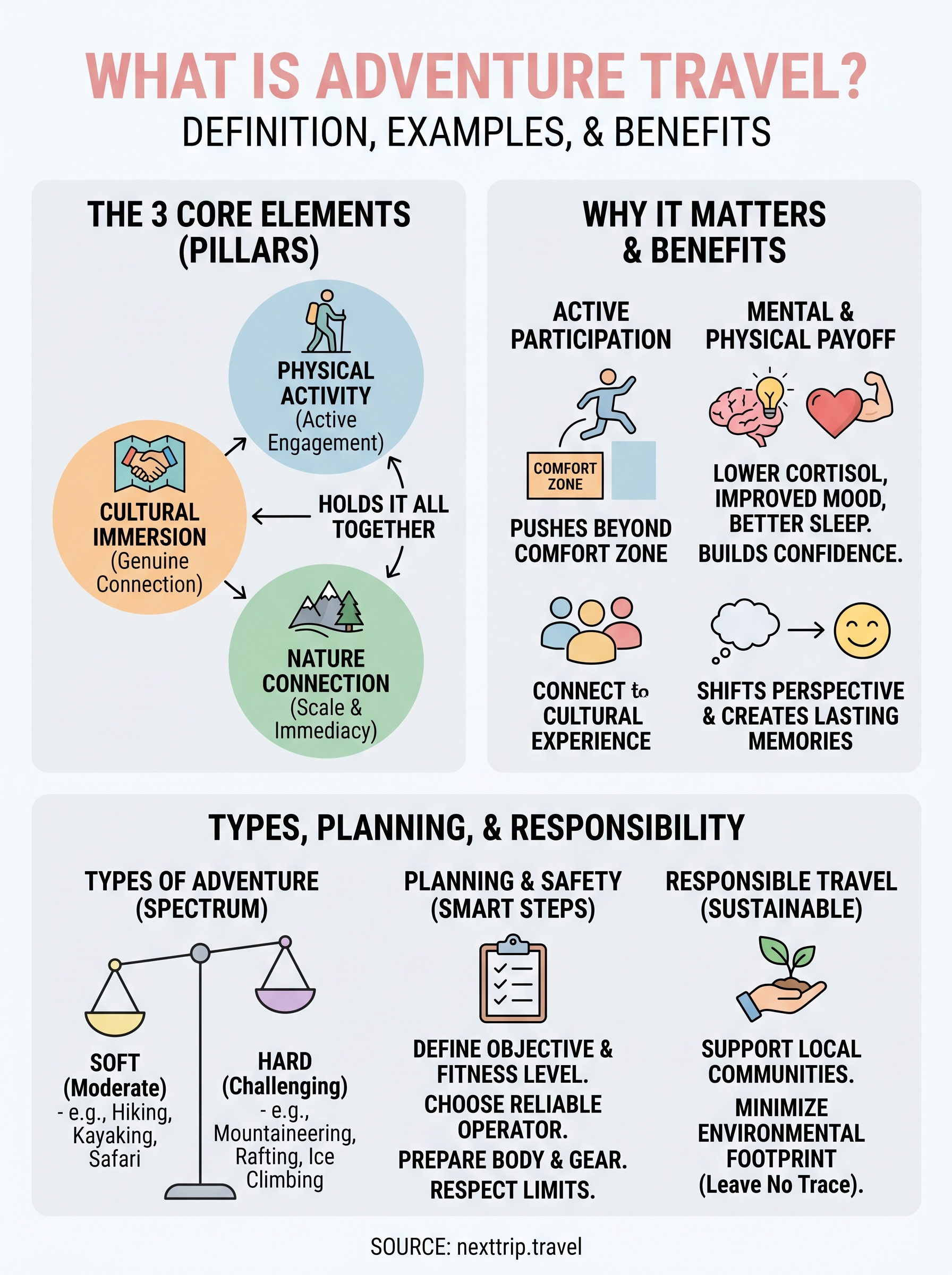
When people ask what is adventure travel, the answer almost always circles back to the same three building blocks: physical activity, cultural immersion, and engagement with natural environments. Remove any one of these, and the experience shifts into something else entirely. A guided museum tour is cultural but not physically demanding. A gym session is physical but stripped of any natural or cultural context. Adventure travel holds all three together, and that combination is what makes it distinctly different from other travel styles.
Physical activity
Physical effort is the entry point for most adventure experiences. It doesn't need to be extreme; a half-day hike through a cloud forest qualifies just as much as a multi-week mountaineering expedition. What matters is that your body is actively involved in the journey, not just transported through it. This engagement changes your relationship to a place because you earn the view, feel the altitude, and move through a landscape at a pace that lets you actually notice it.
The level of physical demand varies enormously across different trip types, and you'll find options that match your current fitness level without needing to train like an athlete.
Cultural immersion
Adventure travel regularly places you in communities, landscapes, and daily rhythms that sit far outside your normal routine. Sharing a meal cooked over an open fire with a local family, navigating a market where you don't speak the language, or joining a traditional ceremony as a respectful guest, these are moments that reshape how you understand the world. They're also the moments travelers talk about for years afterward.
Cultural immersion in adventure travel is not tourism for show. It's genuine contact with how other people live, and that contact changes you.
Local guides, community-based tourism operators, and homestay hosts all play a central role here. They're the ones who transform a destination from a backdrop into a living place with history, customs, and meaning.
Connection with nature
Natural environments are the backdrop for nearly every adventure travel experience worth pursuing. Mountains, rivers, oceans, forests, and deserts each create conditions that demand attention and presence in ways that urban environments rarely do. When you're paddling through mangroves at dawn or watching a wildlife migration unfold across a savanna, the scale and immediacy of the natural world grounds you in a way that's genuinely hard to replicate indoors or in a city.
This connection also tends to build a stronger appreciation for conservation, which feeds directly into how responsible adventure travelers approach their trips.
Types of adventure travel and real examples
One of the most practical ways to understand what is adventure travel is to look at it across a clear spectrum. Soft adventure sits at one end, open to most travelers regardless of fitness level. Hard adventure occupies the other end, demanding serious preparation and often specialist skills. Between those two poles, you'll find dozens of distinct trip categories that suit different interests, timelines, and physical abilities.
Soft adventure
Soft adventure covers activities where the physical demand is moderate and prior experience is rarely required. These trips prioritize exploration and sensory engagement over technical challenge. Real examples include guided wildlife safaris in Kenya's Maasai Mara, sea kayaking through the limestone islands of Palawan in the Philippines, cycling rural backroads in Tuscany, and snorkeling along the coral reefs of Malaysia's Perhentian Islands.

Common soft adventure trip formats include:
- Multi-day hiking routes on established trails
- Guided wildlife watching and birdwatching expeditions
- Beginner-friendly white-water float trips
- Cultural trekking with community-based guides
- Coastal cycling with overnight village stays
Soft adventure is often where the most lasting cultural connections happen, because you move slowly enough to actually notice the places and people around you.
Hard adventure
Hard adventure demands a higher level of physical fitness, mental resilience, and in many cases, technical training. Mountaineering expeditions in the Himalayas, multi-week trekking routes like the Kokoda Track in Papua New Guinea, whitewater rafting through Grade IV rapids, and ice climbing in Iceland all fall into this category. These trips require real preparation, and your safety depends directly on working with qualified guides and reputable operators who know the terrain.
Completing a hard adventure trip delivers a specific sense of accomplishment that is difficult to find anywhere else. The challenge itself is the draw, and the payoff consistently matches the effort you put in before and during the experience.
Water and ocean-based adventures
Water environments open up a distinct set of adventure travel options. Surfing, scuba diving, open-water swimming, and sailing expeditions each offer immersive access to ecosystems that most people rarely encounter up close. Long-distance sailing routes through Southeast Asia, live-aboard diving trips along the Great Barrier Reef, and river expeditions through remote rainforests all qualify because they combine physical engagement with deep nature immersion.
These trips attract travelers who want a different kind of solitude, one defined by open water and minimal infrastructure rather than mountain summits or jungle canopies.
Who adventure travel suits and how hard it feels
One of the biggest misconceptions around what is adventure travel is that it's reserved for elite athletes, gap-year backpackers, or people with unlimited budgets. The reality is far more inclusive. Adventure travel suits anyone who wants to engage actively with a destination, whether that means a weekend hike through a national park or a month-long expedition across remote terrain. The category is wide enough to accommodate first-time travelers in their 50s looking for something more meaningful than a cruise, and seasoned trekkers hunting their next serious objective.
Adventure travel is not just for athletes
Physical fitness helps, but it is not the starting requirement most people assume. Soft adventure activities are specifically designed to be accessible without prior training. A family with children can do a guided rainforest trek in Borneo. A couple in their 60s can sea kayak along a sheltered coastline in Malaysia. A solo traveler with no prior camping experience can complete a well-supported multi-day trail with a reputable operator handling the logistics.
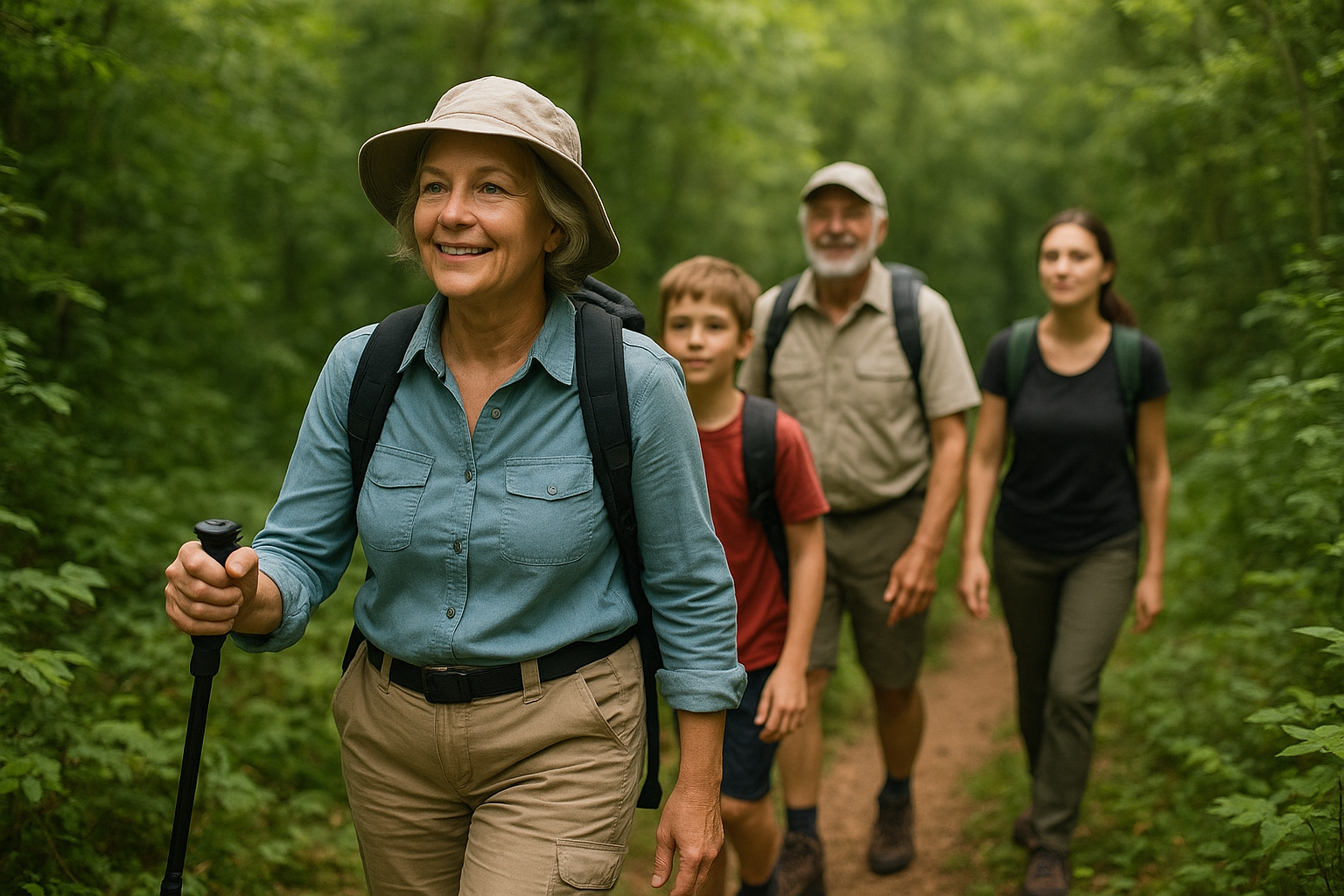
The deciding factor in most adventure travel experiences is motivation and attitude, not peak physical condition.
What matters more than fitness is your willingness to be uncomfortable for stretches of time and your openness to environments that don't operate on a hotel schedule. Discomfort on an adventure trip is usually temporary, purposeful, and far less intense than most people anticipate before they start.
How difficulty actually works in practice
Adventure travel operators use difficulty ratings to help you match your current ability to the right experience. These ratings typically factor in daily walking distance, elevation gain, terrain type, and the availability of support infrastructure along the route. A Grade 1 or "easy" rating usually means you can complete the activity with basic fitness and no specialist equipment. A Grade 5 or "challenging" rating means you'll need preparation, the right gear, and often a qualified technical guide.
You should read these ratings carefully rather than relying on marketing descriptions alone. Operators who are transparent about what each difficulty level actually demands are generally the ones worth booking with. When you have a clear picture of the physical requirements before you commit, you can train appropriately, pack the right gear, and arrive at the trailhead or launch point with realistic expectations. That preparation is what separates an adventure trip that leaves you energized from one that leaves you out of your depth.
How to plan an adventure trip step by step
Good adventure planning starts well before you book anything. Understanding what is adventure travel at a practical level means recognizing that the preparation phase directly shapes the quality of the experience itself. A poorly planned adventure trip wastes time, money, and energy. A well-planned one runs smoothly even when conditions don't cooperate, because you've already made the key decisions before you arrive.
Define your objective and timeline first
Your starting point is a clear objective: decide what you want to get out of the trip. Are you chasing a specific summit, a particular diving site, a cultural immersion, or simply time in wild nature? Locking in your core goal before you start comparing options prevents you from booking the wrong type of trip for the wrong reasons.
Your timeline matters just as much. Many adventure destinations have narrow windows of good weather, and arriving in the wrong season means soggy trails, rough seas, or restricted access to wildlife areas. Research the optimal travel window for your target region before you commit to dates, and cross-check that against your own schedule rather than forcing a trip into an inconvenient slot.
Match the activity to your current fitness level
Be honest about your current physical condition. Booking a Grade 4 trekking route when your fitness base is built around weekend walks sets you up for a miserable experience rather than a memorable one. Start by reviewing operator difficulty ratings carefully and build a training plan that targets the specific demands of your chosen activity, whether that's endurance, elevation gain tolerance, or paddling strength.
The gap between where you are now and where a trip requires you to be is not a problem. It's simply information you can act on.
Build your logistics around a reliable operator
Once your activity and dates are confirmed, choose an operator with verifiable safety credentials, licensed guides, and transparent cancellation policies. Read recent reviews that specifically mention guide quality and emergency protocols, not just descriptions of the scenery. Operators who are upfront about what can go wrong and how they handle it are consistently the better choice over those who market only the highlights.
Pack according to a kit list provided by your operator rather than a generic guide. Your specific terrain, climate, and activity type determine what gear you actually need. Bring less than you think, and prioritize functionality over appearance.
How to manage risk and stay safe
Risk is part of what makes adventure travel genuinely rewarding, but managing it well is what separates a great trip from a dangerous one. Understanding what is adventure travel means accepting that uncertainty comes with the territory, and that your job before departure is to reduce unnecessary risk without eliminating the challenge that makes the experience worthwhile. Most accidents on adventure trips happen because of poor preparation, not because the activity itself is inherently reckless.
Choose operators with real safety credentials
Your first layer of protection is the operator you book with. Verified safety certifications, licensed guides with wilderness first aid training, and clear emergency protocols are non-negotiable starting points. Ask directly about their emergency communication systems, evacuation procedures, and how they handle medical situations in remote areas.
An operator who answers safety questions with vague reassurances is telling you something important about how they run their trips.
Check whether your operator carries comprehensive liability insurance and whether their guides hold certifications recognized by regional or international adventure tourism bodies. Reading recent reviews that specifically mention safety incidents and how the team responded gives you far more useful information than ratings based purely on scenery or food quality.
Prepare your body and gear before you leave
Physical preparation and the right equipment carry equal weight when it comes to staying safe on the trail, on the water, or at elevation. Building your fitness to match the specific demands of your chosen activity reduces your injury risk significantly, and arriving underprepared is one of the most common reasons travelers end up in difficulty. Follow your operator's recommended training timeline in full, not a shortened version of it.
Your gear list should come directly from your operator based on your specific destination and conditions rather than a generic packing guide. Carry a basic wilderness first aid kit, know how to use it, and brief your travel companions on its contents before you start. Confirm that your travel insurance policy covers the specific activities on your itinerary, including emergency medical evacuation if your destination is remote.
Respect local conditions and your own limits
Weather, terrain, and altitude shift quickly in adventure environments. Knowing when to turn back is one of the most important skills you can build as an adventure traveler. Follow your guide's judgment over your own ambition, particularly on your first trip in an unfamiliar environment. Ignoring deteriorating conditions or pushing past clear physical limits accounts for a large share of serious incidents across every adventure travel category.
How to travel responsibly and sustainably
Part of understanding what is adventure travel fully is recognizing that how you travel matters as much as where you go. Adventure destinations are often fragile ecosystems or tight-knit communities where the impact of tourism is felt directly and immediately. Responsible travel isn't a set of extra obligations layered on top of your trip; it's a set of practical decisions you make before and during your journey that determine whether your presence benefits or degrades the places you visit.
Support local communities directly
One of the most effective things you can do is put your spending directly into local hands rather than routing it through international platforms or large multinational operators. Choose locally owned guesthouses, hire guides from the communities you're passing through, and eat at family-run restaurants. These choices keep money circulating within the destination economy rather than extracting it outward, and they create genuine connections with the people whose home you're temporarily sharing.
Booking a community-based operator is often the single most impactful responsible travel decision you can make on any trip.
When you engage with local guides and cultural operators, you also gain a more accurate and current picture of the destination than any travel guide provides. Local knowledge is living knowledge, and the relationships you build through community-based tourism tend to be the ones that make a trip memorable long after you return home.
Minimize your environmental footprint
Adventure travel places you inside natural environments that are often sensitive to overuse and physical disturbance. Stick to marked trails, follow Leave No Trace principles, and avoid removing anything from the natural environment, whether that's shells, plants, or rock formations. Carry reusable water containers and refuse single-use plastics, particularly in destinations where waste management infrastructure is limited.
Research your destination's specific conservation guidelines before you arrive. Some diving sites in Malaysia and across Southeast Asia restrict fin contact with coral reefs; some protected forest areas limit group sizes on trails. Following these guidelines protects the ecosystems your trip depends on. Choose operators who hold recognized environmental certifications and who explain concretely how they manage waste, energy, and wildlife interaction throughout their programs. Operators who invest in genuine environmental standards also tend to deliver higher-quality guiding, because real care for a place and professional competence consistently go together.
Your next move
Now you have a complete picture of what is adventure travel: physical engagement, cultural connection, and time in natural environments, all working together to produce experiences that stay with you long after you're home. The most important step is simply committing to a direction, whether that means a soft adventure hike through a national park or a more demanding multi-week expedition across unfamiliar terrain.
Start by identifying the activity type and difficulty level that genuinely excites you, then build your timeline around the right season for your chosen destination. Choose an operator with transparent safety standards and real local knowledge, and prepare your body and gear specifically for what the trip requires. None of this needs to be complicated.
When you're ready to find a route that matches your interests, explore curated adventure itineraries at Nexttrip.Travel and let local experts handle the planning while you focus on showing up ready to go.