

Malaysia is one of those destinations that hits differently once you're actually there, the food alone is worth the flight. But if you're a first-timer figuring out what to do in Malaysia, the sheer variety of experiences can feel overwhelming. Between the towering Petronas Towers, ancient rainforests, island beaches, and street food markets, narrowing things down takes some real effort.
That's exactly why we put this guide together. At Nexttrip.Travel, we work with travel experts and local insiders who know Malaysia beyond the surface-level tourist trail. Every recommendation here comes from on-the-ground experience, places we've vetted, visited, and built into actual itineraries for travelers like you.
Whether you're drawn to Kuala Lumpur's energy, Langkawi's coastline, or the cultural depth of Penang and Malacca, this list covers 15 of the best spots and experiences across the country. Each one is picked specifically for first-time visitors heading to Malaysia in 2026, with practical details to help you plan a trip that actually makes sense, not just a random bucket list.
Let's get into it.
1. Build a content-ready itinerary with Nexttrip.Travel
Planning what to do in Malaysia from scratch takes hours. You're juggling flight connections, regional weather windows, hotel options, and figuring out which destinations are actually worth the travel time between them. Nexttrip.Travel cuts through that noise by building your itinerary around expert knowledge and influencer-tested routes, so every day of your trip has a clear purpose and nothing feels thrown together.
What you'll do
Working with Nexttrip.Travel means your trip gets designed around your travel style, not a generic template pulled off a booking site. You choose your focus areas, whether that's island hopping, city culture, street food, or wildlife in Borneo, and the team builds a route that connects everything logically. Each stop is chosen for both the experience it delivers and its content and storytelling potential, so your photos and memories actually reflect the trip you wanted.
The biggest advantage is that your itinerary is sequenced by someone who has actually been there, so you won't waste days backtracking across the peninsula.
Best time to go
Malaysia's weather varies significantly by region, which makes timing your trip more complicated than most destinations. The west coast, including Kuala Lumpur, Penang, and Langkawi, is driest from November through March. The east coast and islands like the Perhentians are best from May to October. Nexttrip.Travel accounts for these seasonal windows when mapping your route, so you aren't arriving at a beach destination during monsoon season.
How to get there
Kuala Lumpur International Airport (KLIA) is your most likely entry point into Malaysia. It connects directly to major hubs across Asia, Europe, and the Middle East, and sits about 45 minutes south of the city center by the KLIA Ekspres train. AirAsia and Malaysia Airlines both operate extensive domestic routes from KL, making Langkawi, Kota Kinabalu, and Kuching easy to reach once you've landed. Nexttrip.Travel handles your internal connections as part of the full planning process.
Tips for first-timers
Book your Nexttrip.Travel consultation before locking in any flights. Once the team understands your travel dates and destination priorities, they can flag timing conflicts or suggest better alternatives you might not have considered on your own. Have your budget and total trip length ready before your first conversation, since both shape every decision in your itinerary from the start.
2. Kuala Lumpur for skyline views and street food
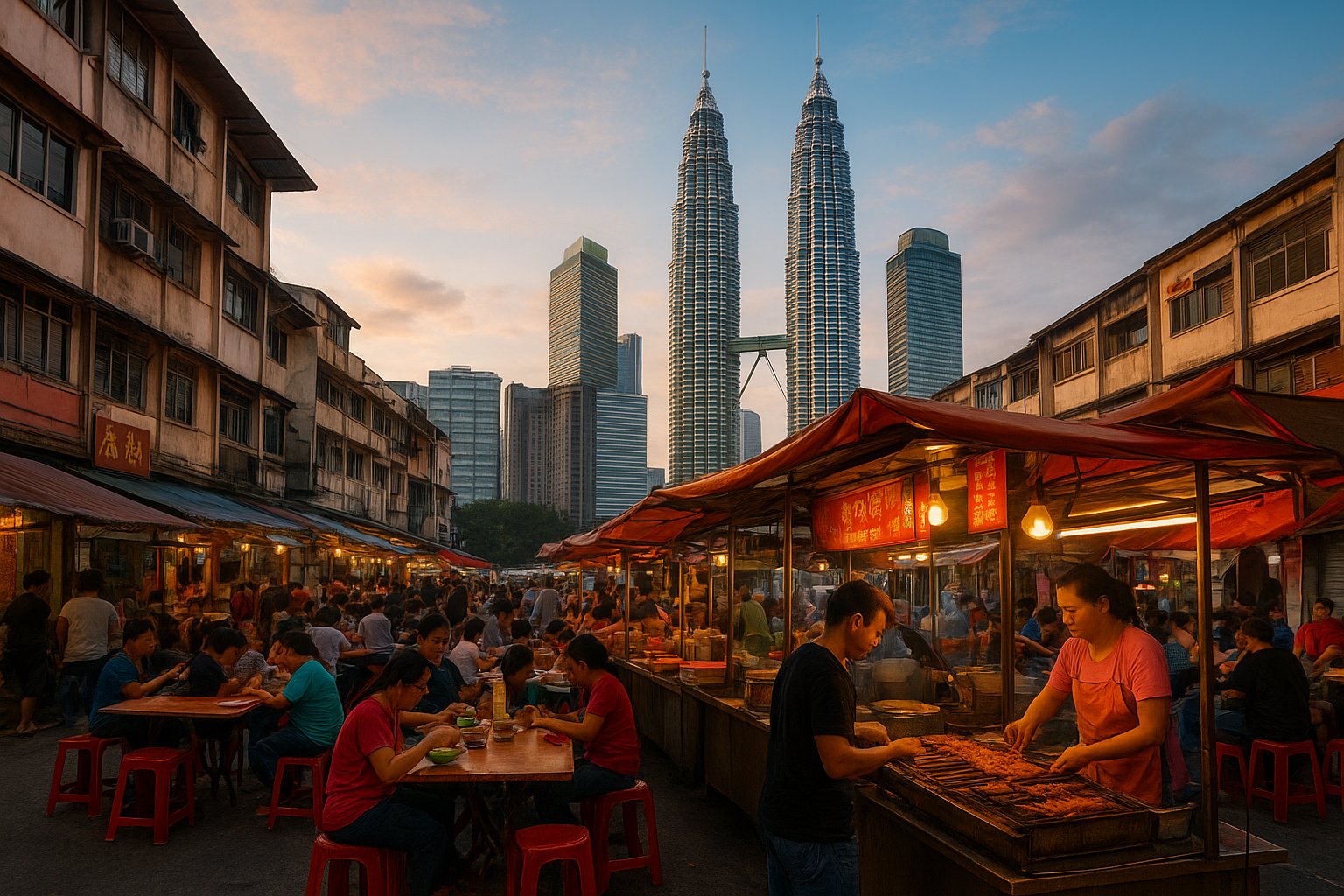
Kuala Lumpur is where most first-timers land, and it earns its place as a strong answer to what to do in Malaysia right from day one. The city packs iconic skyline landmarks, multicultural neighborhoods, and one of Southeast Asia's best street food scenes into a layout that lets you cover the highlights comfortably in two to three days.
What you'll do
Your time in KL will likely center on the Petronas Twin Towers, accessible via paid tickets to the skybridge and observation deck, or free to view from the KLCC Park below at any hour. Beyond the towers, Bukit Bintang serves as the food and nightlife core, while Chinatown's Jalan Petaling market runs every evening with cheap eats and local goods.
Set aside at least one evening for Jalan Alor, a Bukit Bintang street food strip where hawker stalls serve grilled seafood, satay, and fresh fruit drinks side by side.
Best time to go
KL sits on the west coast, so the driest and most comfortable period runs from November through February. Rain falls year-round, but outside the main wet season, showers are typically short afternoon bursts rather than all-day downpours.
How to get there
KLIA Ekspres connects the international airport to KL Sentral station in 28 minutes and costs around RM55 one way. From KL Sentral, the MRT and LRT networks reach most major attractions without needing a taxi or rideshare.
Tips for first-timers
Book Petronas Twin Towers skybridge tickets online before your trip, since same-day slots sell out fast, particularly on weekends. Wear light, breathable clothing year-round, as temperatures in KL average between 30 and 33 degrees Celsius regardless of season.
3. Batu Caves for an easy iconic half-day trip
Batu Caves sits just 13 kilometers north of Kuala Lumpur and ranks as one of the most visited sites in Malaysia. If you're thinking about what to do in Malaysia that delivers maximum visual impact with minimal travel effort, this is it. A massive Hindu temple complex built into a limestone hill, the site is immediately recognizable by the 43-meter golden statue of Lord Murugan standing at the base of the main staircase.
What you'll do
Your visit centers on climbing the 272 colorful steps up to Cathedral Cave, a large natural cavern housing several Hindu shrines. The climb takes around 10 to 15 minutes at a relaxed pace. At the top, you get wide views over the surrounding jungle and urban sprawl that make the ascent worth every step. Wild macaque monkeys roam freely throughout the site, so keep your belongings secure and avoid making direct eye contact with them.
Keep your food and water bottles zipped inside your bag before you reach the steps, as the monkeys here are bold enough to snatch items directly from your hands.
Best time to go
Arrive before 9 AM to beat the tour groups and the midday heat. Weekday mornings are significantly quieter than weekends and major Hindu festival dates.
How to get there
The KTM Komuter train from KL Sentral to Batu Caves station takes about 30 minutes and drops you directly at the cave entrance. Tickets cost around RM2 to RM4 each way, making this one of the cheapest day trips out of the city.
Tips for first-timers
Bring water and sunscreen, since the steps are fully exposed and the sun hits hard from mid-morning onward. Dress modestly, as Batu Caves is an active religious site with dress code expectations at the entrance.
4. Penang and George Town for food and street art
Penang sits off Malaysia's northwest coast and consistently ranks as one of the top answers to what to do in Malaysia for travelers who care about food, history, and culture. George Town, the island's UNESCO-listed capital, packs heritage shophouses, famous street murals, and some of the country's best hawker food into a walkable city core that rewards slow exploration.

What you'll do
Your time in George Town splits naturally between eating and exploring on foot. The famous Armenian Street murals by artist Ernest Zacharevic have become landmarks in their own right, and you can follow a self-guided mural trail that winds through the old quarter. Penang's hawker scene is serious, with Gurney Drive and New Lane standing out as two of the best evening food streets for char kway teow, assam laksa, and cendol.
Give yourself at least two full days in George Town to eat your way through the hawker scene without rushing.
Best time to go
The driest months on the island run from November through February, making this the most comfortable window for walking tours and outdoor food stalls. Crowds increase during Chinese New Year celebrations, so book accommodation early if your trip falls in that period.
How to get there
Penang International Airport receives direct flights from Kuala Lumpur in under an hour via AirAsia and Malaysia Airlines. From the airport, Grab rideshare reaches George Town in roughly 20 to 30 minutes depending on traffic.
Tips for first-timers
Bring comfortable walking shoes since the heritage district is best explored on foot. Carry small cash, as many hawker stalls do not accept cards.
5. Malacca for heritage streets and night markets
Malacca sits about two hours south of Kuala Lumpur and delivers one of the most concentrated experiences of Malaysian history you'll find anywhere on the peninsula. If you're mapping out what to do in Malaysia beyond the major cities, Malacca belongs on the list for its Portuguese, Dutch, and British colonial layers all stacked within a short walking radius.
What you'll do
Your visit centers on Jonker Street, a heritage strip lined with antique shops, cafes, and local snack vendors that transforms into a full night market every Friday through Sunday evening. During the day, you can walk through Christ Church, the Stadthuys, and A Famosa fortress ruins in under a couple of hours, then spend the rest of your time eating your way through Nyonya cuisine, a local hybrid of Chinese and Malay cooking that Malacca is famous for.
Do not skip cendol from the Jonker Street stalls since this version of the shaved ice dessert is considered one of the best in the country.
Best time to go
November through February offers the most comfortable weather for walking the heritage district. The Jonker Street Night Market runs regardless of season, but visit on a Friday or Saturday for the biggest crowds and widest food selection.
How to get there
Express buses from TBS (Terminal Bersepadu Selatan) in Kuala Lumpur reach Malacca Sentral in roughly two hours and cost around RM10 to RM15 each way. From Malacca Sentral, take a local bus or Grab into the city center.
Tips for first-timers
Malacca works best as a two-day overnight trip rather than a rushed day trip from KL. Book a guesthouse inside the heritage zone to walk Jonker Street after the tour groups leave in the evening.
6. Cameron Highlands for tea views and cool weather
Cameron Highlands sits at around 1,500 meters above sea level in Pahang state, making it one of the few places in Malaysia where you'll need a light jacket. If you're planning what to do in Malaysia that offers a genuine change of pace from the heat, this highland region delivers it with rolling tea plantations, strawberry farms, and temperatures that rarely climb above 25 degrees Celsius.
What you'll do
Your time here centers on visiting working tea plantations, with the BOH Tea Centre on the Sungai Palas estate being the most accessible option for first-timers. You can walk through the terraced fields, watch tea processing in action, and sit at the hillside cafe with a fresh cup while looking out over the plantation rows below.
Arrive at the BOH Tea Centre before 11 AM on weekdays to have the viewing deck mostly to yourself before the tour buses arrive.
Beyond tea, strawberry farms along the main roads let you pick your own fruit or buy fresh jam and desserts directly from the stalls.
Best time to go
Cameron Highlands stays cool and relatively dry from February through April and again from July through August. Avoid school holidays and long weekends when traffic on the single-lane mountain roads slows significantly.
How to get there
Express buses from KL's TBS terminal reach Tanah Rata, the main town, in around four hours. The journey costs roughly RM35 to RM45 one way, and most guesthouses are within walking distance of the Tanah Rata bus stop.
Tips for first-timers
Pack a light layer or a thin jacket since evenings drop noticeably. Comfortable shoes matter here since the plantation walkways involve uneven terrain.
7. Langkawi for beaches and the Sky Bridge
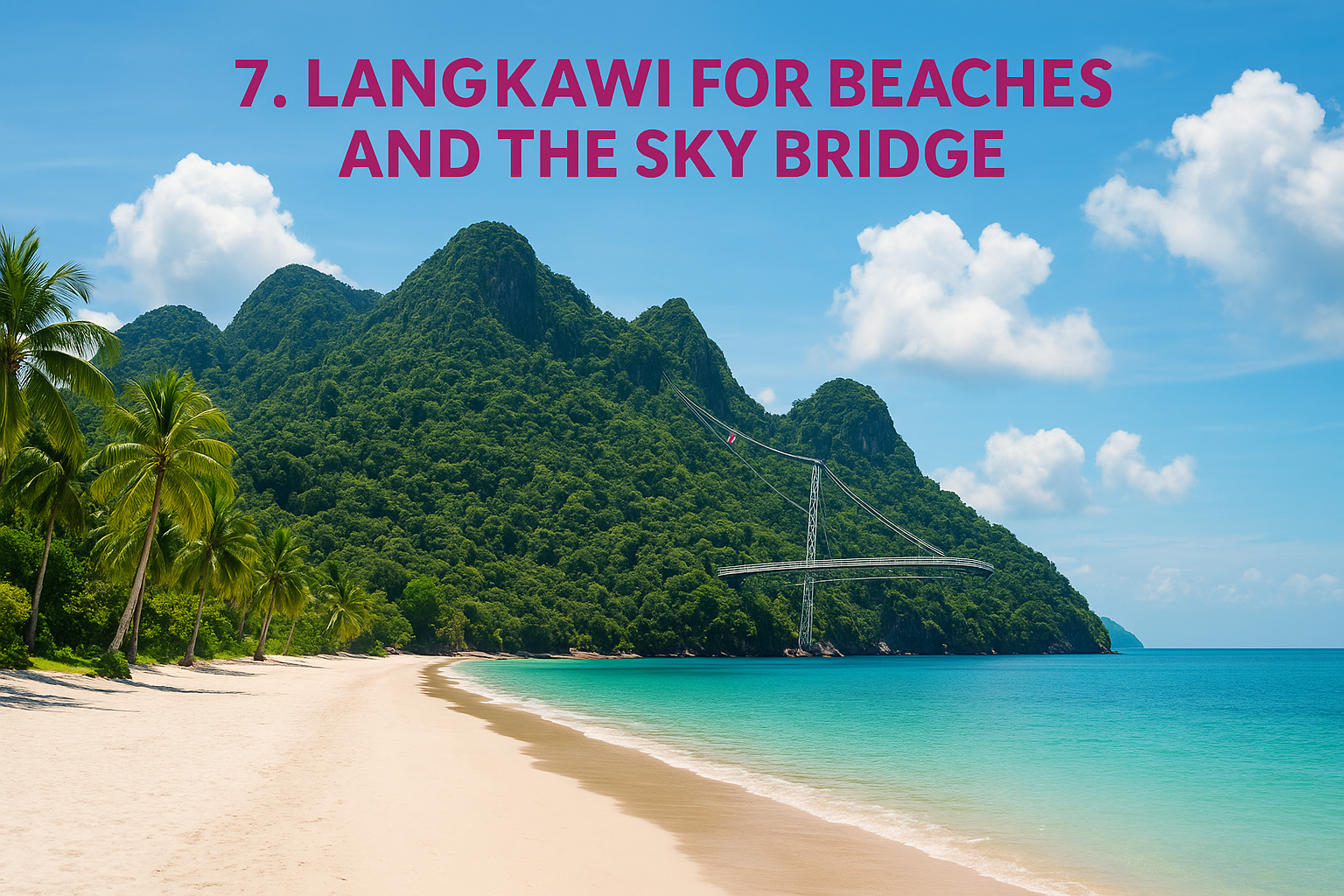
Langkawi is an archipelago of 99 islands off Malaysia's northwest coast, and it stands as one of the clearest answers to what to do in Malaysia if beaches and dramatic scenery are your priorities. The main island offers a mix of white sand beaches, duty-free shopping, and jungle-backed coastline that sets it apart from Malaysia's other island destinations.
What you'll do
Your time in Langkawi splits between beach days and getting up into the Machinchang mountain range via the Langkawi Cable Car. The cable car reaches 708 meters and deposits you at the Langkawi Sky Bridge, a curved pedestrian walkway suspended between two peaks with views that stretch out over the Andaman Sea and into southern Thailand on clear days.
Book your cable car tickets in advance since the Sky Bridge closes periodically for maintenance and slots sell out quickly during peak season.
Best time to go
November through April is the dry season on Langkawi's west coast, giving you the clearest skies and calmest waters for swimming and boat trips. The monsoon season runs from May through October, with heavy rain limiting outdoor activities significantly during those months.
How to get there
Direct flights from Kuala Lumpur reach Langkawi International Airport in under an hour. Both AirAsia and Malaysia Airlines serve this route multiple times daily, and fares stay competitive if you book a few weeks ahead.
Tips for first-timers
Rent a scooter or car on the island, as public transport is minimal and most beaches and attractions are spread across a wide area. Carry cash for smaller beach stalls since card acceptance is patchy outside the main hotels.
8. Perhentian Islands for snorkeling and diving
The Perhentian Islands sit off the northeastern coast of Peninsular Malaysia in Terengganu state, and they represent one of the best answers to what to do in Malaysia if underwater experiences are your priority. The archipelago consists of two main islands, Perhentian Besar and Perhentian Kecil, each with a distinct vibe but equally clear waters.
What you'll do
Your time here revolves around the water. Sea turtle sightings are common on the house reef directly off most beaches, and you can spot them without even joining a guided tour. Snorkeling around the coral gardens near Shark Point and Tokong Laut brings you face to face with black-tip reef sharks, juvenile nurse sharks, and dense schools of reef fish. Several dive operators on both islands offer PADI certification courses for beginners who want to go deeper.
The best snorkeling is accessible directly from the beach on Perhentian Kecil's Long Beach, so you do not need a boat to reach it.
Best time to go
The islands are only open from mid-March through October, as the northeast monsoon shuts everything down from November through February. The clearest visibility underwater comes in April and May before the summer crowds build up.
How to get there
Fly or take a bus to Kota Bharu or Kuala Terengganu, then connect by taxi to Kuala Besut jetty. Speedboats from the jetty reach the islands in roughly 45 minutes and cost around RM70 to RM80 return.
Tips for first-timers
Bring cash since ATMs do not exist on the islands. Pack reef-safe sunscreen to protect the coral during snorkeling and diving sessions.
9. Kuching for a low-key Borneo gateway city
Kuching is one of the most underrated stops for anyone figuring out what to do in Malaysia, and it works especially well as your first foothold into Borneo's Sarawak state. The city moves at a slower pace than Kuala Lumpur, the food scene punches well above its size, and it puts you within easy reach of some of the most rewarding nature experiences in the country.
What you'll do
Your time in Kuching centers on the Sarawak Waterfront, a riverside promenade lined with local food stalls, colonial architecture, and views across to the Astana, the official residence of Sarawak's governor. The Sarawak Museum complex is one of the best natural history and ethnographic museums in Southeast Asia, covering indigenous cultures and Borneo's biodiversity in genuine depth.
Walk the waterfront after sunset when the food stalls open and the river breeze makes the heat manageable.
Best time to go
March through October offers the driest conditions in Kuching, though the city receives rain year-round given its equatorial position. May and June tend to be particularly dry and are solid months for combining a city stay with day trips into the surrounding national parks.
How to get there
Malaysia Airlines and AirAsia both operate direct flights from Kuala Lumpur to Kuching International Airport, with flight times sitting around one hour and 45 minutes. The airport is roughly 12 kilometers from the city center, and Grab rideshare connects you to most hotels in under 20 minutes.
Tips for first-timers
Book at least two nights in Kuching before heading into the national parks, since you will want a day to sort park permits and supplies. Carry a portable rain jacket at all times given how quickly the weather shifts in Borneo.
10. Bako National Park for wild beaches and monkeys
Bako National Park sits just 37 kilometers northeast of Kuching and packs more biodiversity into a small area than almost anywhere else in Malaysia. If your list of what to do in Malaysia includes seeing wildlife in a genuinely wild setting, Bako delivers that without requiring a long expedition into the interior.
What you'll do
Your time in Bako centers on hiking the park's trail network and watching the wildlife that appears with almost no effort. Proboscis monkeys, a species found only in Borneo, gather along the mangrove edges near the park headquarters in the early morning and late afternoon. Silver leaf monkeys and long-tailed macaques roam the beach fringes throughout the day. The trails range from short coastal walks to longer jungle circuits, with Telok Pandan Kecil beach being one of the most photographed spots in the park.
Walk the Lintang Loop trail in the morning before the heat builds up, as this route passes through multiple vegetation zones and gives you the best chance of spotting wildlife actively moving through the canopy.
Best time to go
March through September offers the driest and most accessible conditions for Bako's trails, many of which become slippery and partially flooded during heavy rain. Early morning starts on any day significantly improve your wildlife sighting opportunities.
How to get there
Take a Grab or taxi from Kuching to Bako jetty at Kampung Bako, a 45-minute drive. From the jetty, a short boat ride of about 20 minutes brings you directly to the park headquarters. Day permits are purchased on arrival.
Tips for first-timers
Bring plenty of water and insect repellent since the trails have no shade vendors along the route. Keep food sealed inside your bag at all times, as the macaques at park headquarters are experienced opportunists.
11. Gunung Mulu National Park for caves and bats
Gunung Mulu National Park in Sarawak sits on any serious list of what to do in Malaysia if scale and natural drama are what you're after. This UNESCO World Heritage Site contains some of the largest cave systems on Earth, including Sarawak Chamber, the world's biggest natural cave chamber by floor area, a record that still stands today.
What you'll do
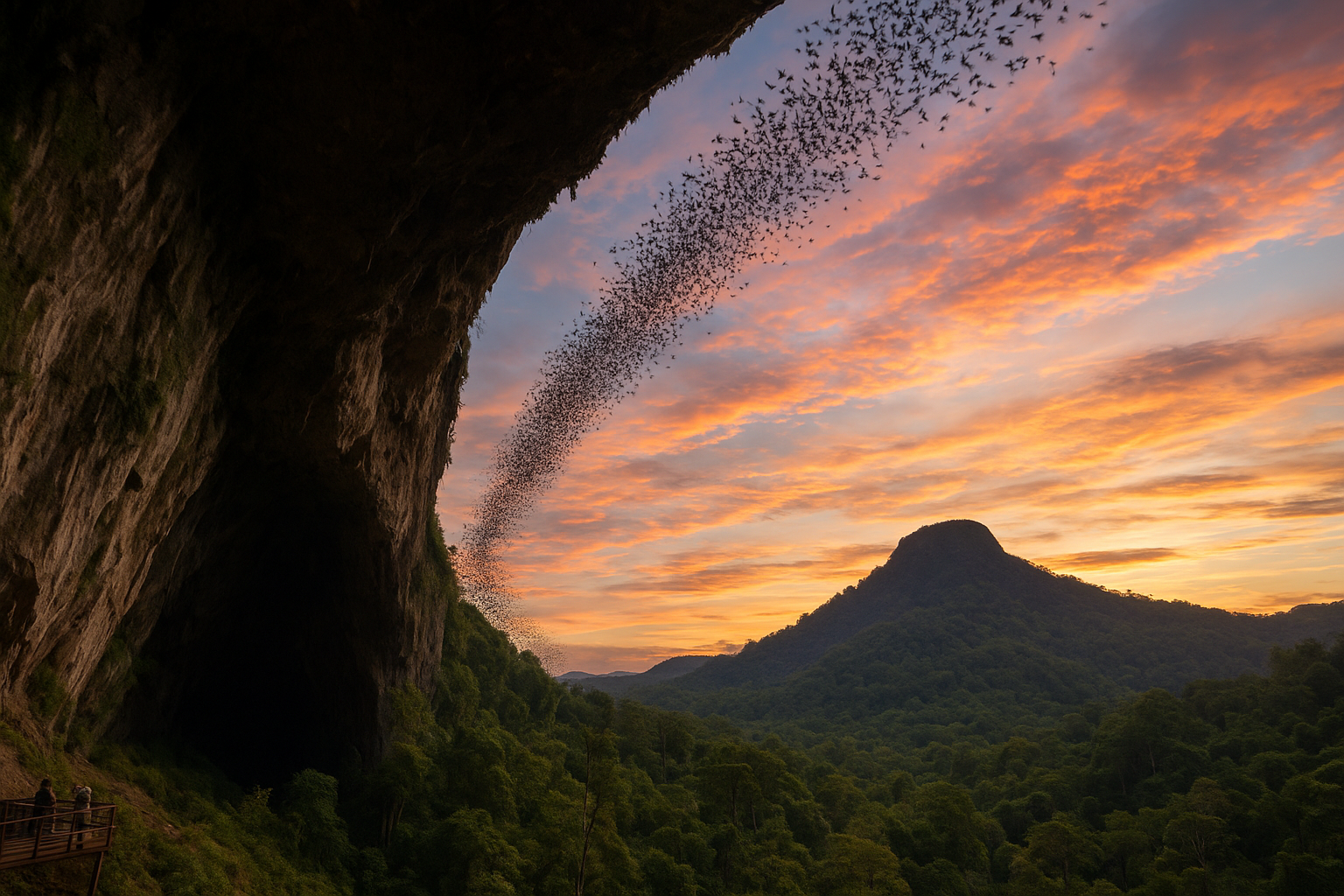
Your time in Mulu centers on guided cave tours through Deer Cave and Lang's Cave, both part of the accessible Show Caves trail. Deer Cave's entrance measures 174 meters wide and 122 meters high, making it one of the largest cave passages in the world. Every evening around sunset, millions of wrinkle-lipped free-tailed bats spiral out from the cave mouth in a column that stretches for kilometers, a spectacle that takes 20 to 40 minutes to pass completely.
Position yourself at the bat observatory platform at least 30 minutes before sunset to secure a clear sightline before the crowd builds.
Best time to go
March through October provides the driest and most accessible conditions for Mulu's cave trails and jungle boardwalks. Rain arrives year-round, but this window significantly reduces the chances of trail closures and slippery boardwalk sections that can limit access to outlying caves.
How to get there
MASwings operates direct flights into Mulu Airport from Miri, the nearest major hub, with a flight time under 45 minutes. Most visitors fly into Kota Kinabalu or Kuching first and connect onward through Miri.
Tips for first-timers
Book cave tours directly through the national park office since private tour arrangements are not permitted inside Mulu. Bring long-sleeved clothing for cave tours as temperatures inside drop noticeably compared to the jungle outside.
12. Kota Kinabalu as your Sabah launch pad
Kota Kinabalu, known locally as KK, serves as the capital of Sabah state on the northern tip of Borneo and functions as your main gateway to some of Malaysia's most dramatic natural landscapes. If you're building out what to do in Malaysia beyond the peninsula, KK is where your Borneo chapter begins in earnest.
What you'll do
Your time in KK splits between the city itself and the surrounding waters. The Kota Kinabalu City Mosque, built partially over a lagoon, is worth visiting during the cooler morning hours when the light reflects off the water around its base. For evenings, the Filipino Market and Centre Point night market serve fresh grilled seafood by the kilogram, making it one of the best value meals you will have anywhere in Sabah.
Arrive at the night market by 6 PM to pick your seafood from the freshest selection before the most popular items sell out.
Best time to go
March through September gives you the driest weather in Sabah, and this window aligns well with both city exploration and day trips to Tunku Abdul Rahman Marine Park, a cluster of five islands reachable by boat in under 30 minutes from the KK waterfront.
How to get there
Malaysia Airlines and AirAsia operate frequent direct flights from Kuala Lumpur to Kota Kinabalu International Airport, with flight times around two and a half hours. The airport sits roughly 8 kilometers from the city center.
Tips for first-timers
Use KK as a minimum two-night base before heading toward Mount Kinabalu or Sandakan. Confirm all national park permits and onward accommodation before leaving the city, as popular spots fill up quickly during peak season.
13. Mount Kinabalu for a sunrise summit challenge
Mount Kinabalu rises to 4,095 meters and stands as the highest peak in Southeast Asia outside of the Himalayas. For anyone serious about what to do in Malaysia that pushes physical limits and rewards you with something genuinely unforgettable, the Kinabalu summit trail is the benchmark experience in Sabah.
What you'll do
Your climb follows the Timpohon Trail, an 8.72-kilometer route from the trailhead at Timpohon Gate to Low's Peak at the summit. Most climbers complete the ascent over two days, resting at Laban Rata Resthouse at 3,272 meters before waking at 2 AM to reach the summit in time for sunrise. The final section crosses bare granite slabs using fixed guide ropes, and the view from the top on a clear morning stretches across Borneo's jungle canopy to the South China Sea.
Book your summit permit and Laban Rata accommodation at least three to four months in advance, as daily climber numbers are strictly capped by Sabah Parks.
Best time to go
March through September offers the best conditions on the mountain, with lower rainfall and better summit visibility. January and February see the highest rainfall and frequent cloud cover that blocks the sunrise views entirely.
How to get there
Take a direct bus or hire a car from Kota Kinabalu to Kinabalu Park headquarters in Kundasang, a journey of roughly two hours. All climbers must register and pay permit fees at the park office before starting the trail.
Tips for first-timers
Bring thermal layers and a waterproof jacket since temperatures at the summit drop below 5 degrees Celsius before dawn. Train your leg strength and cardio fitness for at least six weeks before attempting the climb.
14. Sandakan and Kinabatangan wildlife circuit
The Sandakan and Kinabatangan area in eastern Sabah is where Malaysia's wildlife credentials hit their peak. For anyone weighing what to do in Malaysia that involves genuine animal encounters in a wild river ecosystem, this circuit delivers proboscis monkeys, wild orangutans, pygmy elephants, and hundreds of bird species within a single stretch of river.
What you'll do
Your time here splits between Sandakan itself and the Kinabatangan River corridor about 150 kilometers to the southwest. Most travelers use Sandakan as a base to visit the Sepilok Orangutan Rehabilitation Centre, where semi-wild orangutans attend feeding platforms twice daily. From there, you head inland to a riverside lodge along the Lower Kinabatangan, where two-hour boat rides at dawn and dusk bring you within meters of proboscis monkeys and, with luck, herds of Borneo pygmy elephants drinking at the river's edge.
Book your Kinabatangan river lodge at least two months in advance since the best-positioned lodges operate with limited room numbers and fill up fast.
Best time to go
March through October gives you the most reliable conditions for wildlife spotting along the Kinabatangan. Water levels during this window keep boat access consistent across the river's oxbow lakes, which are the most productive areas for seeing the full range of species.
How to get there
AirAsia and MASwings fly directly into Sandakan Airport from Kota Kinabalu in under an hour. From Sandakan, arrange private transport or a tour pickup to your Kinabatangan lodge, as public bus options are limited and slow on this route.
Tips for first-timers
Pack long-sleeved shirts and insect repellent for every river cruise. Bring binoculars, as wildlife often sits in the tree canopy well above eye level.
15. Semporna and Sipadan for world-class diving
Semporna is a small coastal town in southeastern Sabah that serves as the departure point for Sipadan Island, consistently ranked among the top five dive sites on the planet. If the last item on your list of what to do in Malaysia involves the ocean, this is where the country saves its best for the end.
What you'll do
Your experience here revolves almost entirely around diving the waters surrounding Sipadan Island. The island sits on a volcanic pinnacle that drops 600 meters straight down into the Celebes Sea, creating a wall dive unlike anything most divers encounter anywhere else. You will share the water with schools of barracuda, bumphead parrotfish, and resident hammerhead sharks that patrol the deeper sections of the wall in the early mornings.
Sipadan dive permits are capped at 120 per day across all operators, so your permit must be secured weeks or months before your trip, not on arrival.
Best time to go
April through December offers the best diving visibility around Sipadan, with underwater sightlines regularly reaching 20 to 30 meters during the calmest months. January through March brings rougher surface conditions and reduced water clarity.
How to get there
Fly into Tawau Airport from Kota Kinabalu on MASwings, a flight that takes under an hour. From Tawau, a 90-minute transfer by road reaches Semporna town, where all licensed dive operators are based.
Tips for first-timers
You need a minimum Open Water certification to dive Sipadan. Book your resort and permit package together, as most licensed operators bundle both into a single reservation.
Quick planning checklist
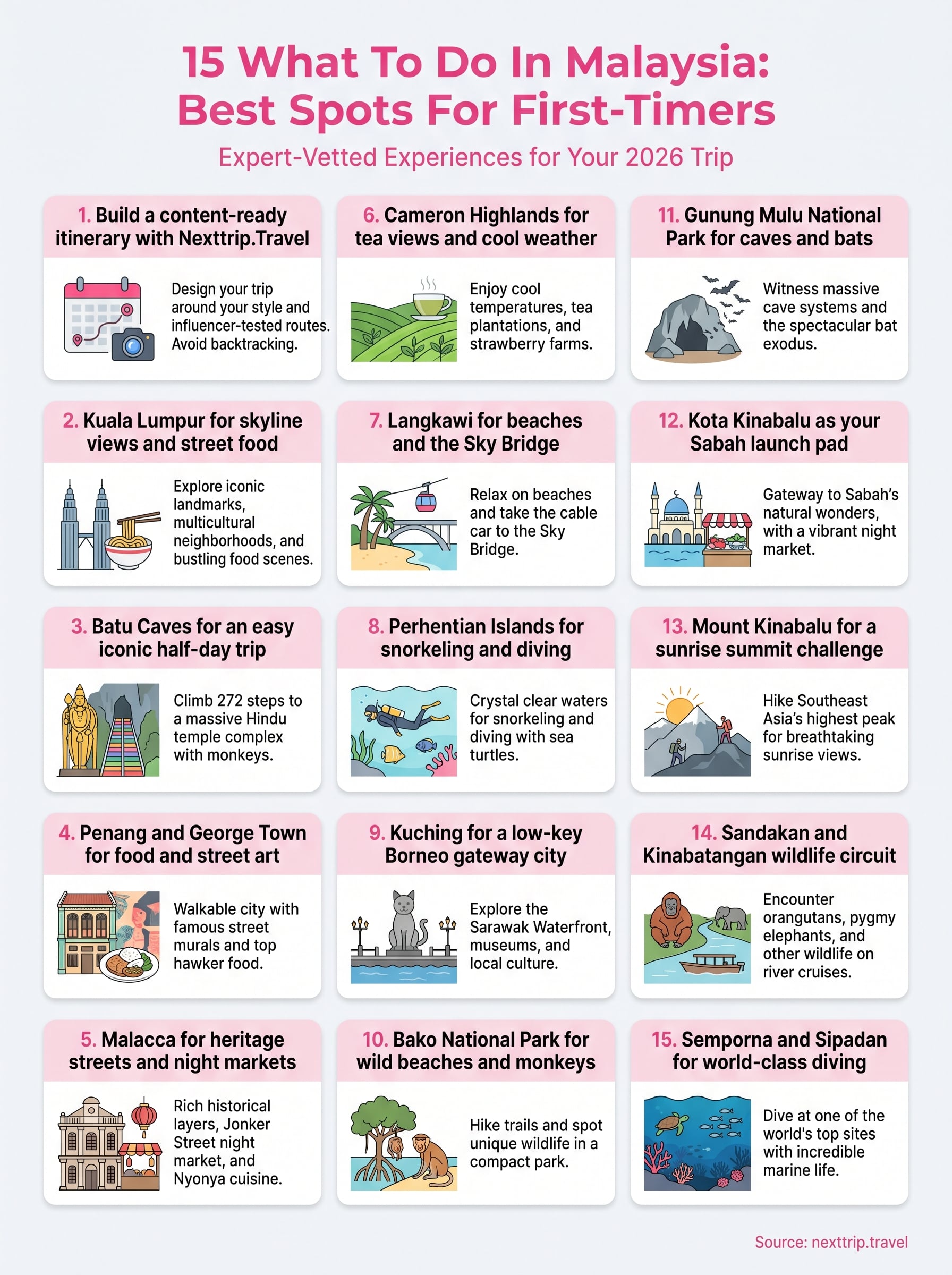
Figuring out what to do in Malaysia gets much simpler once you have the essentials locked in before your trip. Book your Petronas Twin Towers tickets, Kinabalu summit permits, and Sipadan dive permits well ahead of your travel dates since all three sell out fast and none offer walk-up availability. Check the regional weather windows for every destination on your list, because Malaysia's east and west coasts follow different seasonal patterns that affect your entire routing strategy.
Pack light, breathable clothing for the cities and coast, and add one thin layer for Cameron Highlands or any early morning summit attempts. Carry cash for hawker markets, island destinations, and smaller towns where card terminals are unreliable. Give yourself at least two weeks to cover the peninsula and Borneo without feeling rushed.
Ready to pull this into a real itinerary? Plan your Malaysia trip with Nexttrip.Travel and skip the guesswork entirely.