

Kuala Lumpur spreads across dozens of neighborhoods, each with its own personality, and picking the wrong one can turn a great trip into a frustrating one. Figuring out where to stay in Kuala Lumpur matters more than most travelers realize, because the city's layout means your neighborhood choice directly affects what you'll see, eat, and how easily you'll get around. A spot near the Petronas Twin Towers feels completely different from a boutique guesthouse in Chinatown, and both are worlds apart from the leafy calm of Bangsar.
We put this guide together based on real, on-the-ground knowledge of KL's neighborhoods, the kind of local insight that drives every itinerary we build at Nexttrip.Travel. Whether you're a first-timer trying to stay central, a family looking for space and convenience, or a solo traveler chasing street food and street art, the right area makes all the difference.
Below, you'll find 9 of the best areas to stay in Kuala Lumpur, broken down by travel style, budget, and proximity to the city's major attractions. Each section includes specific hotel picks so you can stop scrolling through endless booking pages and start making actual decisions. Let's get into it.
1. Bukit Bintang
Bukit Bintang is Kuala Lumpur's most recognizable neighborhood, and for good reason. The name translates to "Hill of Stars," and the area delivers on that with a dense mix of shopping malls, restaurants, rooftop bars, and street food stalls that keep the streets buzzing well past midnight. If you're figuring out where to stay in Kuala Lumpur and want to be close to everything without much planning, Bukit Bintang is the obvious starting point.
What it's like
Walking through Bukit Bintang means stepping into one of Southeast Asia's most energetic commercial districts. Jalan Bukit Bintang is the main artery, lined with mega-malls like Pavilion KL and Lot 10 on one side and the famous Jalan Alor street food strip just a short walk away. Daytime brings shoppers and café-hoppers, while nighttime shifts to hawker stalls, cocktail rooftops, and the animated bar street of Changkat Bukit Bintang.
Best for
Bukit Bintang works best for first-time visitors to KL who want to land in a place where everything is within reach. It's also a strong pick for solo travelers and couples who prioritize walkability and variety over quiet or a residential feel.
Biggest pros
The biggest advantage here is sheer convenience. You can walk to multiple shopping centers, dozens of restaurants spanning every cuisine, and two transit stations. Food options alone make it worthwhile: Jalan Alor delivers some of the best late-night hawker food in the city, and the surrounding streets cover everything from roti canai stalls to high-end rooftop dining.
Bukit Bintang puts more of Kuala Lumpur within walking distance than almost any other neighborhood, which saves you real time and money over the course of a trip.
Trade-offs to know
Bukit Bintang is loud, crowded, and rarely calm. Traffic on the main roads is heavy throughout the day, and the area draws large tourist crowds, which pushes prices for food and accommodation higher than in neighboring districts. Some streets, particularly around Changkat Bukit Bintang, stay noisy late into the night, so light sleepers should look for hotels with solid soundproofing or choose a property set back from the main road.
Getting around from here
Getting around from Bukit Bintang is straightforward. The Bukit Bintang MRT station connects you to the Putrajaya line, and the Bukit Bintang monorail stop sits nearby on the KL Monorail line. From either station, you can reach KLCC, KL Sentral, and Chinatown without hailing a single cab. Grab, the region's dominant ride-hailing app, is also widely used here and costs very little for short trips across the city.
Hotel picks for every budget
Bukit Bintang covers a wide price range, from no-frills guesthouses to five-star towers.
| Budget Level | Hotel | What to Know |
|---|---|---|
| Budget | Tune Hotel Bukit Bintang | Compact, clean, and well-located |
| Mid-range | Berjaya Times Square Hotel | Direct connection to Times Square mall |
| Luxury | Pavilion Hotel Kuala Lumpur | Skybridge access straight into Pavilion KL |
| Luxury | The Ritz-Carlton Kuala Lumpur | Iconic property with exceptional service |
The Ritz-Carlton and Pavilion Hotel sit at the top of the market and consistently receive strong reviews for rooms, service, and location. For mid-range travelers, Berjaya Times Square Hotel is hard to beat given its direct mall connection and competitive rates.
Best things to do nearby
Bukit Bintang keeps you occupied without leaving the neighborhood.
- Jalan Alor: KL's most famous street food strip, best visited after 6 PM
- Pavilion KL: A flagship mall with local and international brands across multiple floors
- Changkat Bukit Bintang: The city's main strip for bars, live music, and restaurants
- Lot 10 and Fahrenheit 88: Back-to-back malls covering fast fashion, electronics, and local food courts
- KL Forest Eco Park: A short walk away, this small urban rainforest offers a genuine contrast to the commercial energy all around it
2. KLCC
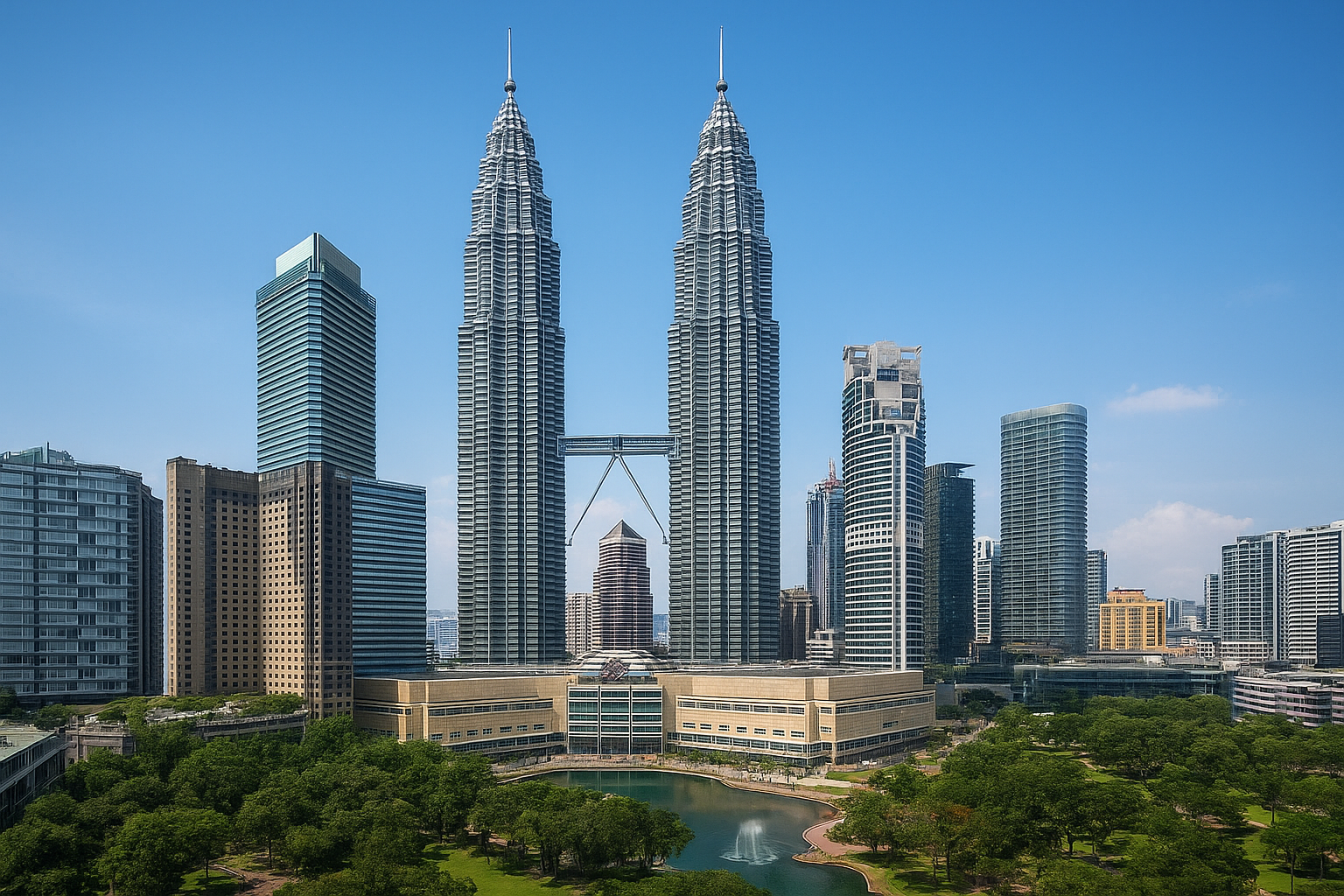
KLCC stands for Kuala Lumpur City Centre, and it organizes itself around one of the world's most photographed landmarks: the Petronas Twin Towers. This neighborhood carries a more polished, upscale feel compared to Bukit Bintang, with wide boulevards, gleaming towers, and a purpose-built park at its center. If you want to wake up with those towers visible from your window, this is where to stay in Kuala Lumpur.
What it's like
KLCC feels ordered and international in a way that few other KL neighborhoods do. Suria KLCC, the mall at the base of the towers, anchors the area alongside several five-star hotels, corporate offices, and embassies. The KLCC Park provides a calm, green space right in the middle of it all, making the area feel less chaotic than Bukit Bintang despite similar visitor numbers.
Best for
KLCC suits business travelers and luxury seekers who prioritize a prestigious address and seamless hotel services. It also works well for first-timers who specifically want that Petronas Towers experience without compromise.
Biggest pros
The biggest draw is proximity to the towers themselves. You can walk to the observation deck, the park, and Suria KLCC in minutes. The area also sits close to Bukit Bintang, so you get the relative calm of KLCC with easy access to the dining and nightlife of its neighbor.
Staying in KLCC puts you inside one of KL's most iconic vistas, which makes a genuine difference to how the city feels during your trip.
Trade-offs to know
KLCC runs expensive across the board, from hotels to restaurants to taxis. Street food is harder to find here compared to Bukit Bintang or Chinatown, and the neighborhood can feel more like a business district than a lived-in part of the city once the crowds thin out after dark.
Getting around from here
The KLCC LRT station connects directly to the Kelana Jaya line, giving you quick access to most major parts of the city. Grab is widely available here, and the walk to Bukit Bintang takes about 15 to 20 minutes on foot through a covered pedestrian walkway.
Hotel picks for every budget
KLCC skews heavily toward the mid and luxury tiers, so budget options are limited here compared to other neighborhoods.
| Budget Level | Hotel | What to Know |
|---|---|---|
| Mid-range | Impiana KLCC Hotel | Direct tower views at competitive rates |
| Luxury | Mandarin Oriental Kuala Lumpur | Faces KLCC Park with exceptional dining |
| Luxury | Traders Hotel | Pool deck with unobstructed tower views |
Best things to do nearby
The area rewards you with a tight cluster of experiences within easy walking distance.
- Petronas Twin Towers: Book observation deck tickets in advance to avoid long queues
- KLCC Park: Free entry, evening fountain shows, and a well-maintained jogging path
- Suria KLCC: Six floors of retail and a solid food court on the lower level
- Aquaria KLCC: An underwater tunnel aquarium that works well for families
3. Chinatown
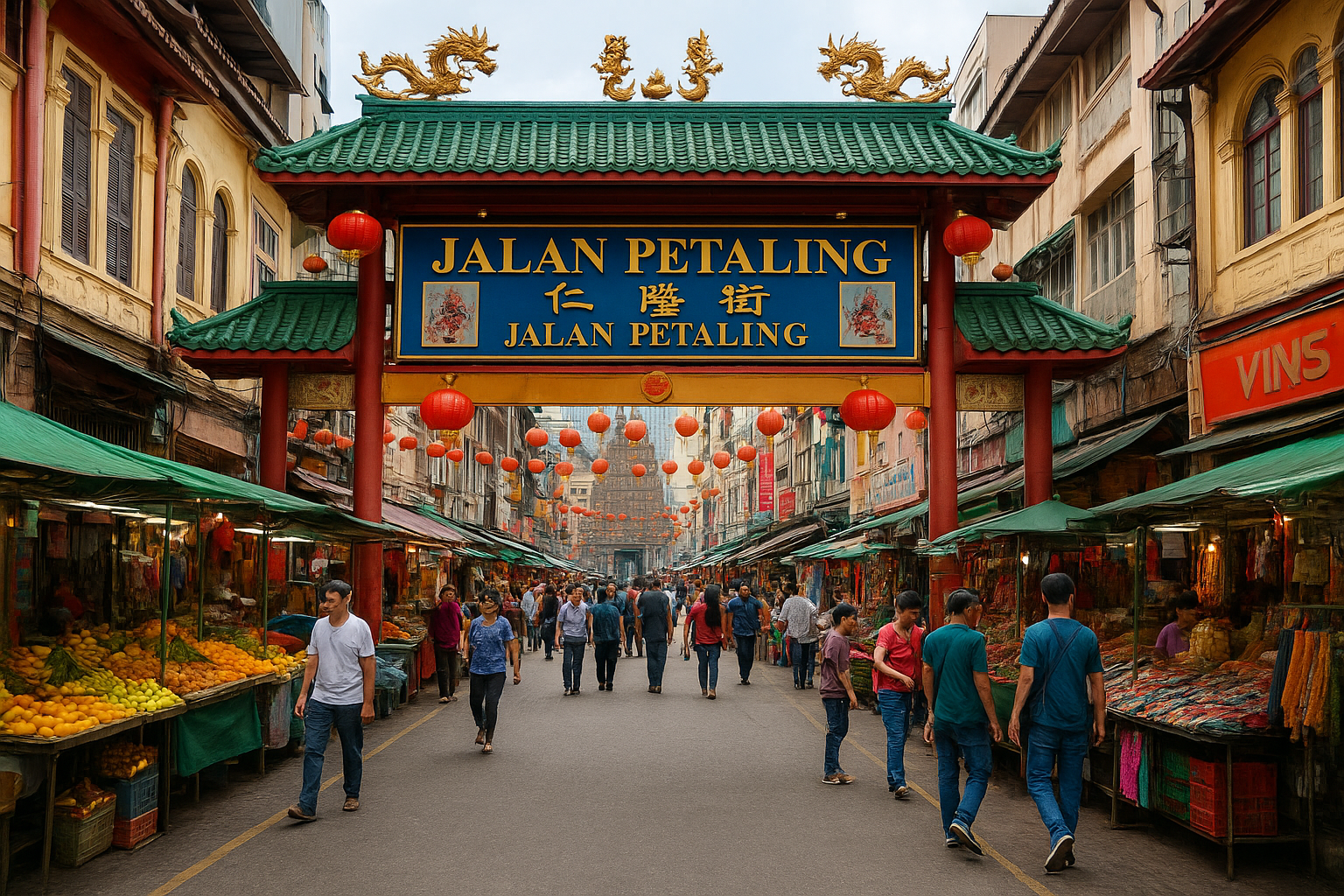
Kuala Lumpur's Chinatown, centered on Jalan Petaling, is one of the oldest and most atmospheric parts of the city. The area packs a tight grid of heritage shophouses, wet markets, and temple courtyards into just a few walkable blocks, giving it a texture that newer neighborhoods simply don't have. If you're deciding where to stay in Kuala Lumpur and want a base with real character, Chinatown makes a strong case.
What it's like
Chinatown moves fast from early morning to late night. Vendors set up along Jalan Petaling before sunrise, and the covered market fills with stalls selling everything from fresh produce to knockoff goods throughout the day. By evening, the Sri Mahamariamman Temple and Chan See Shu Yuen Temple draw visitors, while nearby coffee shops and hawker stalls fill up with both locals and travelers.
Best for
Chinatown suits budget travelers and cultural explorers who want to spend more time in the streets than in the malls. It's also a smart pick for solo travelers who prefer guesthouses with communal spaces and easy access to cheap, excellent food.
Biggest pros
The food is the headline here. Bak kut teh, char kway teow, and roast duck rice are all within a short walk from most accommodations, and prices stay well below what you'd pay in KLCC or Bukit Bintang. The high concentration of budget guesthouses and boutique hostels also means you can spend less on accommodation and more on experiences.
Chinatown gives you more authentic daily life per square meter than almost anywhere else in KL, which is genuinely hard to replicate from a hotel tower in the city center.
Trade-offs to know
The area gets crowded and noisy, particularly on weekends when Jalan Petaling draws large numbers of visitors. Some streets smell strongly of open drains, and accommodation quality varies widely, so reading recent reviews before booking matters here more than in other neighborhoods.
Getting around from here
Pasar Seni LRT station sits right at the edge of Chinatown and connects to the Kelana Jaya line. The station also serves as a hub for several bus routes. Grab works reliably throughout the area, and KL Sentral is only a few minutes away by car.
Hotel picks for every budget
| Budget Level | Hotel | What to Know |
|---|---|---|
| Budget | Mingle Hostel | Social atmosphere with clean dorms |
| Mid-range | The Kuala Lumpur Journal | Boutique design in a converted heritage building |
| Mid-range | Chinatown Boutique Hotel | Central location with easy market access |
Best things to do nearby
- Jalan Petaling Night Market: Best visited after 6 PM when the full stall lineup is running
- Chan See Shu Yuen Temple: A beautifully maintained clan temple from the early 1900s
- Central Market: A converted wet market now selling local crafts, batik, and art
- Sri Mahamariamman Temple: One of the oldest Hindu temples in KL, just steps from the market strip
4. KL Sentral and Lake Gardens
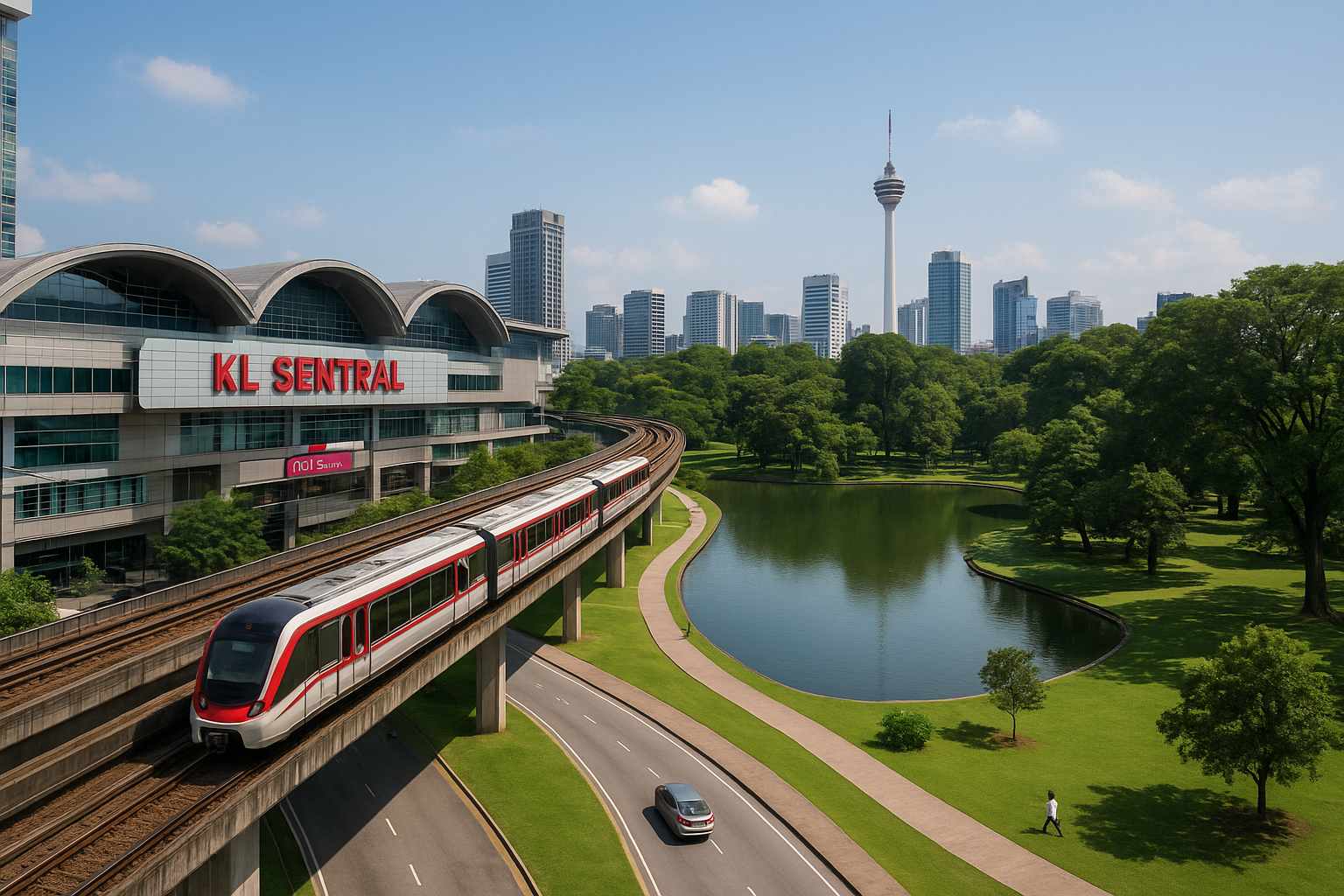
KL Sentral sits at the heart of Kuala Lumpur's entire transportation network, and the Lake Gardens district stretches alongside it with enough green space to give the area a noticeably different pace. Staying here means choosing a practical, well-connected base over the commercial energy of Bukit Bintang or KLCC. For travelers who prioritize smooth arrivals and easy transit access, this combination consistently delivers.
What it's like
KL Sentral itself is built around the city's main rail interchange, so the immediate surroundings feel functional rather than atmospheric. The NU Sentral mall provides convenient dining and retail within the complex, and several hotels connect directly to the station building. A short Grab ride or walk away, Lake Gardens spreads across 173 acres and holds the KL Bird Park, the National Museum, and the Islamic Arts Museum within its grounds.
Best for
This area works well for transit-focused travelers who fly into KLIA or KLIA2 and want to reach their hotel without navigating unfamiliar streets after a long flight. Families and visitors who prefer parks and museums over shopping strips also find this a comfortable fit.
Biggest pros
The direct ERL connection to both KLIA and KLIA2 stands out as the area's clearest advantage. You step off the airport express and walk straight into your accommodation, which removes a significant chunk of arrival stress. Nightly room rates also run noticeably lower here than in KLCC or Bukit Bintang, and the access to Lake Gardens gives you a genuine outdoor option that most central neighborhoods lack.
KL Sentral's airport rail link makes it the most practical arrival point in the city, which alone can justify choosing this area over a more central address.
Trade-offs to know
The streets around KL Sentral lack the food culture and street-level energy of Chinatown or Bukit Bintang. Dining options within walking distance are limited, and you'll likely take the train or Grab to reach most of KL's better restaurants. Lake Gardens also closes to visitors after dark, which narrows evening options in that direction considerably.
Getting around from here
KL Sentral connects to five rail lines, including the KTM Komuter, the LRT Kelana Jaya line, the KL Monorail, and the ERL airport express. Most major neighborhoods sit within 15 to 20 minutes by rail, and Grab operates reliably outside the main station entrance throughout the day and night.
Hotel picks for every budget
| Budget Level | Hotel | What to Know |
|---|---|---|
| Budget | Tune Hotel KL Sentral | Clean rooms with direct mall-level access |
| Mid-range | Aloft Kuala Lumpur Sentral | Connected to the transit hub with modern design |
| Luxury | St. Regis Kuala Lumpur | Close to Lake Gardens with high-end amenities |
Best things to do nearby
Staying in this part of where to stay in Kuala Lumpur gives you quick access to some genuinely underrated attractions.
- KL Bird Park: One of the largest free-flight aviaries in the world, well worth a morning visit
- National Museum of Malaysia: A solid introduction to the country's cultural and historical timeline
- Perdana Botanical Gardens: Open lawns and shaded walkways suited to an early morning outing
- Islamic Arts Museum Malaysia: One of the best museums in Southeast Asia, with a collection that covers architecture, textiles, and calligraphy
5. KL Tower and Bukit Nanas
KL Tower and the Bukit Nanas area occupy a forested hill right in the middle of Kuala Lumpur, and the neighborhood around it feels markedly quieter and more residential than the surrounding commercial districts. It sits between Bukit Bintang and KLCC without fully belonging to either, which gives it an underappreciated in-between quality that suits certain travelers well.
What it's like
Bukit Nanas means "Pineapple Hill," and the forested reserve at its center is one of the last patches of original urban jungle in KL. The streets around the base of the hill are lined with older buildings, small cafes, and a handful of embassies. KL Tower itself dominates the skyline from this side of the city, and the surrounding area stays noticeably calmer than the commercial strips nearby.
Best for
This area works well for travelers who want central access without the noise and crowds of Bukit Bintang. It suits those who plan to split their time between KLCC and Bukit Bintang and want to stay somewhere in the middle, particularly couples and solo travelers looking for a quieter base.
Biggest pros
The central location is the core advantage here. You sit within walking distance of both Bukit Bintang and KLCC, which covers the majority of KL's major attractions without committing to the busiest streets of either district. Accommodation prices also run slightly lower than in KLCC despite the comparable convenience.
Staying near Bukit Nanas gives you an unusually calm base while keeping the busiest parts of the city just minutes away on foot or by train.
Trade-offs to know
The immediate neighborhood has limited street-level dining and retail compared to Bukit Bintang or Chinatown. You will likely walk or take Grab to find most meals, and the area lacks the spontaneous night-market energy that makes other KL neighborhoods feel alive after dark. Some streets on the hill feel isolated once foot traffic drops.
Getting around from here
Dang Wangi LRT station on the Kelana Jaya line sits at the base of the hill and connects you directly to KLCC and KL Sentral. Bukit Bintang is reachable on foot in roughly 15 minutes, and Grab pickups are quick and reliable throughout the area.
Hotel picks for every budget
| Budget Level | Hotel | What to Know |
|---|---|---|
| Mid-range | Royale Chulan Bukit Bintang | Short walk to both KLCC and Bukit Bintang |
| Luxury | The Ascott Star KLCC | Serviced residences with full kitchen facilities |
Best things to do nearby
- KL Tower Observation Deck: Offers a different vantage point from the Petronas Towers and is worth comparing
- Bukit Nanas Forest Reserve: A short trail through protected jungle right in the city center, free to enter
- Jalan P. Ramlee: A compact strip of bars and restaurants within easy walking distance
- Bukit Bintang strip: Close enough to walk to when you want the full commercial experience of where to stay in Kuala Lumpur's busiest shopping district
6. Chow Kit and Kampung Baru
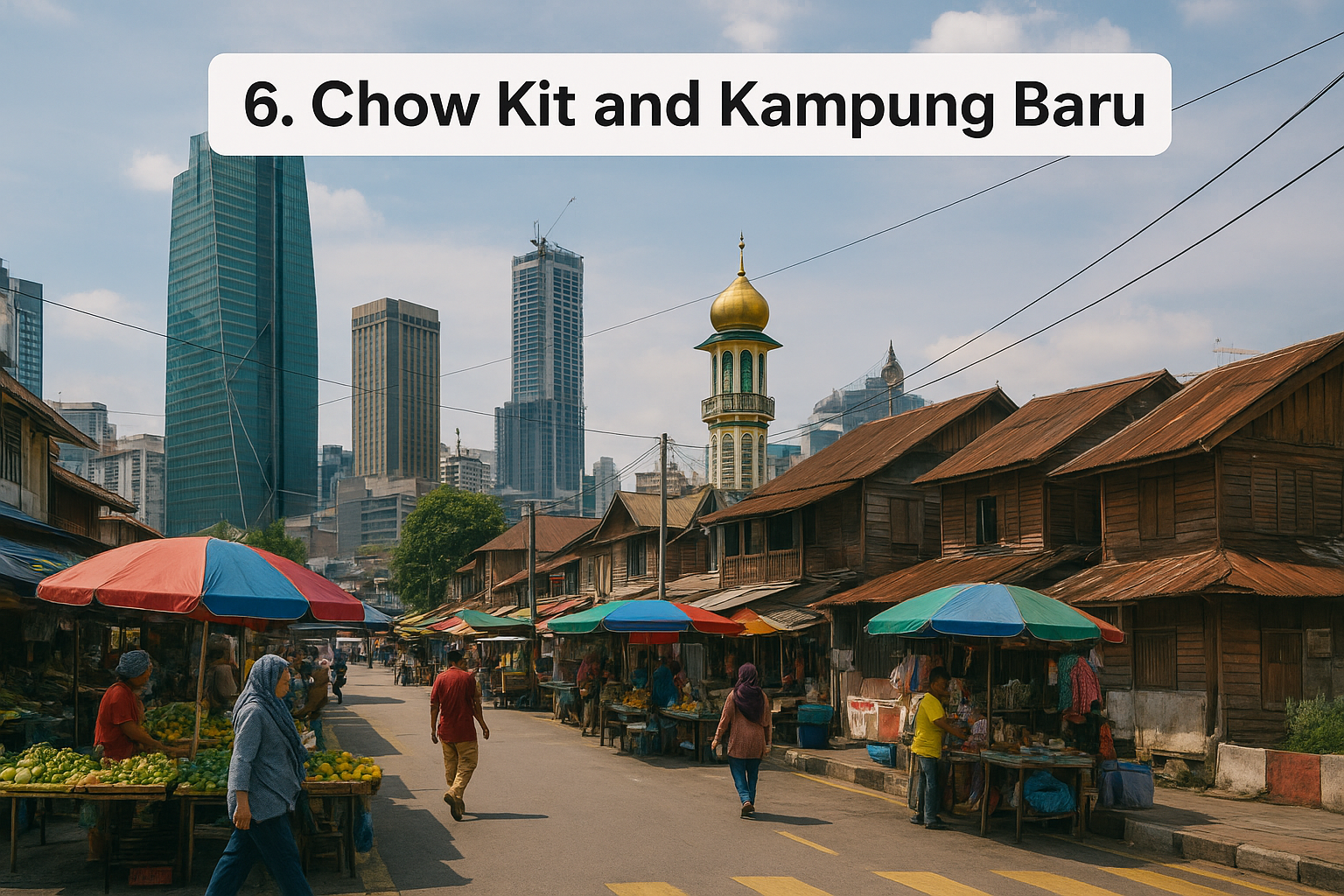
Chow Kit and Kampung Baru sit north of the city center, and together they form one of the most authentically Malay corners of Kuala Lumpur. If you're working through where to stay in Kuala Lumpur and want a base with real local character, these two neighborhoods offer something that most tourist-facing districts simply don't.
What it's like
Chow Kit is a working-class commercial district built around a large wet market that has operated for decades without much change. The streets are loud, busy, and unpolished in a way that feels entirely genuine. Kampung Baru sits adjacent and carries a distinct village atmosphere, with traditional wooden houses, small mosques, and roadside stalls that have changed little in character over the years.
Best for
This area suits cultural travelers and repeat visitors to KL who already know the standard tourist circuit and want something more grounded. Solo travelers and budget-conscious explorers who prefer eating where locals eat will find both neighborhoods genuinely rewarding.
Biggest pros
The food scene here is the real draw. Nasi lemak, roti canai, and satay are all available at prices that reflect what locals actually pay rather than the inflated rates common near Bukit Bintang and KLCC. Accommodation costs also run significantly lower than in the city's main tourist corridors, which gives you room to stretch the rest of your budget considerably further.
If authentic street food and a local daily rhythm matter more to you than a polished location, Chow Kit and Kampung Baru deliver better value per night than most central neighborhoods.
Trade-offs to know
Safety perception is a common concern with Chow Kit, and while the area is generally manageable during daylight hours, some streets feel uncomfortable after dark. Accommodation options are more limited compared to other neighborhoods, and the area lacks the dense transit connections that make places like KL Sentral or Bukit Bintang so easy to navigate from.
Getting around from here
Chow Kit monorail station on the KL Monorail line puts the rest of the city within reach, and Grab operates reliably throughout both neighborhoods. Reaching Bukit Bintang or KLCC takes roughly 10 to 15 minutes by car, which keeps the area practical as a base despite sitting outside the tourist core.
Hotel picks for every budget
| Budget Level | Hotel | What to Know |
|---|---|---|
| Budget | My Hotel Chow Kit | Basic rooms at very competitive nightly rates |
| Mid-range | The Chow Kit Hotel | Stylish boutique property with a rooftop bar |
Best things to do nearby
- Chow Kit Wet Market: One of the most atmospheric food markets in KL, best visited before 9 AM when stalls are fully stocked
- Kampung Baru Sunday Market: A weekly street market centered on Malay food and local goods
- Jalan Tuanku Abdul Halim: A tree-lined boulevard connecting the neighborhood to the broader city center
7. Bangsar
Bangsar sits about four kilometers south of the city center and has developed into one of KL's most well-regarded residential and dining neighborhoods. The area attracts a mix of expats, young professionals, and well-traveled locals, which gives it a noticeably cosmopolitan feel without the tourist-heavy atmosphere of Bukit Bintang or KLCC. If you're weighing where to stay in Kuala Lumpur and want a neighborhood that feels genuinely lived-in, Bangsar makes a compelling case.
What it's like
The neighborhood revolves around two main commercial strips: Jalan Telawi and Bangsar Village. Independent cafes, wine bars, and upmarket restaurants fill the streets between low-rise shophouses and newer developments. The pace runs noticeably slower than in the city center, and the mix of boutique shops, weekend brunch spots, and evening dining options gives the area a relaxed but engaged daily rhythm.
Best for
Bangsar works well for couples, slow travelers, and those who prioritize food and nightlife over proximity to tourist landmarks. It also suits repeat visitors to KL who want a break from the commercial intensity of central neighborhoods.
Biggest pros
The dining scene here consistently outperforms most other KL neighborhoods on quality and variety. Bangsar's restaurant density along Jalan Telawi covers everything from casual Malaysian fare to well-executed international kitchens, and the coffee culture is strong throughout. Accommodation also tends to run slightly cheaper than KLCC while still offering a comfortable standard of room and service.
Bangsar's combination of walkable streets, strong food options, and genuine residential character makes it one of the most rewarding neighborhoods to actually live in during a KL trip.
Trade-offs to know
Reaching the main tourist attractions from Bangsar requires a Grab ride or an LRT trip, since the neighborhood sits outside the walkable tourist core. Traffic around Jalan Telawi runs heavy during weekend evenings, and some accommodations feel cut off from the rest of the city without reliable transport options close by.
Getting around from here
Bangsar LRT station on the Kelana Jaya line connects you to KL Sentral in roughly five minutes, which opens up the rest of the city quickly from there. Grab is widely available throughout the neighborhood, and fares into Bukit Bintang or KLCC typically stay low given the short distances involved.
Hotel picks for every budget
| Budget Level | Hotel | What to Know |
|---|---|---|
| Mid-range | Pullman Bangsar | Polished rooms with easy LRT access |
| Luxury | Banyan Tree Kuala Lumpur | Rooftop pool with wide skyline views |
Best things to do nearby
- Bangsar Village and Bangsar Shopping Centre: Two connected malls with a strong selection of local boutiques and dining options that cater to the neighborhood's regular crowd
- Jalan Telawi: The main dining and bar street, best explored on a weekday evening when it's lively but not overwhelmed
- Taman Tun Dr Ismail (TTDI) Market: A short Grab ride away, this Sunday morning market draws a strong local crowd and offers some of the best casual food in this part of the city
8. Mont Kiara
Mont Kiara sits about eight kilometers northwest of the city center and has built a reputation as KL's primary expat enclave. The neighborhood is heavily residential, with high-rise condominiums, international schools, and a concentrated cluster of restaurants catering to a long-term international crowd. If you're researching where to stay in Kuala Lumpur and want a quiet, well-resourced base away from tourist corridors, Mont Kiara offers a genuinely different experience.
What it's like
The neighborhood feels polished and unhurried in equal measure. Streets are wider and less congested than in the city center, and the commercial strips around Solaris Mont Kiara and 1 Mont Kiara mall carry a relaxed, neighborhood-café feel. You'll find Japanese restaurants, Korean BBQ spots, and Western brunch cafes sitting alongside local kopitiams, which directly reflects the international makeup of the area's resident population.
Best for
Mont Kiara suits long-stay travelers and families who plan to spend extended time in KL and want a comfortable, quieter setting. It also works well for travelers visiting friends or colleagues based in the area's many residential towers.
Biggest pros
The quality of dining and lifestyle options here punches above what the neighborhood's tourist profile might suggest. Grocery stores, gyms, and international restaurants all sit within walking distance of most accommodation options, which makes day-to-day living genuinely easy. Serviced apartment rates also run competitive, offering significantly more space than equivalent-priced hotel rooms closer to the city center.
Mont Kiara rewards travelers who prioritize daily comfort over landmark proximity, particularly on longer trips where a residential pace matters more than a central address.
Trade-offs to know
The main drawback is distance from KL's tourist core. No LRT or MRT station serves Mont Kiara, which means you depend entirely on Grab to reach Bukit Bintang, KLCC, or KL Sentral. Traffic heading into the city during peak hours runs consistently heavy, which can add meaningful time to morning plans.
Getting around from here
Mont Kiara has no direct rail connection, so Grab is your primary option for getting around. Rides into Bukit Bintang typically take 15 to 25 minutes depending on traffic, and costs stay reasonable for occasional trips into the center. During morning and evening peak periods, build extra time into any plans requiring the city core.
Hotel picks for every budget
Accommodation here skews toward serviced apartments rather than traditional hotels, which suits longer stays particularly well.
| Budget Level | Hotel | What to Know |
|---|---|---|
| Mid-range | Clearwater Suites | Spacious serviced apartments with full kitchen facilities |
| Luxury | Pavilion Suites Mont Kiara | Well-appointed units in a prime residential tower |
Best things to do nearby
The area clusters its best options into a compact stretch of commercial development that rewards a slow morning or afternoon of exploration.
- 1 Mont Kiara Mall: The neighborhood's main shopping and dining hub, with a reliable mix of local and international food options across multiple floors
- Solaris Mont Kiara: A low-rise commercial strip with coffee shops, restaurants, and specialty stores popular with the residential crowd
- Publika Shopping Gallery: A short Grab ride away, this arts-focused mall hosts independent boutiques, galleries, and strong brunch options that draw regulars from across this part of the city
9. Mid Valley and Brickfields
Mid Valley and Brickfields sit on the southern edge of the city center, connected to the rest of KL through the KL Sentral transit hub just to the north. Mid Valley Megamall anchors the commercial side of the area as one of the largest malls in Malaysia, while Brickfields carries the distinct character of KL's Little India district, lined with textile shops, flower vendors, and South Indian restaurants that give it a genuinely different feel from the surrounding streets.
What it's like
Mid Valley functions primarily around retail and dining, with the mall and its neighbor The Gardens Mall generating most of the daily foot traffic. Brickfields runs at a slower, more pedestrian pace, with colorful shopfronts, incense smoke, and jasmine garland stalls creating a sensory contrast to the polished interiors of the mall just minutes away. Together, the two sub-districts give this part of the city a dual character that few other KL neighborhoods can match.
Best for
This area works well for shoppers and families who want access to a large, all-weather retail complex without the premium pricing of KLCC. Travelers with an interest in Indian cuisine and South Asian street culture will find Brickfields particularly worth the time.
Biggest pros
The proximity to KL Sentral is the clearest practical advantage here, placing the airport express and five rail lines within walking distance of most accommodations. Mid Valley Megamall also covers an enormous range of dining, retail, and entertainment options under one roof, including a cinema and large food court that suit families traveling with children.
Pairing KL Sentral's transit access with Mid Valley's commercial depth gives you one of the most logistically sound bases for figuring out where to stay in Kuala Lumpur on a practical budget.
Trade-offs to know
The area lacks the street-level atmosphere and cultural texture of neighborhoods like Chinatown or Bangsar. Mid Valley can feel impersonal once you step outside the mall perimeter, and weekend traffic around the complex runs consistently heavy, which slows Grab pickups and adds real time to any plans that require leaving the immediate area.
Getting around from here
KL Sentral sits within a short walk, connecting you to the LRT, KTM Komuter, Monorail, and ERL airport express. Mid Valley also has its own KTM Komuter station accessible directly from the mall's lower level, which makes moving between neighborhoods straightforward without depending entirely on ride-hailing.
Hotel picks for every budget
| Budget Level | Hotel | What to Know |
|---|---|---|
| Mid-range | Cititel Mid Valley | Direct mall access via a covered walkway |
| Luxury | Boulevard Hotel Mid Valley | Spacious rooms with easy access to KL Sentral |
Best things to do nearby
- Mid Valley Megamall and The Gardens Mall: Two connected malls covering premium retail, a large food court, and a multiplex cinema suited for families
- Brickfields Little India: A walkable strip of South Indian restaurants, textile stores, and fresh flower markets best explored on foot in the morning before the heat builds
- Sri Kandaswamy Kovil Temple: One of the most active Hindu temples in KL, located at the center of Brickfields and free to visit
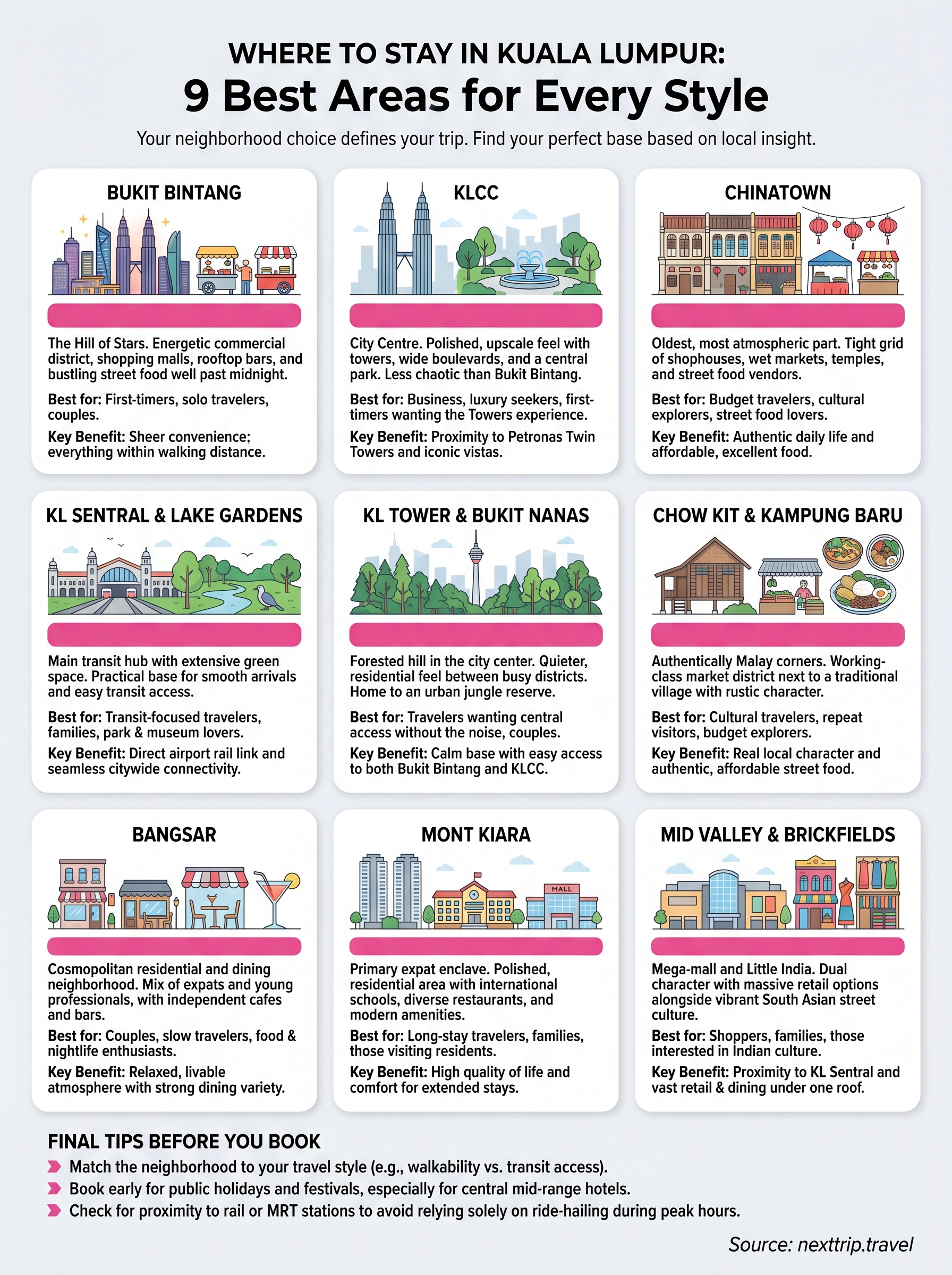
Final tips before you book
Choosing where to stay in Kuala Lumpur comes down to matching the neighborhood to how you actually travel, not just picking the most recognizable name on the map. If you prioritize walkability and food variety, Bukit Bintang or Chinatown will serve you better than a quieter expat district. If transit access matters more than atmosphere, KL Sentral delivers on that more consistently than any other area in the city.
Book your accommodation early if you plan to visit during Malaysian public holidays or major festivals, since mid-range hotels in central neighborhoods fill up quickly and prices climb when availability drops. Always check whether your hotel sits close to a rail or MRT station rather than relying entirely on Grab, particularly during peak-hour traffic when ride times can stretch considerably. Ready to plan the full trip? Let Nexttrip.Travel handle the details so you can focus on the experience.