

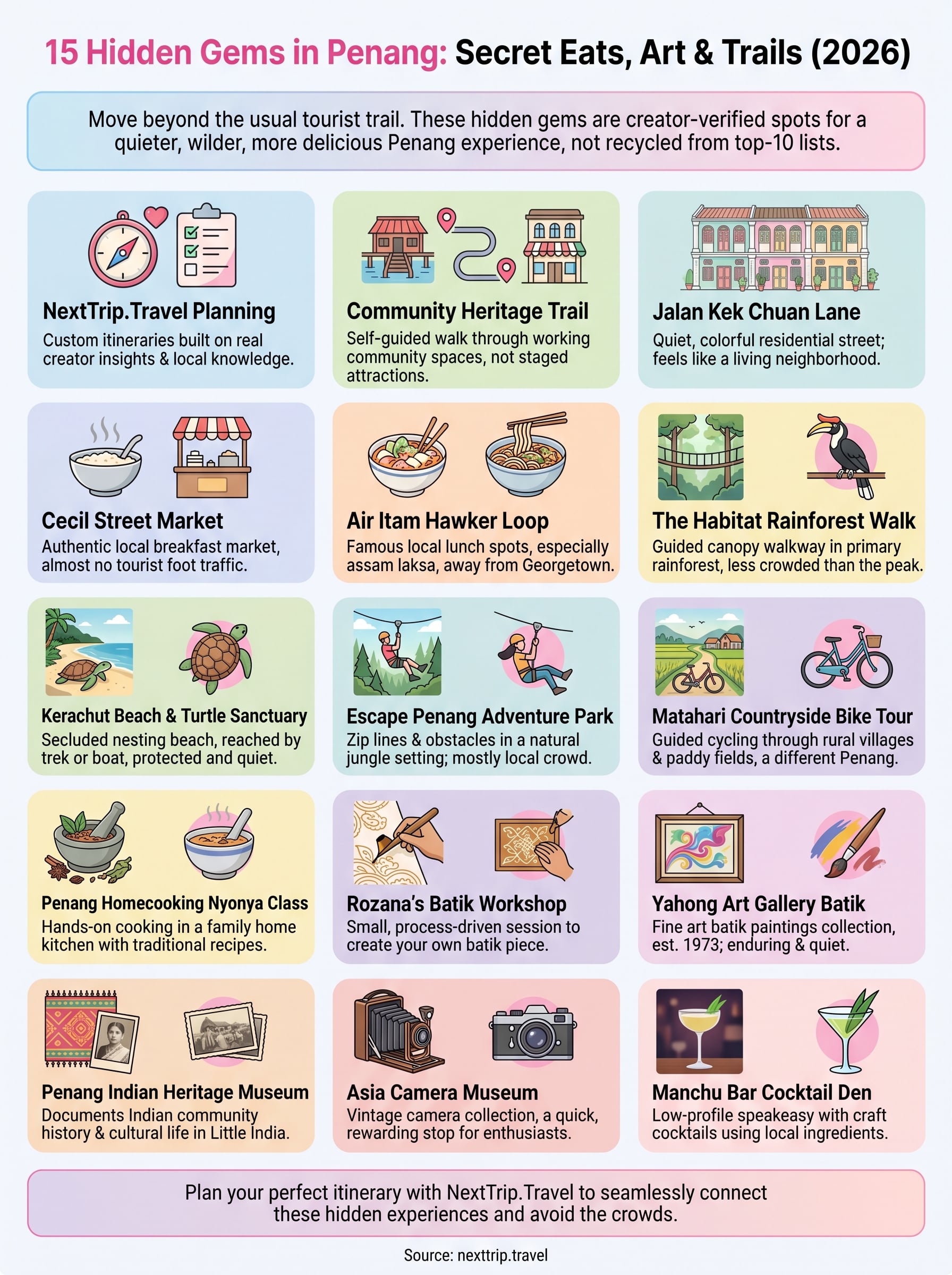
Most visitors to Penang follow the same trail: Georgetown street art, Kek Lok Si Temple, a plate of char koay teow on Lorong Selamat, and call it a day. There's nothing wrong with that route, it's popular for good reason. But if you've already checked those boxes (or you just prefer to skip the crowds), Penang has a quieter, wilder, more delicious side waiting. The hidden gems in Penang we're sharing here are places our team and local creators have actually visited, eaten at, and explored firsthand, not recycled from the same top-10 lists you've seen everywhere else.
We're talking about century-old temples tucked behind shophouses, jungle trails that most tourists drive right past, and hawker stalls where the uncle doesn't need a Michelin mention to prove his laksa is the best on the island. These are the spots that turn a good Penang trip into one you genuinely remember.
At Nexttrip.Travel, we build itineraries around exactly these kinds of experiences, real recommendations from creators and local insiders who know the difference between a tourist trap and the real thing. This guide is a taste of that approach: 15 under-the-radar spots across food, art, nature, and culture that deserve a place on your 2026 Penang itinerary.
1. NextTrip.Travel Penang Itinerary Planning
Planning a Penang trip on your own means hours of cross-referencing outdated forum threads and travel apps that all recommend the same five places. NextTrip.Travel cuts through that noise by building your itinerary around real creator recommendations and local insider knowledge, including the kind of hidden gems in Penang that rarely show up on standard travel sites. If you want a trip that actually reflects how locals and creators move through the island, this is where you start.
What It Is
NextTrip.Travel is a concierge-style travel planning platform that designs custom itineraries based on influencer-curated routes and destination expertise. For Penang specifically, the platform pulls from on-the-ground creator experience to build trips that mix well-known highlights with underrated local spots, from century-old temple lanes to hawker stalls that only regulars know about.
Why It Feels Like a Hidden Gem
Most travelers don't know this kind of personalized planning exists at this price point. You get itinerary design tailored to your travel style, not a generic package built for the average tourist. The recommendations come from people who have actually eaten at these stalls, walked these trails, and know which spots are worth the detour and which ones are just Instagram bait.
Itineraries built from firsthand creator experience read completely differently than anything a generic travel aggregator produces.
How to Use It for a Penang Trip
Visit nexttrip.travel and share your travel dates, group size, and core interests. The team builds a custom Penang itinerary around your preferences, whether you want food-heavy days, cultural deep dives, or a balance of nature and nightlife. You can also browse existing influencer-curated Penang routes as a starting point before customizing further.
Best Time to Plan and Book
Start planning at least four to six weeks before your trip to give the team enough lead time to lock in guides, restaurants, and experiences that fill up quickly. Penang gets particularly busy during school holidays and the annual Georgetown Festival, so earlier planning matters most during those peak windows.
Cost and Booking Notes
Pricing depends on your itinerary length and chosen experiences. Concierge planning fees vary based on trip complexity and group size. Reach out directly through the website for a quote specific to your Penang dates and needs.
Photo and Content Tips
Tell the team upfront that content creation is part of your travel goal. NextTrip.Travel factors in visual storytelling potential when selecting locations, so flagging this early means your route gets optimized for both experience quality and shareable moments from day one.
2. Penang Hidden Gems Community Heritage Trail
Georgetown's main tourist drag gets most of the foot traffic, but the Penang Hidden Gems community heritage trail runs through lanes and back streets that most visitors never find. Organized by local heritage groups, this self-guided walking route connects clan jetties, pre-war shophouses, and neighborhood temples that have been active community spaces for over a century.
What It Is
The trail is a mapped walking route created by community heritage advocates across the older quarters of Georgetown. It covers roughly 3 to 4 kilometers and takes you past clan associations, neighborhood shrines, and pre-war shopfronts that locals use daily.
Why It Feels Like a Hidden Gem
Most visitors stick to the official street art map, which misses entire neighborhoods. This trail puts you inside working community spaces rather than staged tourist attractions.
Walking past a clan jetty at 7am, when residents are starting their day, is a completely different experience from arriving at noon with a tour group.
How to Do It
Pick up a printed trail map from the Penang Heritage Trust office on Jalan Masjid Kapitan Keling, or download a digital version from their website. Walk at your own pace and allow two to three hours to explore properly without rushing.
Best Time to Go
Start by 7am or 8am to catch morning activity at the jetties and avoid the midday heat.
Cost and Booking Notes
The trail itself is free to walk. Some clan association buildings charge a small entry fee of around RM2 to RM5 if you want to step inside.
Photo and Content Tips
Shoot vertical frames in the narrow back lanes for strong compositions. Morning light before 9am gives soft, even coverage without harsh shadows.
3. Jalan Kek Chuan Colorful Shophouse Lane
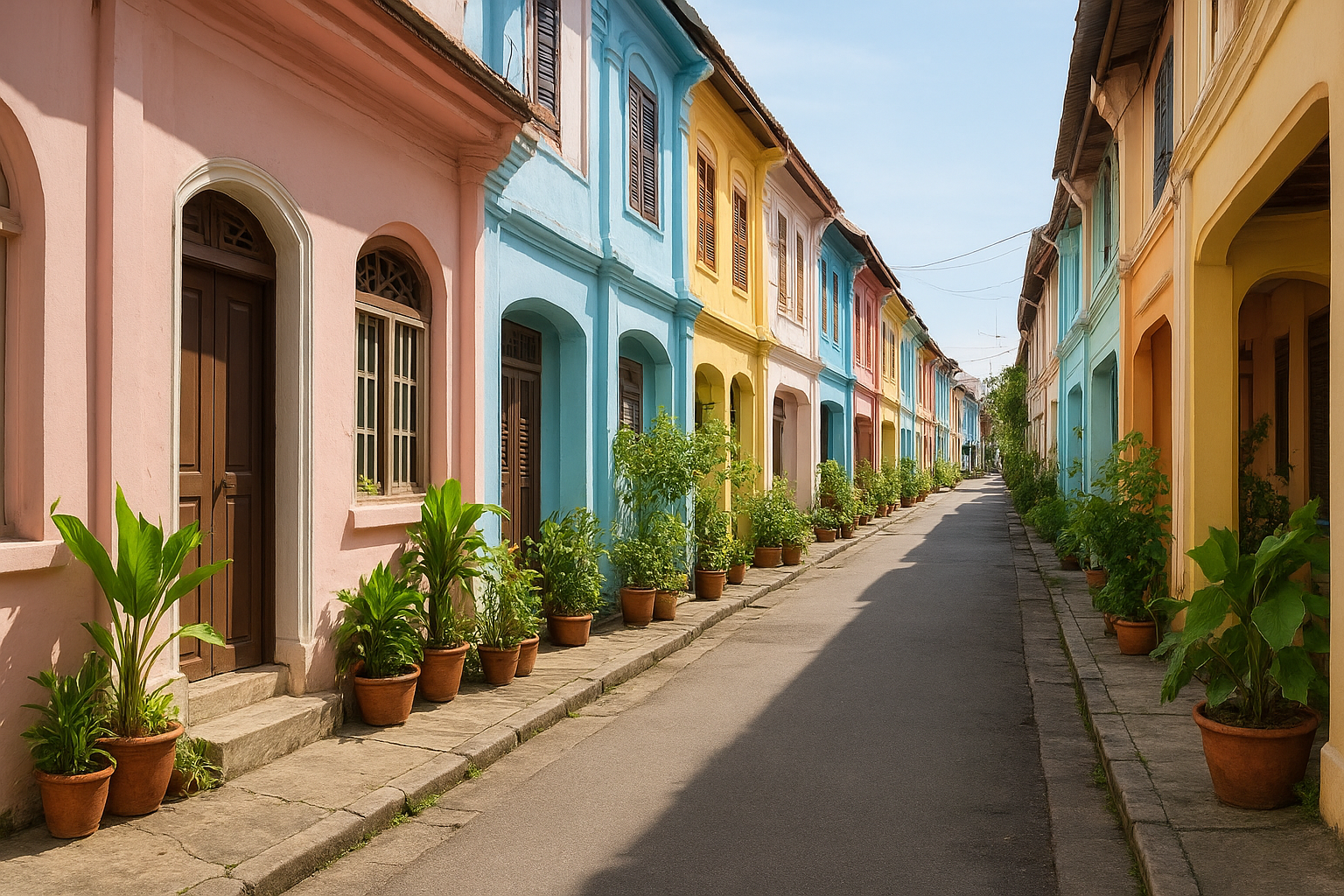
Jalan Kek Chuan sits about a ten-minute walk from Georgetown's busiest tourist streets, yet most visitors never make it here. This short residential lane is lined with pastel-painted pre-war shophouses that local residents and heritage conservation efforts have maintained for decades, giving the street a lived-in warmth that staged attractions rarely match.
What It Is
Running through a quiet corner of Georgetown, this lane features rows of shophouses painted in soft pinks, blues, and yellows. Unlike the street art zones nearby, the street feels genuinely residential, with potted plants crowding doorsteps and neighbors going about their morning routines as if cameras don't exist.
Why It Feels Like a Hidden Gem
This lane rarely appears on mainstream travel lists, which makes it one of the more genuine hidden gems in Penang for anyone who wants color and character without the crowds. Most visitors who find it do so by accident, which tells you something about how underrepresented it is on the standard tourist circuit.
Walking Jalan Kek Chuan mid-morning feels like stepping into a living neighborhood rather than a curated attraction.
How to Do It
Walk here or rent a bicycle from one of Georgetown's rental shops and use Google Maps to navigate. The lane is short enough to cover in 15 to 20 minutes, but slower exploration rewards you with details that a quick pass misses.
Best Time to Go
Arrive between 7am and 9am on a weekday for the quietest conditions. Weekend mornings see noticeably more foot traffic by mid-morning.
Cost and Booking Notes
Entry is completely free. Build it in as a 30-minute detour during a broader Georgetown walking day rather than a standalone trip.
Photo and Content Tips
Shoot wide angles to capture the full row of shophouses, then move closer for door details and plant arrangements that give the lane its residential character.
4. Cecil Street Market Breakfast Crawl
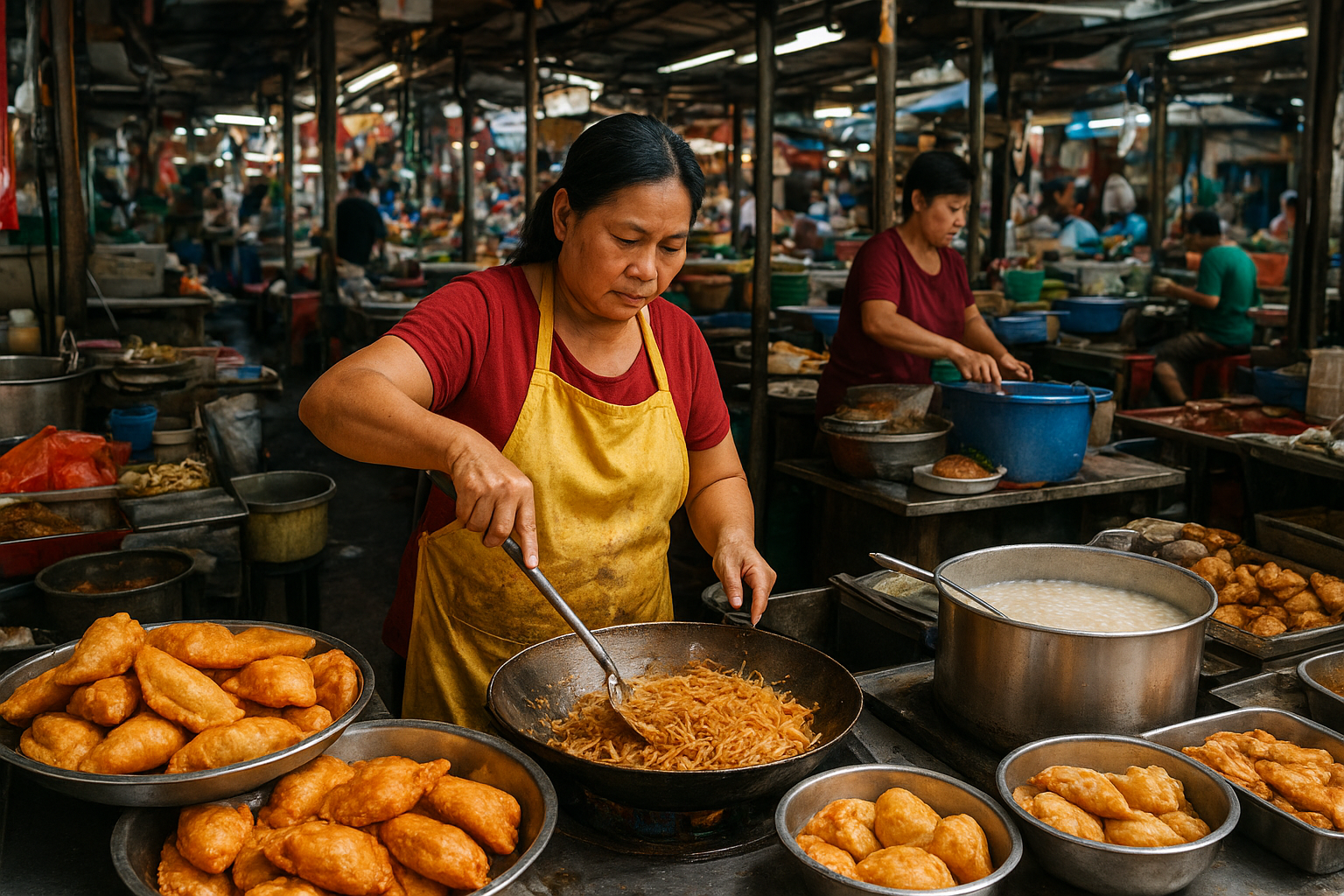
Cecil Street Market sits in a part of Georgetown that most visitors scroll past on their maps without a second glance. This old-school wet and dry market runs along Jalan Cecil and its surrounding lanes, drawing a loyal crowd of locals who have been eating breakfast here for decades. As one of the more underrated hidden gems in Penang, it rewards early risers with a front-row seat to how the city actually starts its day.
What It Is
The market combines a traditional wet market section with a cluster of hawker stalls that set up from early morning. You'll find vendors selling everything from fresh curry puffs to handmade popiah, alongside steaming bowls of porridge and fried kuey teow that rarely cost more than a few ringgit per plate.
Why It Feels Like a Hidden Gem
Cecil Street draws almost no tourist foot traffic, which means prices stay local and vendors don't adjust their food or their pace for outsiders. Eating here feels like a genuine neighborhood ritual rather than a performance.
The older aunties who run the porridge stall at Cecil Street have been doing this since before most food bloggers were born.
How to Do It
Arrive hungry and work your way from stall to stall, sampling two or three dishes rather than ordering a full meal at one spot. Bring cash in small denominations since most stalls don't accept card payments.
Best Time to Go
Show up between 6:30am and 8:30am on any weekday. By 10am, most stalls start packing up.
Cost and Booking Notes
Budget RM8 to RM15 per person for a full crawl across multiple stalls.
Photo and Content Tips
Shoot close-up frames of food in preparation rather than finished plates to capture the market's working energy.
5. Air Itam Market Hawker Lunch Loop
Air Itam sits inland, away from Georgetown's tourist belt, and most visitors only pass through it on the way to Penang Hill. That's a mistake. The Air Itam Market anchors one of the island's most concentrated stretches of local hawker food, and doing a proper lunch loop here puts you in the middle of one of the more rewarding hidden gems in Penang that guidebooks consistently overlook.
What It Is
Air Itam Market is a full-scale wet and dry market with a hawker section that runs through lunch service. The surrounding streets and adjacent coffee shops extend the eating zone further, giving you a cluster of Hokkien mee, assam laksa, and economy rice stalls all within a short walk of each other.
Why It Feels Like a Hidden Gem
The market serves a dense residential neighborhood rather than a tourist strip, so the food stays priced and seasoned for locals. The assam laksa stalls here regularly draw Penangites who drive across town specifically for lunch, which is the kind of endorsement that matters.
When locals drive past easier options just to eat somewhere specific, that tells you everything about the food quality.
How to Do It
Park near the market and walk the surrounding lanes to identify which stalls have the longest queues. Follow those queues and order small portions at two or three spots rather than loading up at one.
Best Time to Go
Arrive between 11:30am and 1pm on a weekday to catch full service before stalls sell out.
Cost and Booking Notes
Expect to spend RM10 to RM18 per person across a full lunch loop.
Photo and Content Tips
Shoot overhead angles on bowls to show broth color and toppings clearly in natural daylight.
6. The Habitat Penang Hill Rainforest Walk
Most visitors take the Penang Hill funicular to the top, snap a few photos of Georgetown below, and head straight back down. That means the majority of tourists completely miss The Habitat, a guided rainforest experience sitting right at the summit that earns its place among the lesser-known hidden gems in Penang.
What It Is
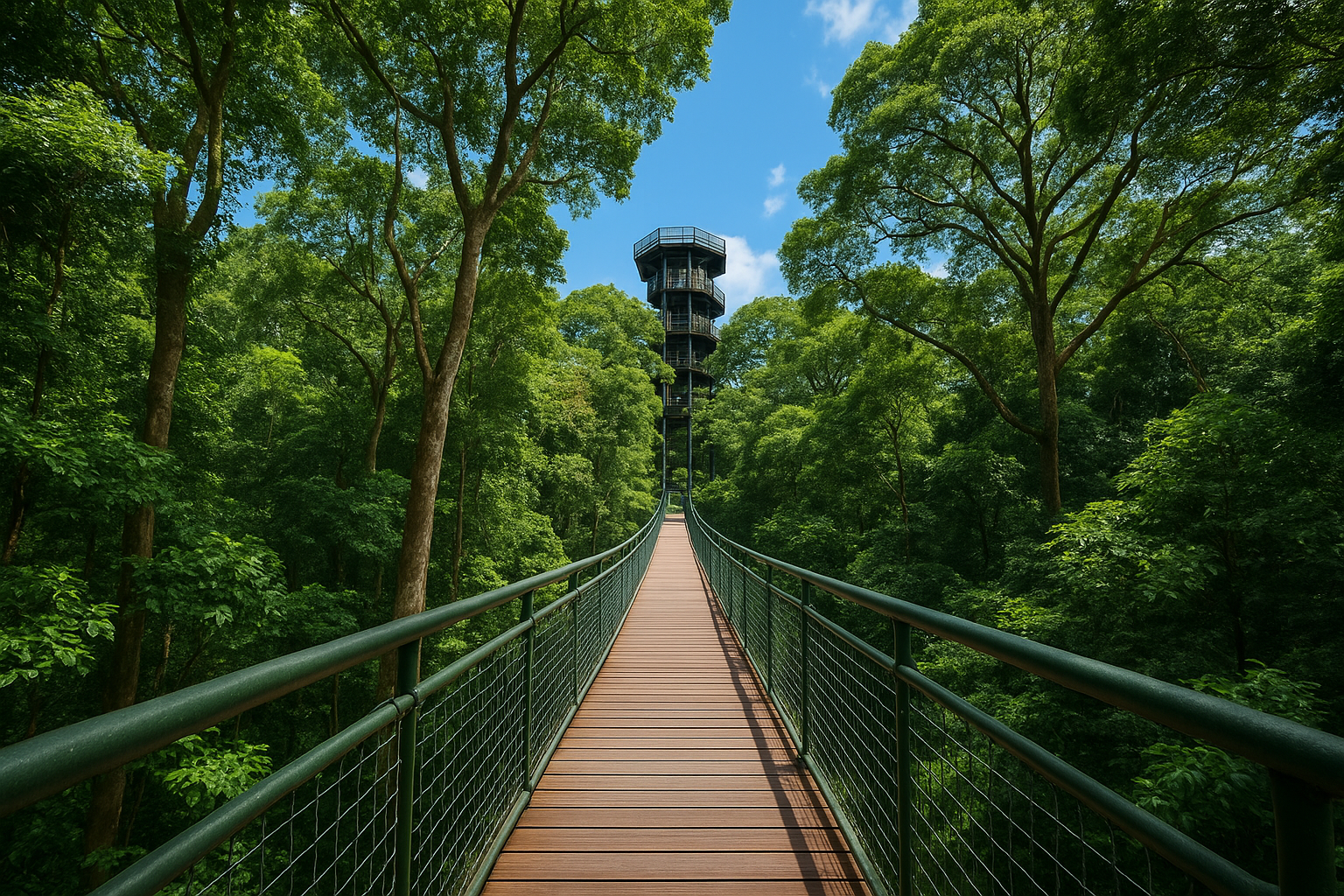
The Habitat is a 150-acre rainforest conservation and eco-tourism space at the peak of Penang Hill. It features a canopy walkway, a treetop tower called Curtis Crest, and guided nature walks through primary rainforest that has remained largely untouched for centuries.
Why It Feels Like a Hidden Gem
Most travelers treat Penang Hill as a viewpoint stop rather than a destination, so The Habitat stays well below capacity even on busy weekends. You get a genuine rainforest experience with actual wildlife sightings, including hornbills and stick insects, without the crowds that pack similar attractions elsewhere in Malaysia.
Watching a hornbill glide across the rainforest canopy from the Curtis Crest tower is one of those moments that justifies the whole trip.
How to Do It
Book tickets through The Habitat's official website before you visit, then take the Penang Hill funicular from the lower station in Ayer Itam. Allow two to three hours to walk the trails and climb Curtis Crest at a comfortable pace.
Best Time to Go
Go on a weekday morning between 8am and 10am for the coolest temperatures and the best wildlife activity.
Cost and Booking Notes
Tickets cost approximately RM50 to RM60 per adult depending on the package selected. Funicular fees apply separately.
Photo and Content Tips
Shoot wide upward angles from the canopy walkway to show the full scale of the tree canopy against the sky.
7. Kerachut Beach and Turtle Sanctuary
Kerachut Beach sits inside Penang National Park on the island's northwest tip, reachable only by jungle trek or boat. That access barrier alone keeps the crowds away, making it one of the more genuinely rewarding hidden gems in Penang for travelers willing to put in a little effort to get there.
What It Is
Kerachut is a protected nesting beach for green and leatherback sea turtles, managed by the Department of Wildlife and National Parks. The beach itself runs long and clean, backed by jungle, and sits next to a rare meromictic lake where saltwater and freshwater layers don't mix.
Why It Feels Like a Hidden Gem
Unlike more accessible beaches in Penang, Kerachut gets almost no casual day-tripper traffic. The turtles nest here between May and September, and the conservation team manages the beach carefully to minimize disturbance, which keeps the experience feeling protective and purposeful rather than touristy.
Reaching a beach by jungle trail rather than parking lot changes how you experience it entirely.
How to Do It
Start from Penang National Park headquarters in Teluk Bahang and either hike the 3-kilometer jungle trail or take a short boat ride to reach the beach. Register at the park office before entering.
Best Time to Go
Visit between May and September if turtle nesting activity is your priority. Arrive in the morning before heat peaks.
Cost and Booking Notes
Park entry is free for Malaysian citizens and costs around RM10 for foreigners. Boat hire runs approximately RM60 to RM80 return per group.
Photo and Content Tips
Shoot wide beach frames from the treeline edge to capture the full stretch of shoreline without disturbing any nesting activity near the waterline.
8. Escape Penang in Teluk Bahang
Teluk Bahang sits at Penang's northwestern tip, far enough from Georgetown that most tourists treat it as a pass-through on the way to the national park. Escape Penang turns that assumption on its head. This outdoor adventure park offers one of the more unexpected hidden gems in Penang for travelers who want something physically engaging and genuinely fun.
What It Is
Escape Penang is a large-scale outdoor adventure park built across hilly jungle terrain in Teluk Bahang. It features zip lines, tree climbing courses, water slides, and rope obstacles spread across multiple zones, all designed to use the natural landscape rather than fight against it.
Why It Feels Like a Hidden Gem
Most visitors associate Penang with food and heritage, so an adventure park rarely makes their shortlist. That means Escape draws a mostly local crowd, keeping queues short and the atmosphere relaxed even on weekends.
A park built into actual jungle terrain delivers something that manufactured theme parks simply cannot replicate.
How to Do It
Book tickets through Escape's official website in advance, especially for weekend visits. Wear athletic clothes and closed-toe shoes, as most activities require proper grip and movement range. Allow a full half-day or more to cover the main zones without rushing.
Best Time to Go
Visit on a weekday morning to get the shortest queues and cooler temperatures before noon heat sets in.
Cost and Booking Notes
Day passes run approximately RM100 to RM120 per adult, with discounts for children. Online booking typically saves you RM10 to RM15 versus walk-in pricing.
Photo and Content Tips
Capture action shots mid-activity on the zip lines for dynamic content, and shoot wide frames from the elevated platforms to show the surrounding jungle canopy.
9. Matahari Countryside Bike Tour
Most people cycling in Penang stick to Georgetown's heritage streets, which means the island's quieter inland and coastal countryside rarely sees any tourist wheels. The Matahari bike tour takes you out of the city entirely, routing through kampung villages, paddy fields, and coastal roads where the pace slows down and the scenery opens up completely.
What It Is
Matahari runs small-group guided cycling tours through Penang's rural outskirts, including routes along Balik Pulau's farming villages and the island's lesser-traveled southwestern coast. Each tour covers roughly 25 to 40 kilometers depending on the route selected, with local guides leading the way and explaining the communities you pass through.
Why It Feels Like a Hidden Gem
Rural Penang rarely appears on any list of hidden gems in Penang, yet the countryside here sits in sharp contrast to Georgetown's urban density. You ride past durian orchards and stilted fishing villages that most visitors never know exist.
Cycling through a working kampung at sunrise is a completely different Penang from the one most travelers take home in their photos.
How to Do It
Book directly through Matahari's local website and confirm your group size in advance. Bikes and helmets are provided, and support transport follows the group in case anyone needs a rest.
Best Time to Go
Ride between November and February when temperatures stay more manageable and road conditions are drier. Start times in the early morning around 7am keep you ahead of the midday heat.
Cost and Booking Notes
Tours typically run RM150 to RM200 per person, including bike hire, a local guide, and a simple breakfast stop.
Photo and Content Tips
Shoot wide landscape frames across the paddy fields during the golden hour light just after sunrise for the strongest natural color.
10. Penang Homecooking School Nyonya Class
Nyonya cuisine sits at the heart of Peranakan culture, but most visitors only experience it through restaurant menus. The Penang Homecooking School offers something far more personal: a hands-on Nyonya cooking class run from a family home that turns a meal into a genuine cultural lesson.
What It Is
The school runs small-group cooking sessions focused on traditional Nyonya recipes passed down through generations of Peranakan families. Classes typically cover three to four dishes per session, including staples like otak-otak, acar, and prawn sambal, using ingredients sourced from local markets that morning.
Why It Feels Like a Hidden Gem
Unlike hotel cooking classes built around convenience, this school puts you inside a working family kitchen with recipes that haven't been simplified for tourist comfort. It consistently ranks among the more personal hidden gems in Penang for anyone who wants to understand the food rather than just eat it.
Learning to balance belacan and torch ginger from someone whose grandmother taught them the same recipe is an experience no restaurant visit can replicate.
How to Do It
Book sessions directly through the school's contact page well in advance, as class sizes stay small by design. Bring a notebook alongside your appetite, since recipes are shared for you to recreate at home.
Best Time to Go
Classes run most mornings throughout the week, with weekend slots filling fastest. Book at least two weeks ahead during school holiday periods.
Cost and Booking Notes
Sessions typically cost RM180 to RM250 per person, covering instruction, ingredients, and the meal you cook together.
Photo and Content Tips
Shoot close-up frames of spice prep and mortar work before cooking starts, when colors and textures are at their most striking.
11. Rozana's Batik Hands-On Workshop
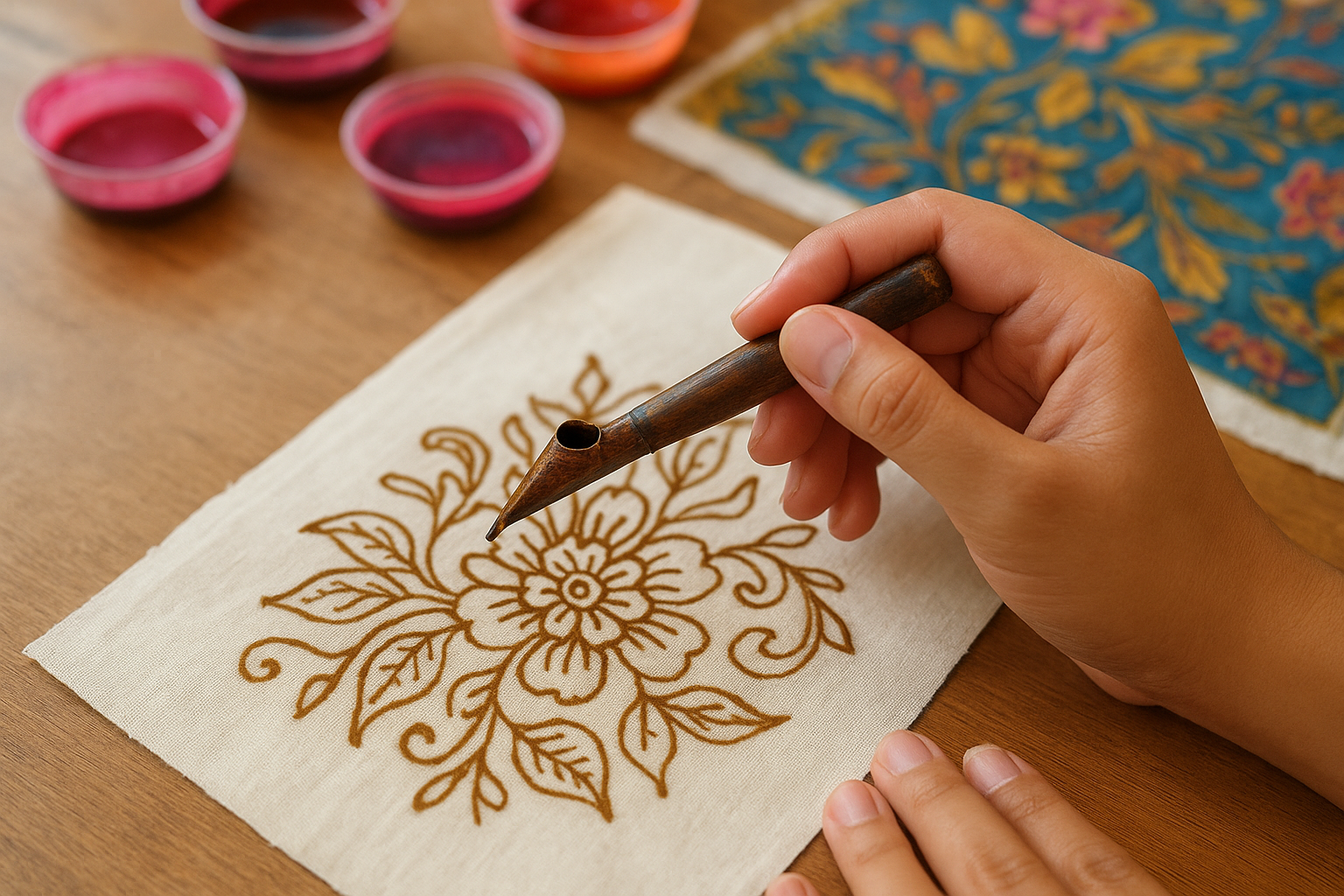
Batik is everywhere in Penang's souvenir shops, but buying a printed piece off a shelf tells you nothing about how it was made. Rozana's workshop gives you the full process firsthand, from tracing patterns with a wax-filled canting tool to applying fabric dye in layers, making it one of the most tactile hidden gems in Penang for travelers who want to leave with something they actually created.
What It Is
Rozana runs intimate batik-making sessions from her studio in Georgetown, teaching traditional Malaysian batik techniques to small groups. Each session covers wax resist drawing, dye application, and fabric finishing, and you walk away with a completed piece of batik cloth to keep.
Why It Feels Like a Hidden Gem
Most craft workshops in Georgetown run on tourist volume, keeping classes large and instruction light. Rozana's setup stays deliberately small, so you get genuine one-on-one guidance rather than a demonstration you watch from a distance.
Learning batik from someone who practices it as a craft rather than runs it as a show produces a completely different result.
How to Do It
Contact Rozana directly through her Facebook page or WhatsApp number listed on local heritage directories. Sessions typically last two to three hours, so arrive rested and ready to concentrate.
Best Time to Go
Weekday mornings give you the most relaxed session pace. Avoid booking during school holidays when slots fill quickly.
Cost and Booking Notes
Sessions run approximately RM120 to RM150 per person, covering all materials and your finished fabric piece.
Photo and Content Tips
Shoot close-up frames of the canting tool drawing wax lines onto fabric for detailed, process-driven content that performs well in short video format.
12. Yahong Art Gallery Batik Paintings
Batik as fine art rarely gets the attention it deserves in Penang's cultural circuit, and Yahong Art Gallery in Batu Ferringhi fills that gap quietly. This gallery has been showcasing Malaysian batik paintings for over five decades, making it one of the more enduring hidden gems in Penang for travelers who appreciate craft elevated to a serious artistic practice.
What It Is
Yahong houses an extensive collection of batik paintings created by Malaysian artists, with works ranging from traditional motifs to contemporary interpretations of local landscapes and figures. The gallery also sells original pieces and limited prints, giving you a chance to bring home something with genuine provenance rather than a mass-produced souvenir.
Why It Feels Like a Hidden Gem
Most visitors to Batu Ferringhi focus on the night market and beach hotels, completely bypassing Yahong even though it sits within walking distance. The gallery has operated continuously since 1973, and its depth of collection and quiet setting set it apart from anything you'd find in Georgetown's more commercial art spaces.
A gallery that has survived over fifty years without chasing trends is almost always worth an hour of your time.
How to Do It
Walk in without an appointment during opening hours and take your time moving through the collection. Staff are knowledgeable and happy to explain specific works if you ask.
Best Time to Go
Visit on a weekday afternoon when foot traffic is lightest and you can browse at your own pace without interruption.
Cost and Booking Notes
Entry to the gallery is free of charge. Artwork prices vary significantly depending on the piece and artist.
Photo and Content Tips
Shoot detail frames of brushwork and dye layering on individual paintings to show the texture and craft that separates batik painting from printed fabric.
13. Penang Indian Heritage Museum
The Penang Indian Heritage Museum sits on Jalan Masjid Kapitan Keling in the heart of Little India, occupying a restored pre-war building that most visitors walk straight past on their way to the nearby mosques and temples. This compact museum documents over 200 years of Indian settlement and cultural life on the island, covering communities that shaped Penang's colonial economy, religious landscape, and food culture in ways that most heritage tours barely mention.
What It Is
The museum houses artifacts, photographs, and archival documents tracing the history of Tamil, Telugu, Sikh, and North Indian communities in Penang. Exhibits cover topics from early labor migration and trade to traditional festivals, textiles, and religious practices that remain active parts of Penang's cultural fabric today.
Why It Feels Like a Hidden Gem
Indian heritage sits underrepresented in Penang's mainstream tourism narrative, which skews heavily toward Chinese Peranakan culture. This museum fills that gap directly, and it does so without the crowds that pack Georgetown's more visible attractions, making it one of the quieter hidden gems in Penang worth building time into your schedule.
A museum that covers a community's full arc from migration to cultural permanence earns more than a quick pass-through.
How to Do It
Walk in during opening hours without a reservation. The collection is compact enough to cover thoroughly in 45 to 60 minutes, so it works well as a mid-morning stop between other Little India visits.
Best Time to Go
Visit on a weekday morning when foot traffic stays light and staff have time to answer questions.
Cost and Booking Notes
Entry costs approximately RM5 per adult, making it one of the most affordable heritage stops in Georgetown.
Photo and Content Tips
Shoot close-up frames of archival photographs and textile displays for content that reflects genuine cultural depth rather than surface-level tourism.
14. Asia Camera Museum Quick Stop
The Asia Camera Museum sits inside a restored shophouse on Lebuh Muntri, wedged between Georgetown's better-known heritage attractions. Most visitors walk right past it, which makes it one of those compact but genuinely rewarding hidden gems in Penang that rewards curious travelers who slow down enough to look for it.
What It Is
The museum houses a private collection of over 1,000 vintage cameras and photography equipment spanning more than a century of photographic history. Displays range from early box cameras and folding models to Cold War-era film equipment sourced from across Asia, all arranged with clear labeling and working context.
Why It Feels Like a Hidden Gem
Photography draws millions of visitors to Penang every year, yet almost none of them visit a museum dedicated to the cameras behind that obsession. The collection is genuinely deep, and the curators clearly care about context rather than just display quantity.
A museum that traces the full arc of photographic technology from glass plates to autofocus earns real attention from anyone who takes images seriously.
How to Do It
Walk in during opening hours and allow 45 to 60 minutes to move through the collection without rushing. The space is compact, so you cover it efficiently, making it a strong mid-morning add-on between other Lebuh Muntri stops.
Best Time to Go
Visit on a weekday morning when the space stays quiet and you can linger over specific pieces without navigating around other visitors.
Cost and Booking Notes
Entry costs approximately RM15 to RM20 per adult, which includes access to the full collection and a small hands-on demonstration area.
Photo and Content Tips
Shoot close-up frames of lens details and shutter mechanisms on the older equipment for textured content that connects the museum's subject matter directly to your own image-making practice.
15. Manchu Bar Hidden Cocktail Den
Georgetown's bar scene clusters mostly around the well-known streets of Jalan Penang and Armenian Street, leaving its quieter speakeasy-style spots almost entirely off the tourist radar. Manchu Bar is one of those spots: a deliberately low-profile cocktail den tucked inside a pre-war shophouse that rewards anyone willing to look past the obvious nightlife options.
What It Is
Manchu Bar operates as an intimate craft cocktail bar inside a restored heritage building in Georgetown. The interior is small and deliberately understated, with bartenders who build drinks around local ingredients like pandan, calamansi, and coconut palm sugar alongside standard spirits.
Why It Feels Like a Hidden Gem
This bar doesn't advertise heavily, which keeps the crowd small and the atmosphere genuinely relaxed. Among the underrated hidden gems in Penang for evening experiences, it stands apart because the focus stays on drink craft rather than social media staging.
A bar that earns its regulars through quality rather than visibility is worth more than a dozen louder venues combined.
How to Do It
Walk in directly on any operating evening and order from the seasonal cocktail menu, which the bartenders rotate based on ingredient availability. Ask the staff for a recommendation tied to your flavor preference and they will build something specific to your taste.
Best Time to Go
Arrive between 8pm and 10pm on a weekday for the most relaxed atmosphere before weekend crowds push the noise level noticeably higher.
Cost and Booking Notes
Cocktails run approximately RM35 to RM55 per drink, which aligns with Georgetown's better craft bar pricing and reflects the quality of ingredients used.
Photo and Content Tips
Shoot low-light close-up frames of cocktail glassware against the warm interior lighting for atmospheric content that captures the bar's mood accurately without needing flash.
Ready to Explore Penang
Penang rewards travelers who look past the obvious stops. The hidden gems in Penang covered in this guide span food, art, nature, and culture, and none of them require you to fight through peak-hour crowds or pay inflated tourist prices to experience them properly. Each one reflects what makes this island genuinely worth multiple visits.
Your next step is deciding how you want to put these spots together. Stringing 15 locations into a coherent, well-timed itinerary takes more planning than most people expect, especially when you factor in opening hours, travel time between areas, and food stalls that sell out before noon. That's exactly where expert planning pays off. If you want a custom Penang itinerary built around the kind of real local knowledge behind this list, start planning your trip with NextTrip.Travel and let the team handle the logistics while you focus on the experience.