

You've decided you want to travel, but now comes the real question: should you go alone or with a group? The debate around solo travel vs group travel comes up every time someone starts planning a trip, and for good reason. Each style shapes your experience in fundamentally different ways, from how you spend your budget to how safe you feel in unfamiliar places.
There's no universally "right" answer here. What works for a first-time traveler heading to Southeast Asia looks completely different from what suits a seasoned explorer chasing cultural deep dives across Europe. Your personality, comfort level, and travel goals all play a role, and understanding the tradeoffs before you book anything can save you from a trip that doesn't match your expectations.
At Nexttrip.Travel, we design personalized itineraries for both solo explorers and group travelers, built around curated experiences and concierge-level planning that fit your specific style. Whether you thrive on independence or prefer shared adventures, this guide breaks down eight key differences, with honest pros and cons, so you can figure out which approach actually fits you best.
1. Plan with NextTrip Travel
Whether you're weighing solo travel vs group travel, the planning process shapes your experience long before you board your first flight. NextTrip Travel handles the logistics behind both styles, using concierge-level planning to match your itinerary to the type of trip you actually want.
What this looks like in real life
When you work with NextTrip Travel, you start by sharing your travel goals, destination preferences, and how much structure you want on the road. From there, a dedicated travel expert builds your itinerary around influencer-recommended locations, local insider picks, and your personal travel style. You're not handed a generic package; you get a customized route designed around how you travel.
Where it helps solo travelers most
Solo travelers benefit most from having pre-arranged accommodations, transfers, and activity bookings in place before they arrive. This removes a significant chunk of the decision fatigue that solo travel can produce, letting you stay spontaneous on the ground without scrambling for logistics. NextTrip also builds in flexible time blocks that let you explore independently without feeling locked into a rigid schedule.
The biggest advantage of concierge planning for solo travelers is that it gives you freedom without the research burden.
Where it helps group travelers most
Group travelers get the most value from coordinated bookings across all members, which eliminates the back-and-forth of aligning schedules, splitting costs, and managing different preferences. NextTrip handles group accommodation, shared transfers, and activity coordination so the group arrives together, stays together, and spends less time on logistics and more time on the experience itself.
Trade-offs to expect
No planning service removes every variable. Solo bookings through a concierge service typically cost more per person than booking hostels or budget transport yourself. For groups, customization becomes harder as the group grows because aligning everyone's preferences takes more time. You also give up some spontaneity when meals, tours, and transport are pre-booked.
Quick fit check before you book
Ask yourself two questions before committing. Do you prefer having decisions made in advance, or do you want to figure things out on the ground? Does your group have aligned travel preferences, or will coordination become a source of conflict? Your honest answers will tell you how much planning support actually benefits you.
2. Flexibility and daily control
Flexibility is one of the most debated factors in solo travel vs group travel because it affects every single day of your trip. How you spend your mornings, whether you linger at a market or skip a scheduled tour, depends entirely on the structure (or lack of it) you choose before you leave.
How much freedom you really get
Solo travel gives you complete control over your schedule, meaning you can change your plans based on mood, weather, or a recommendation from a local you met that morning. Group travel trades that freedom for coordinated movement, which means fewer detours but also fewer surprises.
Solo travel upsides for flexibility
When you travel alone, every decision is yours, from what you eat at noon to whether you stay an extra night in a city you love. You adjust your pace without asking permission or waiting for others.
Group travel upsides for structure
Groups benefit from pre-arranged logistics that remove the need to problem-solve daily. When transport, meals, and activities are already scheduled, you spend less mental energy on decisions and more time actually experiencing the destination.
Structure is not the opposite of enjoyment; it often creates the conditions for a more relaxed trip.
The hidden cost of flexibility
Total flexibility sounds appealing, but it also means you carry the full weight of every decision. Decision fatigue is real, and it can drain your energy faster than any long-haul flight.
Decision shortcut
Ask yourself whether making daily choices on the road energizes or exhausts you. That single answer will tell you which travel style fits your personality better.
3. Safety and support when things go wrong
Safety is one of the most practical factors in solo travel vs group travel, and it often gets underestimated until something actually goes wrong. How quickly you get help and who stands beside you during a medical issue, theft, or missed connection depends heavily on which travel style you chose.
What changes between solo and group
When you travel alone, every problem lands on you first, and you handle it with whatever resources you brought. Group travel distributes that pressure, which means someone else can act while you recover, regroup, or call for assistance.
Solo travel safety advantages and gaps
Solo travelers move with low visibility, which can reduce the chance of being targeted as part of a large tour group. However, a medical emergency or injury with no one nearby creates a serious gap in your support system that no app fully replaces.
Always share your daily itinerary with someone at home when traveling solo, even if it's just a rough outline sent each morning.
Group travel safety advantages and gaps
Groups benefit from built-in accountability because someone notices when you're missing. The downside is that unclear group leadership can slow emergency responses when no single person takes ownership of the situation.
Practical safety checklist for either style
Run through these basics before departure, regardless of how you travel:
- Carry digital and physical copies of your passport and insurance documents
- Save local emergency numbers offline on your phone
- Purchase travel insurance that covers medical evacuation
When to choose one over the other
If you're heading to a destination with limited infrastructure or elevated safety concerns, group travel gives you a stronger support net. Solo travel works well in well-connected, traveler-friendly destinations where ride apps, local SIM cards, and tourist services are easy to access.
4. Budget, value, and surprise costs
Budget is one of the most misunderstood factors in solo travel vs group travel because both styles carry hidden costs that don't show up at the planning stage.
Where solo travel can cost more
Solo travelers pay single-room supplements at most hotels, which can add 30-50% to accommodation costs compared to splitting a double. You also absorb every transport and activity fee alone, with no one to share a taxi or split a private tour.
Where group travel can cost more
Group trips bundle costs that cover services you may not use, such as guided tours or group dinners that don't suit your preferences. Once the group itinerary locks in, you lose the ability to shop around for better rates on specific items.
The real cost gap between solo and group travel often appears in week two of your trip, not day one.
Cost categories to compare line by line
Run these four categories side by side before you finalize your budget:
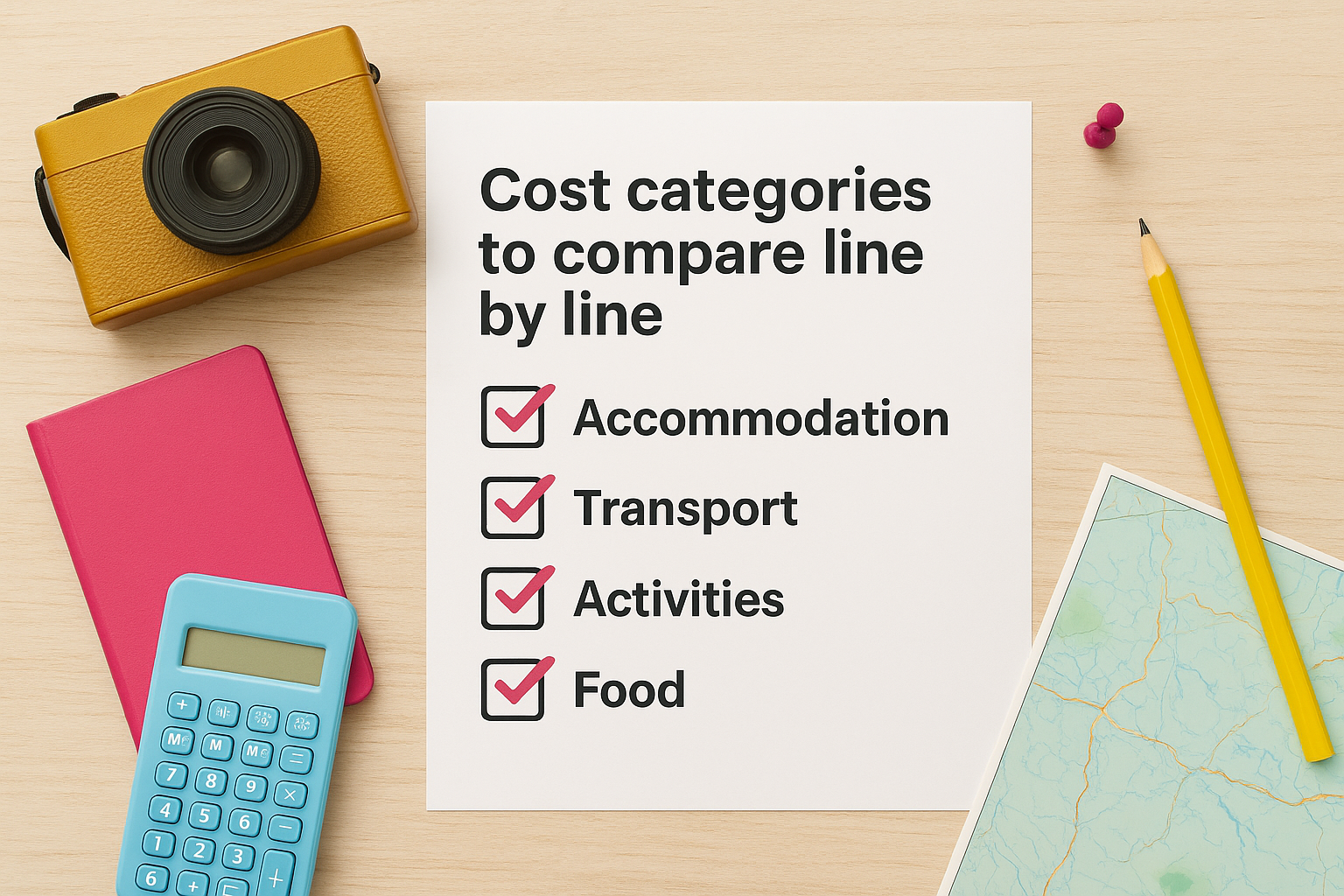
- Accommodation: single vs shared room rates
- Transport: private vs group transfers
- Activities: individual entry fees vs group pricing
- Food: independent dining vs included meal packages
How to estimate your true trip cost
Build your estimate using daily spending averages for your destination, then add a 15% buffer for unplanned costs. Track each category separately so you can identify exactly where your money goes before anything surprises you.
Best option by budget type
If you're working with a tight fixed budget, group travel typically delivers better value through shared costs. If you want spending flexibility, solo travel lets you cut or upgrade specific expenses as your trip progresses.
5. Planning effort and mental load
Planning a trip sounds exciting at the start, but the actual effort involved varies depending on whether you go alone or with others. In solo travel vs group travel, the mental load you carry before and during your trip is one of the most overlooked differences between the two styles.
What you must decide in solo travel
Solo travelers make every single decision themselves, from choosing the right accommodation neighborhood to figuring out local transport on arrival day. That includes researching visa requirements, building a day-by-day itinerary, and handling booking changes if anything shifts last minute.
What you outsource in group travel
Group travel moves a large portion of that decision-making responsibility to a coordinator, tour leader, or concierge service. You still choose whether to join an optional activity, but the core logistics covering flights, hotels, and transfers are handled for you.
Outsourcing logistics does not mean losing input; it means spending your energy on the parts of the trip that actually matter to you.
Common planning mistakes in both styles
Solo travelers often underestimate research time and end up booking accommodations in inconvenient locations. Group travelers frequently delay key decisions because everyone assumes someone else is handling the details. Both mistakes are avoidable with early planning.
How to reduce planning time without losing quality
Use a structured pre-trip checklist that covers visa requirements, insurance, accommodation, and transport in sequence. Booking through a concierge service like NextTrip Travel compresses weeks of research into a single conversation.
Who this difference matters for most
If you have limited time before your trip or find research draining, group travel significantly lowers your pre-departure stress. Solo travelers who enjoy deep research will find the planning process rewarding rather than exhausting.
6. Social energy, privacy, and loneliness
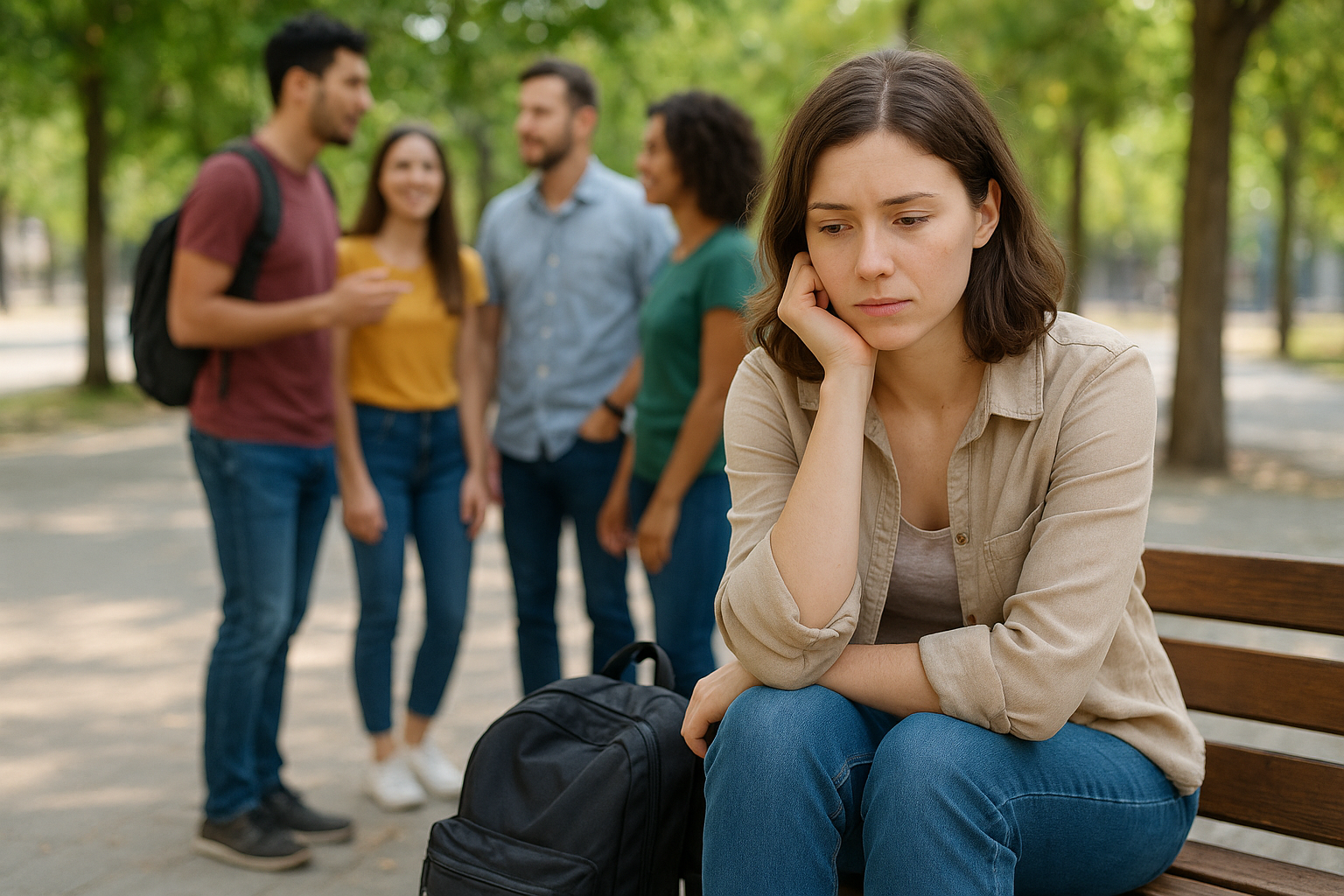
Your social needs shape how you experience a destination more than most travelers expect. In solo travel vs group travel, the difference between feeling energized and drained often comes down to how much social interaction your trip builds in and whether that matches what you actually need.
How social needs affect the trip
Personality drives this decision more than destination does. Introverts often find group schedules exhausting because constant shared meals and coordinated activities leave little room to recharge. Extroverts may find solo travel lonely faster than they anticipate, especially on longer trips.
Solo travel social options that actually work
Solo travel does not mean you travel without people. Hostel common areas, guided day tours, and local cooking classes give you controlled social exposure without the commitment of traveling with a fixed group. You choose when to engage and when to step back, which suits people who need both connection and quiet.
Structured day activities give solo travelers social interaction without sacrificing full-trip independence.
Group travel dynamics to watch for
Group travel creates built-in social connection, but it also creates friction when personalities clash or energy levels differ. One person who moves slowly can affect the whole group's schedule, and that tension compounds over longer trips.
How to protect alone time on any trip
Build at least one unscheduled block into each travel day. Even 90 minutes of solo time with no agenda protects your energy regardless of which style you choose.
Red flags you should not ignore
Watch for growing resentment toward group members or persistent isolation when traveling solo. Both signals tell you that your current travel style does not match your actual social needs, and adjusting earlier saves the trip.
7. Pace, depth, and what you remember
The pace you keep on a trip directly shapes what you absorb and what stays with you long after you return home. In the debate around solo travel vs group travel, pace is the factor that most determines whether you leave a destination feeling like you actually understood it or just passed through it.
How pace shapes the experience
Pace is not just about speed. It covers how long you stay in one place, how often you move, and whether you have time to revisit a neighborhood or museum that surprised you on day one. A forced pace, whether too fast or too slow, flattens the experience.
Solo travel strengths for depth and spontaneity
Solo travel lets you slow down or speed up without negotiating with anyone. If a coastal town grabs your attention, you stay another day. That freedom to follow curiosity is what turns a good trip into a memorable one.
Depth comes from lingering, and solo travel gives you full permission to linger.
Group travel strengths for efficiency and access
Groups move through destinations with pre-arranged access to sites that individual travelers often wait longer to enter. A coordinated itinerary also ensures you cover more ground efficiently, which matters on shorter trips where every day counts.
How to avoid feeling rushed or stuck
Build at least one buffer day into any trip longer than five nights. Buffer days absorb delays, let you revisit a favorite spot, or simply give you space to rest without falling behind.
Best fit by trip length
Shorter trips under seven days benefit from group structure because efficiency maximizes what you see. Longer trips reward solo pacing, giving you time to move at a rhythm that actually suits you.
8. Content and photo opportunities
If capturing your trip matters to you, the choice between solo travel vs group travel affects your content output more than most people plan for. How you shoot, what you access, and how much time you spend behind a camera all shift depending on the structure around you.
How each style affects photos and video
Your travel setup directly controls the quality and quantity of content you can create. Solo travel gives you full control over timing and location, while group travel gives you natural subjects and candid moments that are harder to manufacture alone.
Solo travel pros and cons for capturing content
Solo travelers choose exactly when and where to shoot without waiting for others. The main gap is that getting yourself in the frame requires a tripod, a willing stranger, or a lot of creative workarounds.
A compact tripod solves most solo content problems and adds almost no weight to your bag.
Group travel pros and cons for capturing content
Groups give you built-in photographers and real interaction shots, but the group schedule may push you past a location before you finish shooting it. You also deal with other people's comfort levels around being filmed or posted online.
Tips for getting content without derailing the trip
Keep your gear setup fast and simple so you capture moments without slowing the group or missing the experience yourself. Set a personal rule that shooting stops when it starts pulling you out of the moment.
Etiquette and safety for filming and posting
Always ask before filming locals or other travelers and check local laws on drone use and photography in religious or restricted sites. Posting your real-time location publicly while traveling alone creates a safety risk worth avoiding.
Pick your travel style and book with confidence
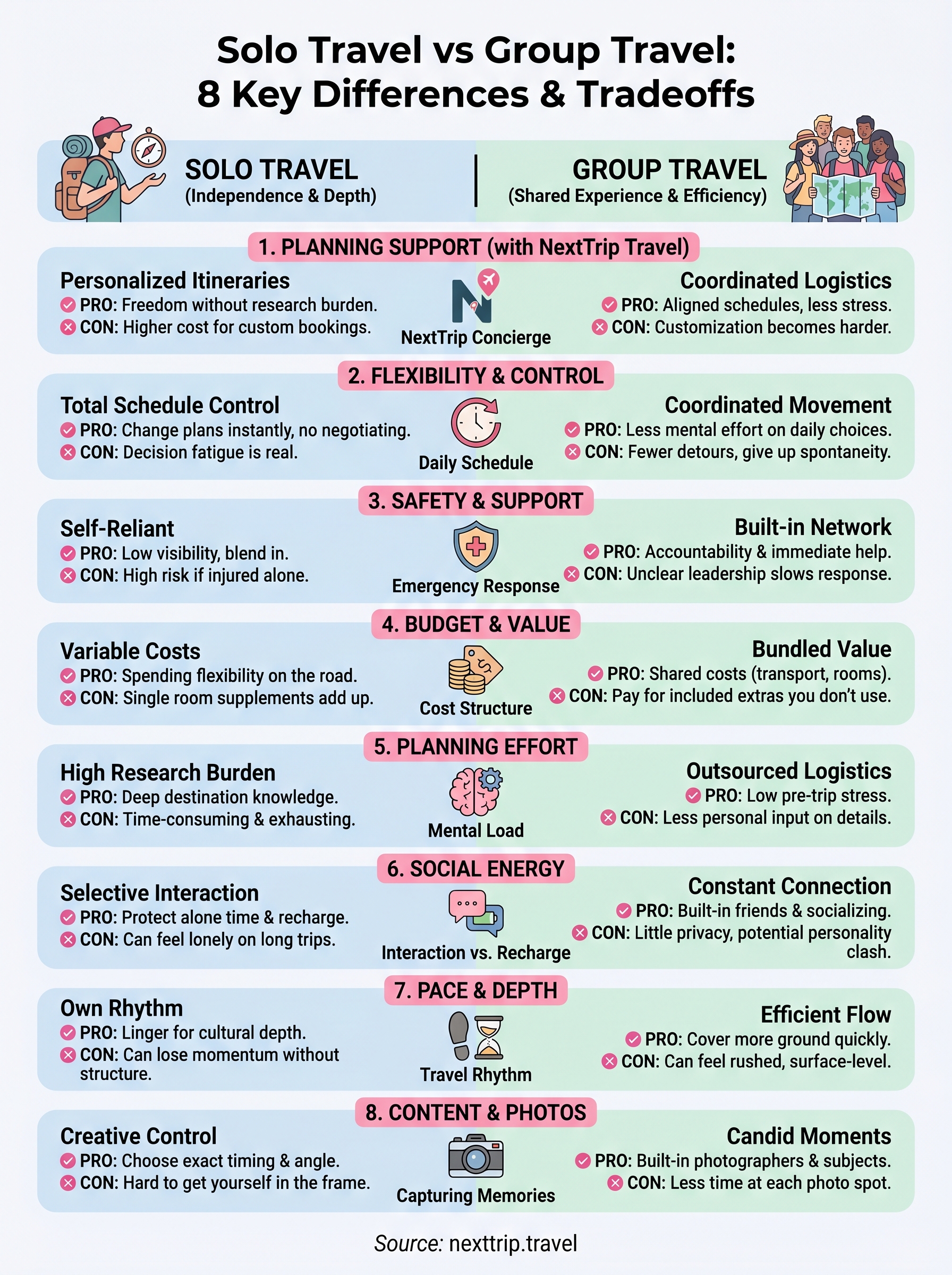
The choice between solo travel vs group travel comes down to three things: how much control you want daily, how you handle the planning and mental load, and what you need socially to enjoy the trip. Neither style is better in every situation. Solo travel rewards independence and depth. Group travel rewards efficiency and shared experience. Both deliver strong results when they match your actual personality and goals.
Your next step is simple. Identify which factors from this guide matter most to you, then build your trip around those priorities rather than what sounds good in theory. If you want expert help designing an itinerary that fits your travel style, whether you're going solo or bringing a group, explore curated travel experiences at NextTrip Travel. The planning process starts with a single conversation, and the right trip is closer than you think.