

You've booked the resort, saved the influencer reel for inspiration, and blocked off your calendar, but now comes the part that trips most travelers up: figuring out what to pack for a beach vacation without overstuffing your suitcase or forgetting something critical. Whether you're headed to the shores of Langkawi or a villa in the Maldives, what you bring shapes how much you enjoy the trip.
At Nexttrip.Travel, we design curated travel experiences with the help of creators and local insiders who actually live these destinations. That means we hear firsthand, constantly, about the items travelers wish they'd packed and the stuff that sat untouched at the bottom of their bags. We used that real feedback to build this list of 14 essentials and gear picks that actually matter.
Below, you'll find a practical, no-fluff packing guide covering clothing, sun protection, toiletries, tech, and beach-specific gear. It's built for couples, families, and solo explorers alike, so you can spend less time stressing over luggage and more time living a trip worth sharing.
1. A personalized packing plan from NextTrip.Travel
Before you grab a random packing list off the internet and call it done, consider that every beach vacation is different. A week in Penang looks nothing like a long weekend in the Perhentian Islands, and what you pack should reflect that. Nexttrip.Travel builds custom travel itineraries designed around your specific destination, duration, and activities, which means your packing plan starts before you even open your suitcase.
Why you need it
Generic packing lists fail you because they treat all beach trips as the same. If you're snorkeling in Redang, you need water shoes and a rash guard. If you're doing a luxury resort stay in Bali, you need at least one dinner-ready outfit and a versatile cover-up. A destination-specific plan removes the guesswork and keeps you from overpacking items you'll never touch.
The biggest packing mistake travelers make is building a list around "what if" rather than "what will I actually do."
When you plan with Nexttrip.Travel, the concierge team accounts for your itinerary, your climate, and your planned activities so your bag works for the trip you're actually taking, not a hypothetical one.
How to pick the right one
Start by mapping out your days. Write down every type of activity you plan to do: beach days, boat trips, city exploration, dinners out. Then match your packing list to those activities rather than packing for every possible scenario. Nexttrip.Travel's concierge service helps you do exactly that, so you arrive with a bag that covers your real trip.
Check the average weather and humidity for your destination during your travel dates. Malaysia's coastal destinations, for example, can bring sudden afternoon rain, which means a lightweight packable layer matters more than an extra sundress.
Packing tips for beach vacations
Once you know what to pack for a beach vacation based on your specific plans, build your list in categories: clothing, footwear, sun protection, toiletries, and tech. This structure stops you from missing entire categories when you're rushing to zip your bag the night before you fly.
Pack heavier items toward the bottom of your suitcase and rolled clothing toward the top to protect breakables and maximize usable space. A packing cube system keeps you organized from check-in to checkout without digging through layers every morning.
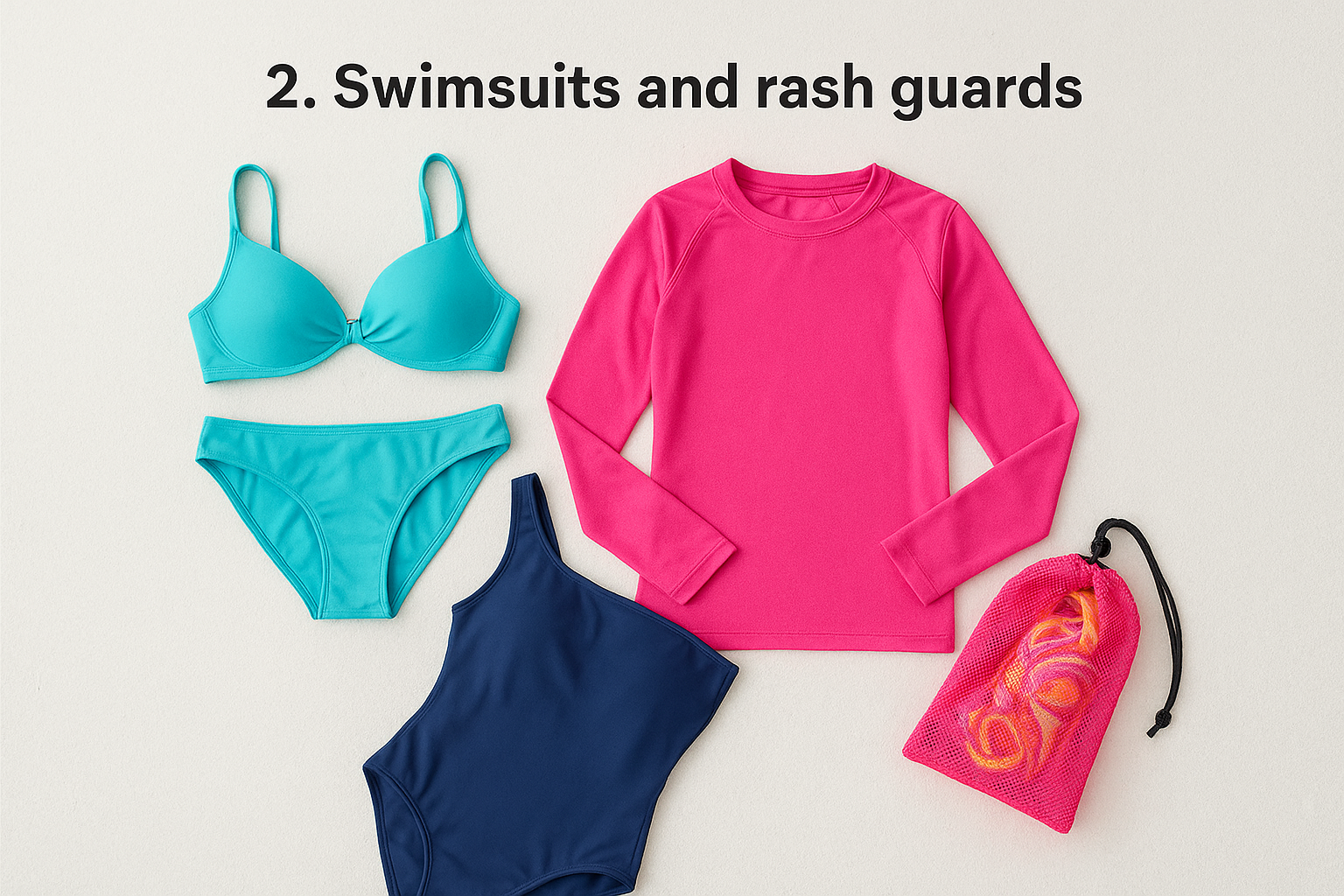
2. Swimsuits and rash guards
Your swimsuit is the core of every beach day, and packing the wrong number or the wrong style can limit what you do. One swimsuit for a seven-day trip is too few. It stays damp between swims and wears out fast from salt, sun, and chlorine. Pack at least two so one can dry fully while you wear the other.
Why you need it
A rash guard is not optional if you plan to snorkel, surf, or spend long stretches in open water. UV-protective rash guards block up to 98% of UVA and UVB rays, which means you stay protected even when sunscreen washes off in the surf. They also reduce skin irritation from sand and reef contact, which matters a lot on active water days.
If you spend more than two hours in the water each day, a rash guard does more for your skin than reapplied sunscreen alone.
How to pick the right one
Choose quick-dry, chlorine-resistant fabric for your swimsuit so it holds its shape across the full trip. For rash guards, look for a UPF 50+ rating and a fit that stays in place during movement. Women's one-pieces with built-in UV protection double as both swimwear and light coverage, which cuts down on what you need to carry.
Packing tips for beach vacations
Pack two to three swimsuits and one rash guard as a baseline for a week-long stay. Rinse each suit in fresh water after every use to extend its life. Roll them tightly into a mesh dry bag so they dry faster and stay separate from dry clothing in your suitcase.
3. A cover-up you can wear beyond the sand
A cover-up solves one of the most common packing challenges: carrying fewer clothes while still having the right look for multiple settings. Most beach trips move quickly between the water, a lunch spot, a market, or a casual bar, and a well-chosen cover-up lets you transition between those settings without a full outfit change.
Why you need it
Stepping off the sand into an air-conditioned restaurant or local shop without a cover-up means digging through your bag for a full change of clothes. Beach destinations like Langkawi or the Perhentian Islands mix casual beach culture with basic dress codes at nearby cafes and temples, so a single layer that works in both settings saves real time and bag space.
A cover-up that works beyond the beach effectively replaces two to three separate outfit pieces you'd otherwise pack.
Your cover-up also handles one practical problem that most travelers overlook: sun exposure during midday walks. A lightweight layer between sessions on the sand protects your shoulders and back without the sticky feeling of reapplied sunscreen over every inch of skin.
How to pick the right one
Choose a loose, breathable fabric like linen or cotton gauze that dries quickly and doesn't cling when you're warm. Midi-length wrap dresses, oversized button-down shirts, and wide-leg pants all double as beach cover-ups and casual going-out pieces. Skip heavy fabrics since they absorb moisture and take too long to dry in humid coastal climates.
Packing tips for beach vacations
When deciding what to pack for a beach vacation, pick a cover-up in a neutral or solid color so it pairs with every swimsuit in your bag. Fold it flat on top of your beach tote so it's the first thing you grab when you leave the water.
4. Breathable, mix-and-match outfits
Packing clothes that work together cuts your bag weight significantly and gives you more outfit options with fewer pieces. A mix-and-match system built around two or three base colors means every top pairs with every bottom, so you're never stuck wearing the same combination twice in a row.
Why you need it
Beach destinations run warm and humid, and your clothing needs to handle both heat and movement throughout the day. Light, breathable fabrics keep you comfortable whether you're walking a night market, exploring a coastal town, or grabbing lunch between swims.
Packing clothes that can't swap with each other forces you to carry more pieces than you need, which adds weight and takes up space your beach gear actually deserves.
Three tops and two bottoms that mix and match give you six outfit combinations, which covers most week-long beach trips without overpacking.
How to pick the right one
Choose linen, cotton, or moisture-wicking blends that breathe in high humidity and stay comfortable through long, active days. Solid colors and simple prints work best since they pair easily across every piece in your bag.
Avoid heavy denim or anything that takes more than a few hours to air dry after a sweaty afternoon in a coastal climate.
Packing tips for beach vacations
When you think through what to pack for a beach vacation, lay your tops and bottoms out together before loading your bag. If a top only pairs with one bottom, leave it home.
Roll each piece instead of folding to reduce wrinkles and fit more into your suitcase without forcing the zipper shut.
5. One dinner-ready outfit
Most beach trips include at least one nicer meal or evening out, whether that's a beachfront restaurant, a rooftop bar, or a local seafood spot that actually draws a crowd. Packing one outfit specifically built for dinner means you're never caught wearing sandy shorts when the evening calls for something slightly more put-together.
Why you need it
Beach destinations in Malaysia, including Penang and Langkawi, often blend casual beach culture with restaurants and venues that expect a basic dress code after sundown. Without a dinner-ready option in your bag, you end up wearing the same daytime clothes all evening, which gets uncomfortable fast in warm, humid coastal air.
One versatile evening outfit covers every dinner or outing on your trip without adding meaningful weight to your suitcase.
How to pick the right one
Choose a single outfit that moves from day to evening with minimal effort. For women, a wrap dress or a sleek midi skirt paired with a fitted top works across most settings. For men, lightweight chinos and a linen button-down handle everything from a casual beach bar to an air-conditioned restaurant without looking overdressed.
Stick to wrinkle-resistant fabrics so the outfit looks sharp after spending days compressed in your suitcase. Linen, jersey, and lightweight polyester blends all travel well in tropical heat without losing their shape.
Packing tips for beach vacations
When planning what to pack for a beach vacation, treat your evening outfit as one complete unit. Pack the full look together, shoes included, so you never scramble to find pieces on a rushed evening. One dinner outfit is genuinely enough for most trips.
6. Comfortable sandals for beach and town
Your footwear does more work on a beach vacation than most travelers expect. You need something that handles wet sand, uneven paths, and short walks into town without falling apart after two days of salt water and heat. A solid pair of sandals handles all of that in one lightweight package.
Why you need it
Beach destinations move fast between environments. You walk from the resort to the sand, from the sand to a lunch spot, and from there to a market or waterfront stroll, sometimes within the same afternoon. Flip-flops fall short for anything beyond the pool because they offer no arch support and slip on slick surfaces.
A pair of well-built sandals with grip and support replaces flip-flops, casual shoes, and light walking shoes in one go, which frees up real space in your bag.
How to pick the right one
Look for sandals with a contoured footbed and rubber grip outsole so they stay stable on wet surfaces around the pool and on uneven coastal paths. Brands that make water-safe leather or synthetic sandals built for light hiking hold up best across a full trip.
Choose a neutral color like tan, black, or brown so the sandal pairs with your swimsuit cover-up, your dinner outfit, and your daytime clothes without looking out of place in any setting.
Packing tips for beach vacations
When you finalize what to pack for a beach vacation, plan for one versatile sandal rather than multiple pairs. Stuff socks or small items inside the sandals to save space in your bag and pack them sole-to-sole to protect the footbed.
7. Water shoes for rocks, reefs, and tide pools
Sandals handle the town, but water shoes handle the terrain sandals can't. Rocky shorelines, coral reefs, and slippery tide pools require closed-toe protection that grips wet surfaces and shields your feet from cuts. Without them, a single reef walk can end your beach day early.
Why you need it
Many of Southeast Asia's best coastal spots sit right next to sharp volcanic rock, live coral, or barnacle-covered surfaces that punish bare feet. Snorkeling entries and exits through shallow reef areas are some of the most common causes of foot injuries on beach trips, and most of them are preventable.
A pair of water shoes that cost under $40 can save you from a medical stop that derails two full days of your trip.
How to pick the right one
Look for a rubber toe cap and a non-slip outsole rated for wet rock surfaces. The fit matters more than aesthetics here: a loose shoe fills with water and slides around, which creates its own hazard. Choose a snug mesh upper that drains quickly and doesn't hold sand between your toes after every step through the shallows.
Neoprene water shoes add a layer of thermal protection if you plan to spend time in cooler tidal pools or deeper reef areas where the temperature drops fast below the surface.
Packing tips for beach vacations
When you work through what to pack for a beach vacation, water shoes are easy to deprioritize until you actually need them. Pack them in a mesh bag or outer pocket of your suitcase so they stay separate from dry clothing and dry out fast between uses.
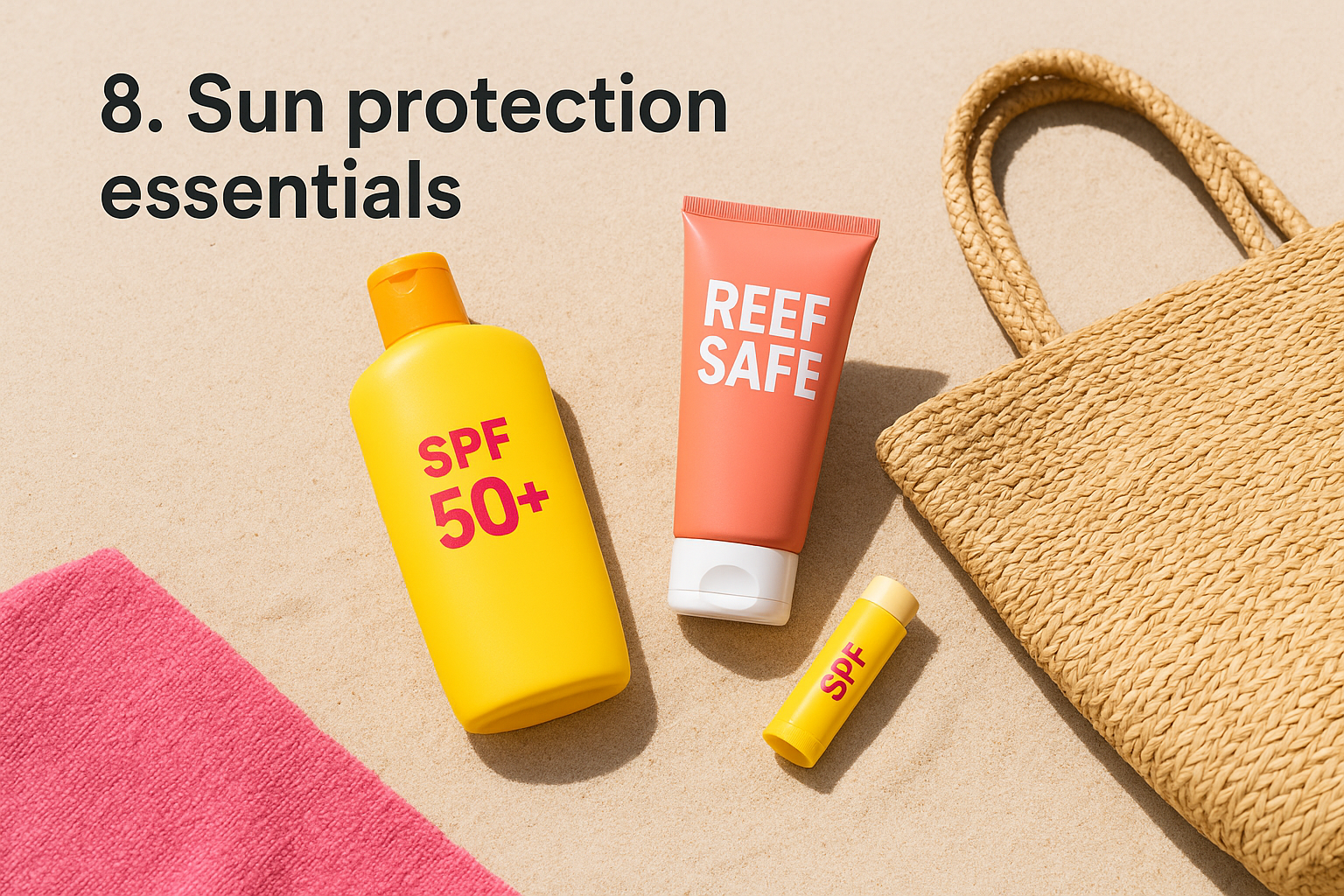
8. Sun protection essentials
Sun protection is the category most travelers underpack, and it's the one that causes the most damage when you get it wrong. Sunburn on day two of a beach vacation limits everything you planned to do for the rest of the trip.
Why you need it
Beach environments expose you to reflected UV radiation from both water and sand, which amplifies your total UV exposure well beyond what you'd experience inland. Standard sunscreen applied once in the morning loses most of its effectiveness by midday after swimming and sweating.
Research confirms that sunscreen loses up to 80% of its effectiveness within 40 minutes of swimming, which makes reapplication every two hours the actual minimum standard.
How to pick the right one
Choose a broad-spectrum, water-resistant formula with at least SPF 50 as your daily baseline. If you're snorkeling or swimming near reefs in Malaysia, pick a reef-safe option that excludes oxybenzone and octinoxate, which damage coral ecosystems. Look for these three in your kit:
- SPF 50+ broad-spectrum sunscreen (water-resistant)
- Reef-safe formula for water activities
- SPF lip balm, which is easy to overlook when you think through what to pack for a beach vacation
Packing tips for beach vacations
Pack a full-size bottle for the beach bag and a travel-size stick or spray for day trips and boat outings. Solid sunscreen sticks resist leaking in your carry-on and apply cleanly without greasy hands.
Store all sunscreen away from direct heat since high temperatures degrade active ingredients faster than most people expect. Keep a small bottle inside your beach tote so reapplication stays easy without digging through your main bag mid-afternoon.
9. A sun hat that stays put
A wide-brim hat is one of the most practical items on any beach packing list, and also one of the most commonly forgotten. Direct sun exposure on your face, neck, and shoulders adds up fast over a full beach day, and even SPF 50 sunscreen needs backup from physical shade to keep up.
Why you need it
Your face absorbs more cumulative UV damage on a beach trip than almost anywhere else, primarily because sand and water both reflect sunlight back upward at angles that bypass standard forward-facing sun protection. A hat blocks that reflected glare from below as well as direct sun from above, which means your skin gets a genuine break during the hours between 10 a.m. and 3 p.m. when UV intensity peaks.
Dermatologists consistently rank wide-brim hats as one of the most effective physical sun protection tools available, more reliable than sunscreen reapplication alone during extended outdoor exposure.
How to pick the right one
Choose a hat with a brim of at least three inches all the way around, which covers your ears and the back of your neck rather than just your forehead. A chin strap or interior sweatband matters more than most buyers expect because coastal wind pulls unsecured hats off within minutes. Packable straw or woven nylon hats hold their shape after compression and weigh almost nothing in your bag.
Packing tips for beach vacations
When you sort through what to pack for a beach vacation, treat your sun hat as carry-on luggage rather than packing it inside a checked bag where it will get crushed. Stuff small items like sunglasses or a travel wallet inside the crown to protect the shape and use the overhead bin space efficiently.
10. Sunglasses you can wear all day
Good sunglasses do more than complete a beach look. They protect your eyes from UV radiation reflected off water and sand, and the right pair handles full sun without slipping off your face every time you move.
Why you need it
Your eyes absorb UV damage just as your skin does, and prolonged beach exposure without protection increases your long-term risk of cataracts and macular degeneration. Standard fashion sunglasses often skip UV protection entirely, which means they block visible light without filtering the rays that actually cause damage. That combination is worse than wearing nothing because your pupils dilate behind tinted lenses and take in more harmful UV as a result.
Ophthalmologists recommend lenses that block 99 to 100 percent of both UVA and UVB radiation as the baseline standard for genuine eye protection outdoors.
How to pick the right one
Look for a UV400 or 100% UV protection label, which confirms the lenses block the full spectrum of harmful rays rather than just reducing brightness. Polarized lenses cut the glare off water significantly, which reduces eye fatigue during long beach days. Choose a wraparound or oversized frame that limits light entry from the sides, since reflected glare from sand and ocean hits at angles that standard frames miss entirely.
Packing tips for beach vacations
When you finalize what to pack for a beach vacation, pack your sunglasses in a hard-shell case to protect the lenses from scratches inside a packed bag. Bring a second budget pair as a backup since beach environments are hard on eyewear and losing your only pair on day one is a real problem.
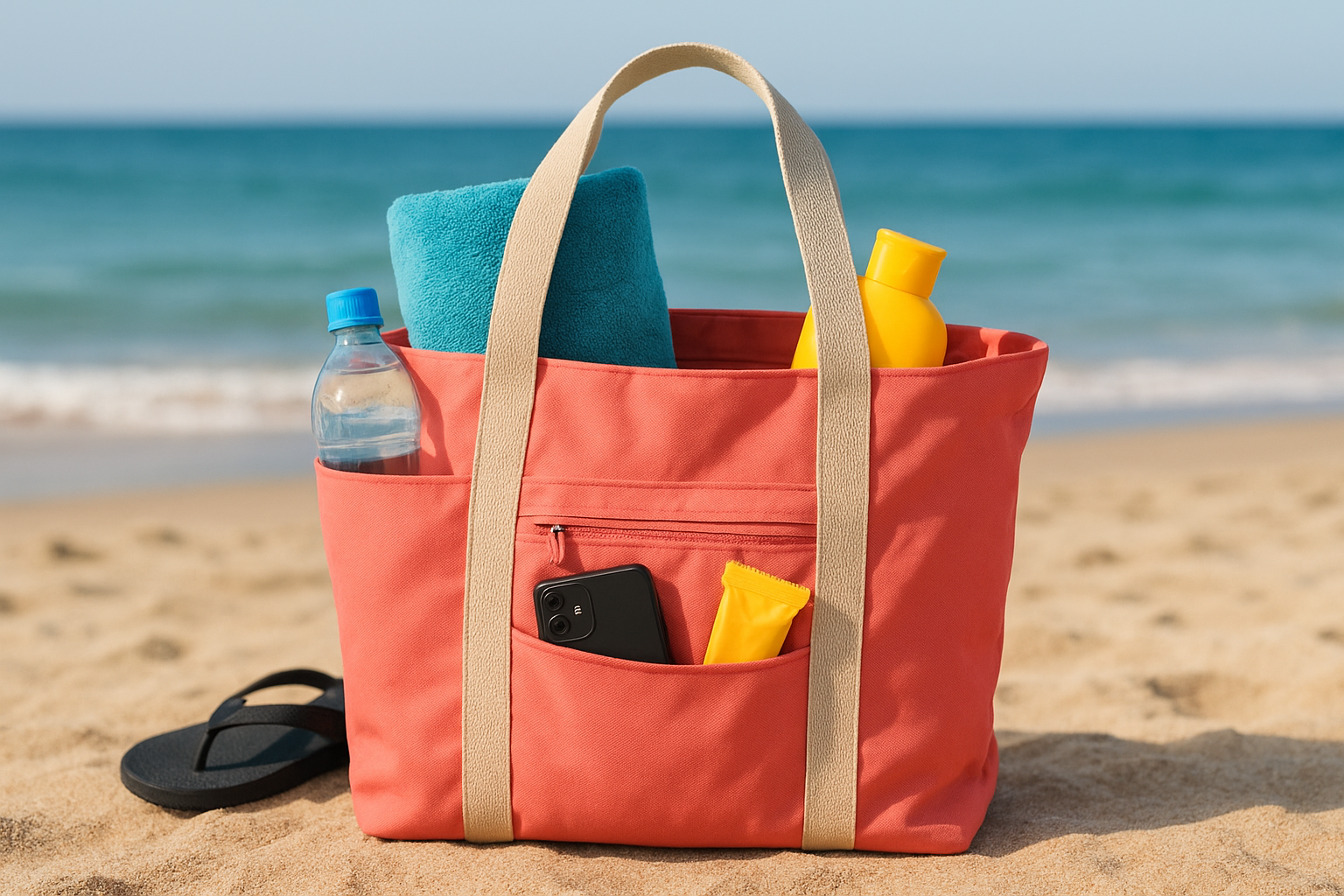
11. A beach tote or daypack that organizes fast
Your bag for the beach does more than carry towels. It needs to hold sunscreen, snacks, a water bottle, your phone, and wet gear all at the same time, without turning into a sand-filled disaster by noon. A tote or daypack built for beach conditions keeps everything accessible so you spend less time digging and more time in the water.
Why you need it
Most standard bags fall apart fast in beach environments. Fabric totes absorb water, standard zippers corrode in salt air, and unstructured bags dump their contents the moment you set them on uneven sand. A bag designed for the beach solves all three problems before they ruin your afternoon.
A well-organized beach bag saves you from repacking every time you move between the water and your spot on the sand, which adds up across a full day of activity.
How to pick the right one
Look for a bag with waterproof or water-resistant lining and a separate wet compartment for damp swimsuits and towels. Interior pockets that hold your phone, keys, and sunscreen upright keep small items from sinking to the bottom. A wide, flat base that sits stable on sand without tipping is worth prioritizing over a sleek silhouette that falls over constantly.
Packing tips for beach vacations
When you think through what to pack for a beach vacation, treat your beach bag as its own packing category. Load it the night before with your sun protection, snacks, and water bottle so you can grab it and go without a rushed morning scramble. Keep your phone and valuables in the innermost pocket, away from damp gear.
12. A quick-dry towel and sand-resistant blanket
Your resort may supply towels for the pool, but hotel towels are rarely allowed off the property, and they do nothing for a stretch of open beach or a boat trip where you need your own gear. A quick-dry towel and a sand-resistant blanket together handle every beach scenario without adding significant weight to your bag.
Why you need it
Standard cotton towels absorb water fast and stay damp for hours, which makes them uncomfortable to use a second time and slow to pack after a morning swim. In humid coastal climates like Malaysia's, a soggy cotton towel sitting in your beach bag develops a musty smell by afternoon. A quick-dry microfiber towel solves both problems by drying in 20 to 30 minutes rather than hours.
A sand-resistant blanket saves your gear from constant grit because its tight weave lets sand fall through rather than clinging to the surface.
How to pick the right one
Choose a microfiber towel with a weight between 300 and 400 GSM for the best balance of softness and drying speed. For the blanket, look for a tightly woven nylon or ripstop polyester with reinforced corners and ground stakes so it holds position when coastal wind picks up during the afternoon.
Packing tips for beach vacations
When you work through what to pack for a beach vacation, these two items compress into almost nothing. Roll your microfiber towel tightly and secure it with its own snap or carry bag, then fold the blanket flat underneath it in your beach tote so both stay dry and ready to grab.
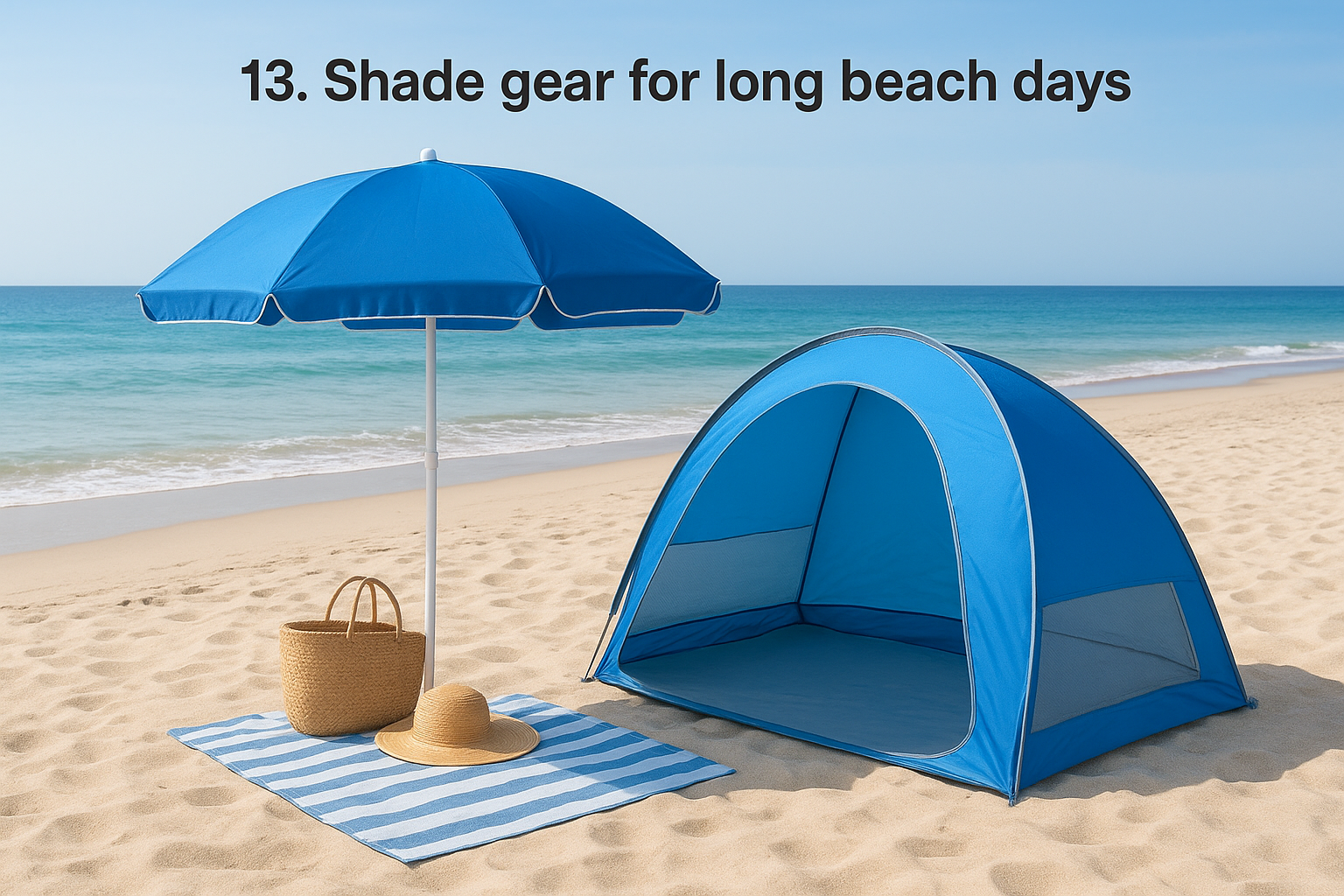
13. Shade gear for long beach days
Most travelers plan for sun protection on their skin but forget to plan for shade overhead. A portable beach umbrella or pop-up sun shelter gives you a physical barrier from direct UV radiation so you can spend more time on the beach without the full force of midday sun hitting you from above.
Why you need it
Your sunscreen and hat handle a lot, but they don't eliminate the cumulative heat and UV load that builds up over four to six hours on an open beach. A shade structure drops the temperature under its canopy by several degrees and reduces your total UV exposure significantly during the hottest window of the day.
Studies on outdoor thermal comfort show that shaded areas can feel up to 10 degrees cooler than adjacent sun-exposed surfaces under the same conditions, which translates directly to how long you can stay comfortable outdoors.
How to pick the right one
Look for a UPF 50+ rated beach umbrella or pop-up shelter with a sand anchor or weighted base that holds firm in coastal wind. Pop-up shelters with ventilated mesh panels reduce the greenhouse effect inside and keep air moving so the shade feels genuinely cool rather than stifling. A compact fold-down size that fits in its own carry bag is worth prioritizing since you'll carry it across sand every time.
Packing tips for beach vacations
When you consider what to pack for a beach vacation, shade gear is often the last thing added and the first thing left behind. Pack your umbrella or shelter in a dedicated carry bag with a shoulder strap so it doesn't compete for space inside your main luggage.
14. Waterproof and power kit for your tech
Your phone, camera, and power bank take a beating at the beach. Salt spray, sand, and sudden rain create the exact conditions that destroy unprotected electronics in a single afternoon. A dedicated waterproof and power kit keeps your tech functional for the entire trip so you never miss a moment worth capturing.
Why you need it
Beach environments are hard on devices in ways that aren't always obvious until something goes wrong. Water and sand reach electronics through gaps, ports, and vents even when you're being careful, and the combination of heat and humidity accelerates damage once moisture gets inside. Losing your phone on day three of a week-long trip turns every activity into a navigation problem.
A waterproof case rated to at least IP67 withstands submersion up to one meter for 30 minutes, which covers most accidental drops in shallow water during beach and boat activities.
How to pick the right one
Build your kit around three core items: a waterproof phone case or dry bag rated for water submersion, a high-capacity power bank with at least 20,000mAh for multi-day charging, and a compact universal travel adapter that handles the outlet types at your destination. Add a waterproof camera pouch if you carry a mirrorless or point-and-shoot camera on water activities.
Packing tips for beach vacations
When you finalize what to pack for a beach vacation, keep your power kit together in a single waterproof organizer pouch inside your beach bag. Charge your power bank fully the night before every active day so you never run low mid-trip when you're away from your room.
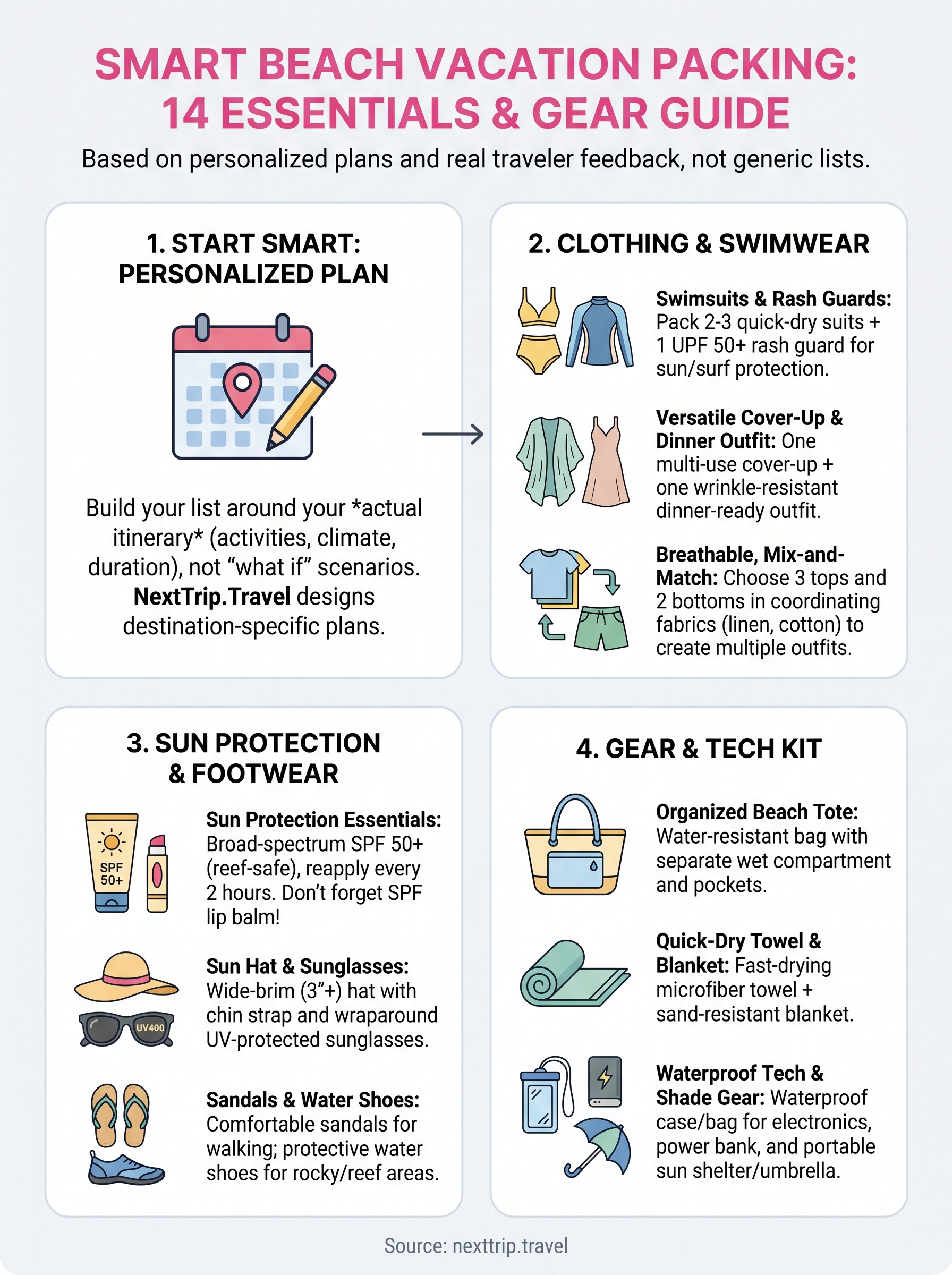
Your beach bag, simplified
Knowing what to pack for a beach vacation is not about bringing everything and sorting it out at the resort. It is about making deliberate choices before you zip the bag so every item you carry earns its space on the trip.
The 14 essentials in this guide cover the categories that actually determine how comfortable, protected, and prepared you are from day one through your last afternoon on the sand. Swimsuits, sun protection, shade gear, and a solid tech kit do not overlap, so skipping any one category leaves a real gap in your trip.
Your trip deserves a plan that goes beyond a packing list. NextTrip.Travel's concierge team builds destination-specific itineraries around your travel style, your activities, and your timeline so you arrive ready for the trip you actually planned, not a generic version of it.