

Sabah sits on the northern tip of Borneo, and it's one of those rare destinations where the best places to visit in Sabah genuinely surprise you at every turn. Think towering peaks, underwater worlds teeming with sea turtles, and islands so quiet you can hear the tide shift from your doorstep.
Whether you're drawn to summit trails on Mount Kinabalu or world-class dive sites off Sipadan, Sabah delivers experiences that most Southeast Asian destinations simply can't match. It's the kind of place that turns a week-long trip into a story you tell for years, exactly the type of journey we build at Nexttrip.Travel, where every itinerary is shaped by people who've actually been there and know what's worth your time.
Below, we've mapped out eight standout destinations across Sabah, covering nature, islands, and diving, so you can plan a trip that hits the highlights without the guesswork.
1. Kota Kinabalu
Kota Kinabalu, locally called KK, is where most Sabah trips begin, and it earns its place as a base for good reason. The city sits on the western coast of Sabah, facing a cluster of islands and a sunset that regularly stops people mid-conversation. It also connects you quickly to every other destination on this list.
Why it belongs on your Sabah list
KK ranks consistently among the best places to visit in Sabah because it combines city convenience with genuine natural access. You can eat fresh seafood at night, watch the sun drop into the South China Sea from Signal Hill, and be on a boat to an island by 8 a.m. the next morning.
KK is also the main gateway to Mount Kinabalu, the Kinabatangan River, and Sipadan, so positioning yourself here first makes the logistics of your entire trip significantly easier.
Best things to do in Kota Kinabalu
The Gaya Street Sunday Market runs every week and gives you a direct look at local crafts, produce, and street food without the tourist markup. For views, head up to Signal Hill Observatory in the late afternoon when the light hits the islands across the water. The Esplanade waterfront is worth a walk after dinner when the city cools down.
Where to eat and what to try
Head straight to the Filipino Market near the waterfront for fresh grilled seafood at honest prices. Order the whole grilled fish with sambal and stay for the garong-garong. For something more casual, hawker stalls around Sinsuran and the night markets serve laksa and nasi lemak that locals actually line up for.
Where to stay and which area to choose
Staying near the Waterfront Esplanade puts you within walking distance of restaurants, ferry terminals, and the night market. Budget travelers find solid options around Gaya Street, while mid-range hotels cluster closer to the waterfront and offer views worth paying slightly more for.
Easy day trips from the city
Tunku Abdul Rahman Marine Park sits just 15 to 20 minutes by ferry from Jesselton Point terminal. Kinabalu Park is roughly two hours by road, making it a manageable overnight if you want to spend the following morning exploring Kundasang at a proper pace.
2. Tunku Abdul Rahman Marine Park
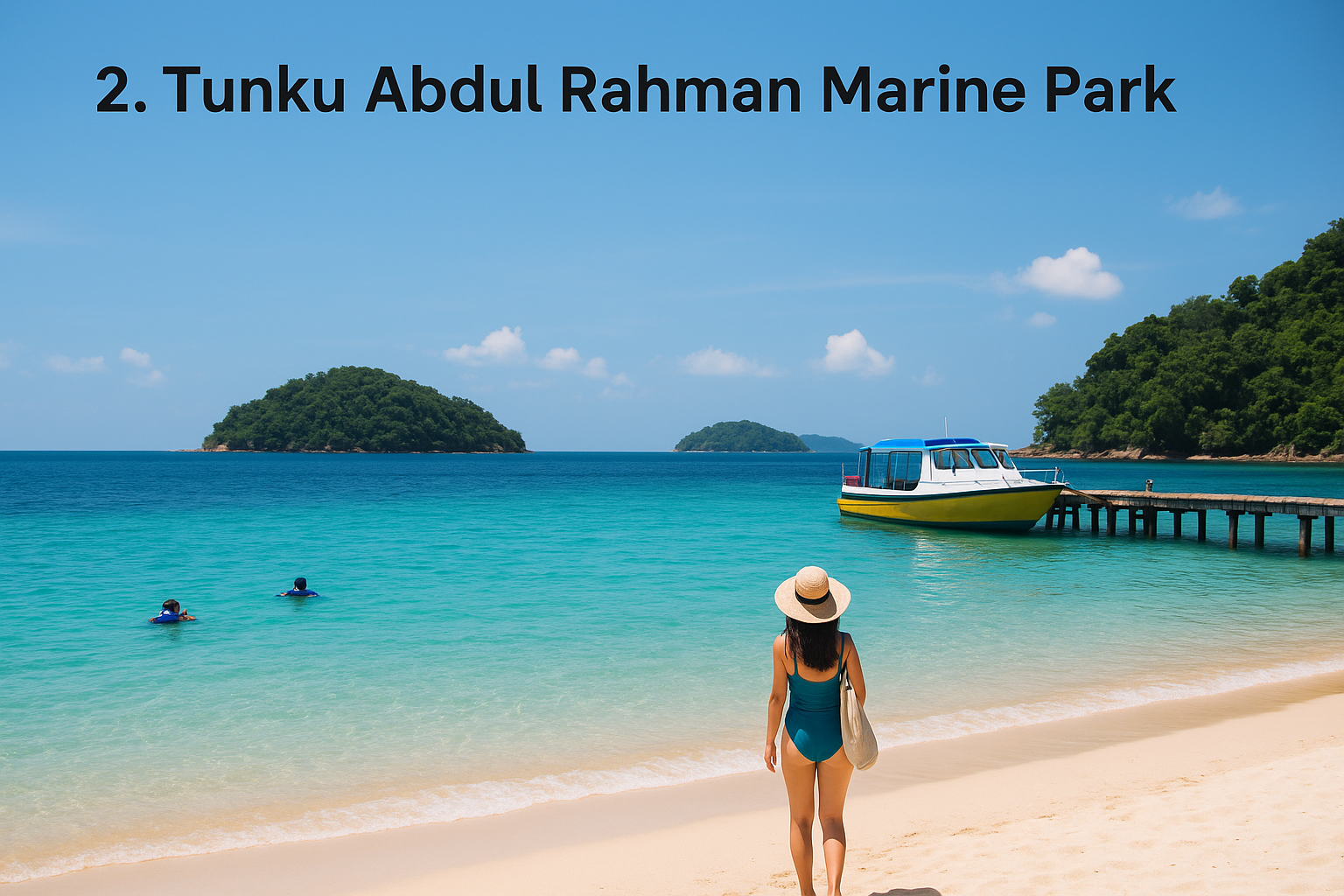
Just 15 minutes from the KK waterfront by ferry, Tunku Abdul Rahman Marine Park covers five protected islands with coral reefs, white sand beaches, and water clear enough to see the seabed from the boat. It ranks among the best places to visit in Sabah if you want genuine reef snorkeling without a long travel day.
Why go here
The park protects active coral gardens that shelter sea turtles, reef fish, and hard coral formations you can reach by simply wading in from the shore. The short distance from KK makes this the most accessible natural experience in the entire state.
Arrive before 9 a.m. to get the calmest water and the best visibility around the reef edges before day-trippers fill the beaches.
Which islands to choose
Sapi and Manukan are the most developed, with changing facilities and food stalls on site. Sulug is quieter and better for snorkeling with fewer visitors. Mamutik sits in the middle in terms of size and crowd levels.
What to do on the islands
Snorkeling around Sapi and Manukan regularly turns up sea turtles, especially in the morning hours. You can also kayak, swim, or walk the beach. Paragliding is available at Sapi for a different perspective on the bay.
What to pack for an island day
Bring reef-safe sunscreen and a dry bag. Carry your own snorkel gear if possible since rental quality on the islands is inconsistent.
How to get there and what it costs
Ferries leave from Jesselton Point Terminal in KK. A return boat ticket runs roughly RM 23 to RM 35 per person, with a separate park entrance fee of around RM 10 for adults payable on arrival.
3. Mount Kinabalu and Kinabalu Park
Mount Kinabalu stands at 4,095 meters above sea level, making it the highest peak in Southeast Asia and one of the most iconic landmarks among the best places to visit in Sabah. The mountain anchors Kinabalu Park, a UNESCO World Heritage Site covering over 75,000 hectares of protected lowland and montane forest.
Why go here
The park attracts hikers, botanists, and casual visitors equally because the mountain itself is only one part of the experience. Even if you never lace up a pair of hiking boots, the surrounding park holds some of the most diverse flora on the planet, including multiple species of pitcher plants found nowhere else.
Book your climb permits and accommodation at least three months ahead, especially for peak season between March and August, since daily summit slots are strictly limited.
Climb vs visit the park only
Summiting takes two days with an overnight stop at Laban Rata, roughly 3,270 meters up. If the summit is not your goal, a full park visit still rewards you with mountain trails, waterfalls, and plant life you will not see at lower elevations.
What to see inside Kinabalu Park
The park headquarters area offers well-marked trails through mountain gardens filled with rhododendrons, orchids, and carnivorous pitcher plants. The Silau-Silau trail is a manageable walk that most fitness levels can handle.
Permits, guides, and what to book early
Climbing permits and mandatory guide fees are purchased through Sutera Sanctuary Lodges, the official operator. Secure your Laban Rata accommodation at the same time since it sells out fast.
Best time to visit and weather notes
February through April offers the most stable weather for summit attempts. Cloud cover builds most afternoons year-round, so early morning starts improve your visibility on the trail significantly.
4. Kundasang and Poring Hot Springs
Kundasang sits about 15 kilometers from Kinabalu Park at an elevation cool enough to require a light jacket, making it a refreshing contrast to coastal Sabah. It ranks among the best places to visit in Sabah if mountain scenery and local farm culture appeal to you.
Why go here
Cool highland air and unobstructed views of Mount Kinabalu make Kundasang worth a dedicated stop rather than just a drive-through. The valley also grows vegetables at altitude, so local produce at roadside stalls is genuinely fresh and cheap.
Best viewpoints and photo spots
Kundasang War Memorial Park gives you an open sightline to the mountain on clear mornings. Get there before 9 a.m. before cloud cover builds across the upper peak.
Clear skies over Mount Kinabalu from Kundasang War Memorial Park are most reliable in the early morning, so plan your visit before clouds roll in.
Desa Dairy Farm and local markets
Desa Dairy Farm sits on rolling green hills with the mountain visible in the background and cattle grazing in the foreground. Stop at roadside stalls along the main road to pick up fresh strawberries and highland vegetables before moving on.
Poring Hot Springs and canopy walkway
Poring Hot Springs sits roughly 40 kilometers from Kundasang and combines natural hot spring pools with a canopy walkway elevated above the rainforest floor. The walkway gives you a treetop perspective that ground-level trails simply cannot match.
How to get around the Ranau and Kundasang area
Renting a car or hiring a private driver from KK is the most practical way to cover Kundasang, Ranau, and Poring in a single day. Public transport between these spots runs infrequently and limits your timing significantly.
5. Kinabatangan River
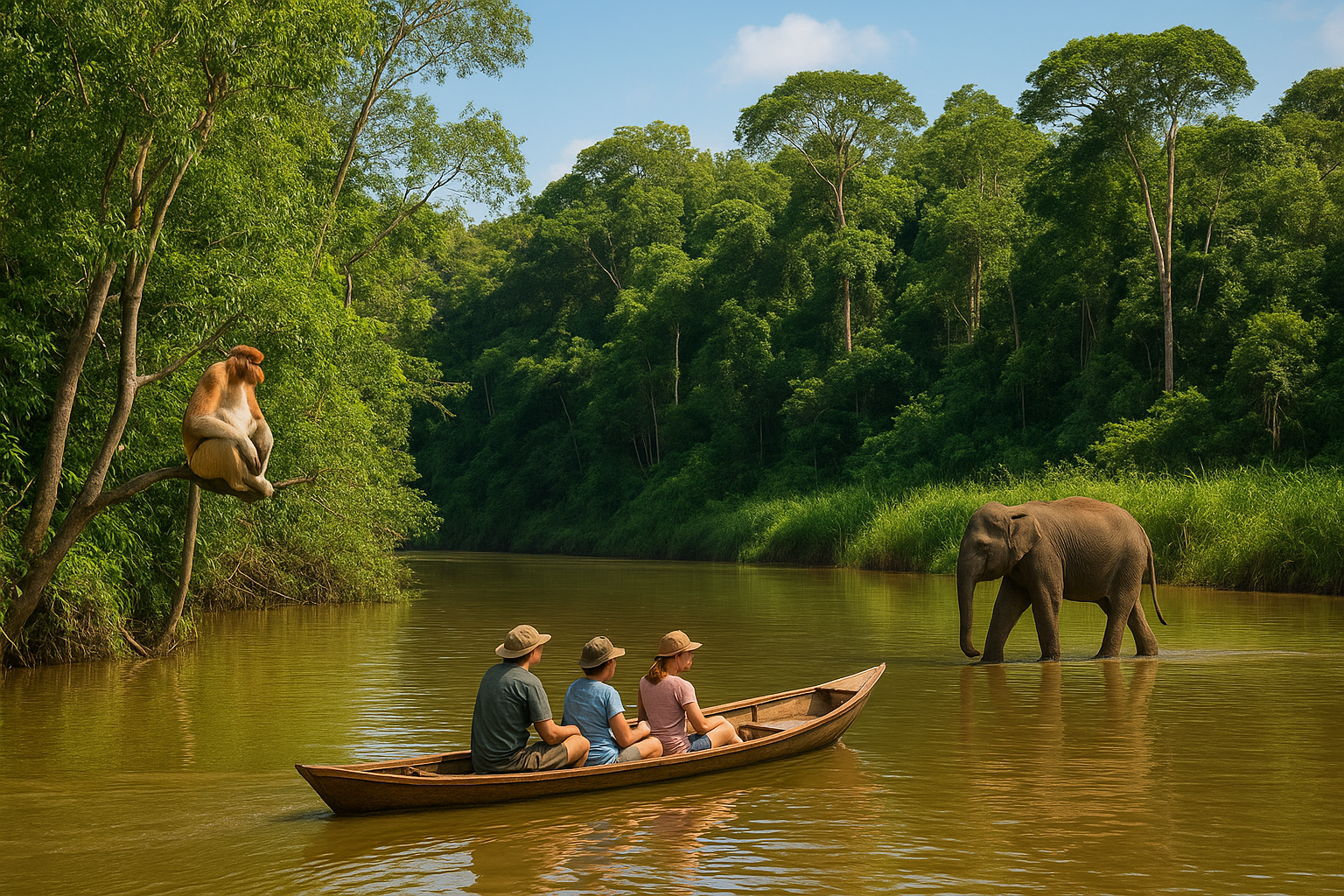
The Kinabatangan River runs through the lowland rainforest of eastern Sabah, and it stands out as one of the best places to visit in Sabah for anyone serious about wildlife. The river corridor holds one of the highest concentrations of wild orangutans and proboscis monkeys in Borneo within a relatively compact area.
Why go here
Few places on earth let you watch wild primates, elephants, and crocodiles from a slow-moving boat without a long trek into the forest. The Kinabatangan offers that access reliably, which is why it earns a dedicated spot in any serious Sabah itinerary.
Book your river lodge at least six to eight weeks ahead since accommodation along the Kinabatangan is limited and fills quickly during school holidays.
Wildlife you can realistically spot
Proboscis monkeys and long-tailed macaques gather along the riverbanks at dusk and dawn. Pygmy elephants move through the corridor seasonally, and oriental darters and kingfishers are common sightings for birdwatchers even on shorter visits.
River cruises, night walks, and what to expect
Most lodges run early morning and late afternoon boat cruises when wildlife is most active. Night walks through the adjacent forest add a separate layer of sightings, including slow lorises and flying squirrels that you will not see during daylight hours.
Where to stay along the river
Sukau and Bilit are the two main villages with lodges directly on the river. Staying overnight at one of these gives you multiple cruise slots across two days.
When to visit for the best sightings
March through October offers drier conditions and clearer river access. Elephant sightings peak when water levels push herds closer to the riverbank during the dry season months.
6. Sepilok and Sandakan wildlife centers
Sandakan sits on Sabah's northeast coast and serves as the gateway to three of the most compelling wildlife experiences among the best places to visit in Sabah. The Sepilok area, roughly 25 kilometers from the city, puts you within reach of two world-class conservation centers and a rainforest park that rewards patient visitors.
Why go here
Few destinations pack this density of wildlife encounters into such a small area. Within a single day, you can watch orangutans return to feeding platforms, observe sun bears in naturalistic forest enclosures, and walk a canopy boardwalk above the forest floor.
Sepilok Orangutan Rehabilitation Centre tips
The Sepilok Orangutan Rehabilitation Centre rescues and rehabilitates orphaned orangutans before releasing them into protected forest. Bring binoculars and a long lens since feeding platforms sit at a distance from the viewing gallery.
Bornean Sun Bear Conservation Centre tips
This center sits directly adjacent to Sepilok and takes under an hour to visit properly. Watch for bears climbing trees and foraging at ground level through the viewing platforms inside the forest enclosure.
Rainforest Discovery Centre for canopy walks and birds
The Rainforest Discovery Centre offers a canopy walkway and observation tower that raises you level with the upper forest. Birdwatchers regularly spot hornbills and pittas along the trail, especially in early morning.
Arrive at the Rainforest Discovery Centre before 8 a.m. for the quietest conditions and the best bird activity before the heat builds.
How to plan timing around feeding sessions
Feeding sessions at Sepilok run twice daily at 10 a.m. and 3 p.m. Build your day around the morning feed first, then move through the sun bear center and finish at the Rainforest Discovery Centre before midday.
7. Danum Valley Conservation Area
Danum Valley covers 438 square kilometers of undisturbed lowland dipterocarp forest in the interior of Sabah, making it one of the most significant primary rainforests remaining in Southeast Asia. If you want raw, unfiltered jungle with minimal other visitors, this is where you go.
Why go here
Danum consistently earns its place among the best places to visit in Sabah because the forest here has never been logged. That distinction matters enormously for wildlife density and the sheer scale of the trees towering above the forest floor.
What makes Danum different from other jungles
Most forest reserves in Sabah contain secondary growth, meaning the forest regenerated after clearing. Danum Valley is primary forest, which means the ecosystem remains intact and supports species that cannot survive in degraded habitat, including clouded leopards and Sumatran rhinoceros in the deeper reaches.
The undisturbed canopy at Danum Valley creates wildlife encounters that no other destination in Sabah can reliably replicate.
Typical activities and what you might see
Night drives along forest roads regularly turn up civets, sambar deer, and slow lorises. Guided day walks focus on plant identification, insect life, and forest structure as much as large mammals.
Where to stay and what to budget for
Borneo Rainforest Lodge is the primary accommodation option and sits inside the conservation area. Expect rates from USD 250 per person per night, with meals and guided activities typically included.
How to get there from Lahad Datu
Danum Valley sits roughly 85 kilometers from Lahad Datu by a single access road. Arrange transfers through Borneo Rainforest Lodge directly since private vehicles are restricted and public transport does not serve the area.
8. Semporna and Sipadan
Semporna is a small coastal town in southeastern Sabah and the launchpad for one of the most celebrated diving destinations on earth. Sipadan Island sits at the meeting point of three ocean currents that channel in extraordinary marine life year-round, drawing divers from across the globe to this single remote location.
Why go here
Sipadan consistently ranks among the best dive sites in the world, and its position on the edge of a deep ocean wall means you encounter sea turtles, schooling barracuda, and hammerhead sharks in a single dive. For anyone building a list of the best places to visit in Sabah, this destination belongs near the top if diving factors into your plans.
Sipadan diving permits and how they work
The Malaysian government limits Sipadan to 120 diving permits per day across all operators. You book through a licensed dive resort in Semporna, and permits are allocated, not guaranteed, so confirm yours before arriving.
Book your Sipadan dive resort at least three to six months ahead, particularly for peak season, since permit slots fill faster than accommodation.
Best alternatives if you cannot get Sipadan permits
Mabul and Kapalai offer strong macro diving with frogfish, seahorses, and nudibranchs at close range. Both islands sit near Sipadan and deliver genuine underwater quality even without the wall dive.
Snorkeling and island hopping options
Islands around Semporna, including Mabul and Mataking, work well for snorkeling from the surface. Speedboats departing from Semporna Jetty reach all of them within 45 minutes.
Best season for visibility and sea conditions
April through December delivers the calmest seas and best underwater visibility. January and February bring rougher conditions that can limit boat access to the outer islands.
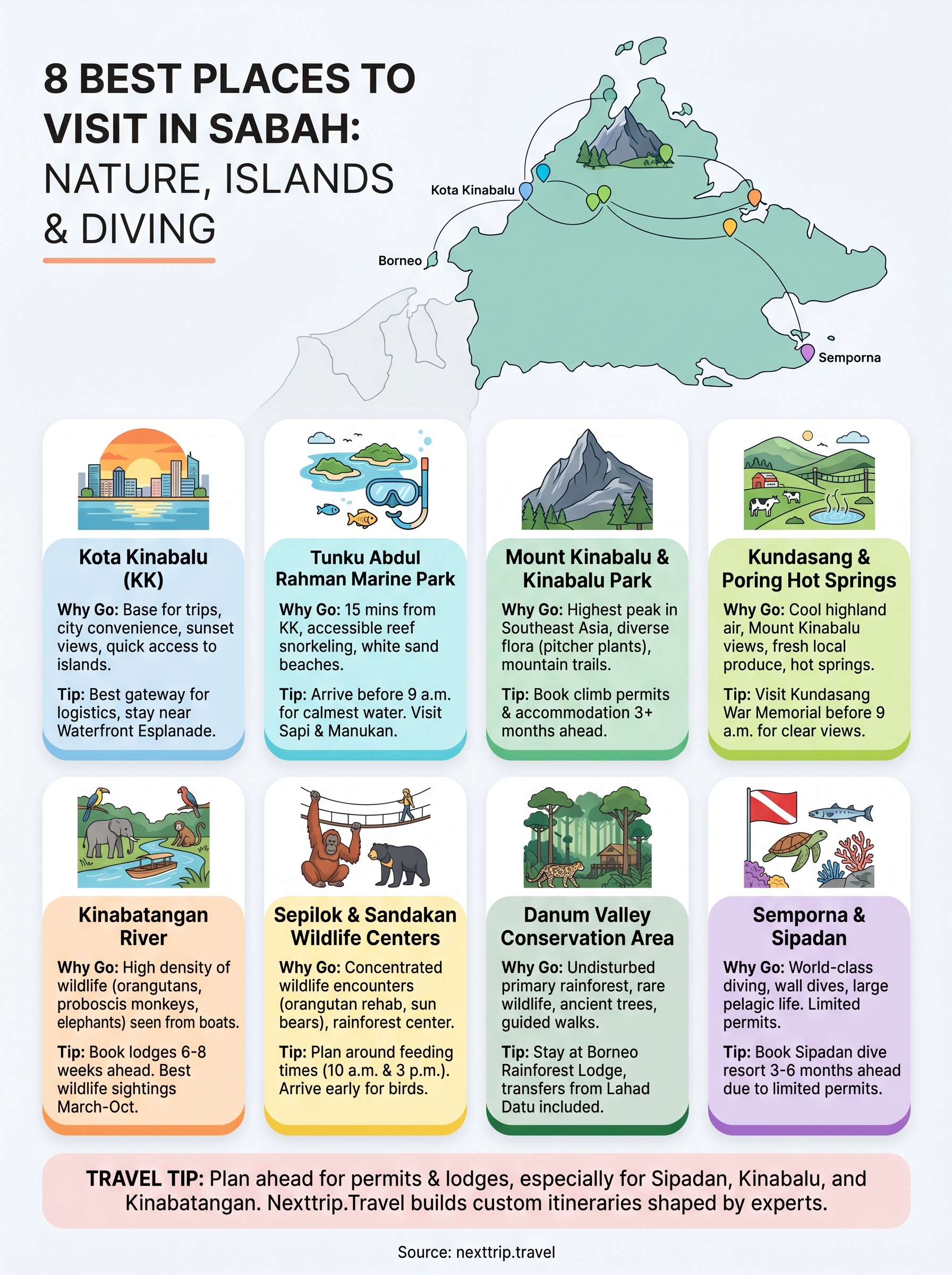
Map it and book it with confidence
Every destination on this list covers a different side of Sabah, from highland farms and primary rainforest to coral walls and proboscis monkeys on a river bank. The best places to visit in Sabah reward travelers who plan ahead, especially for Sipadan permits, Kinabalu climb slots, and Kinabatangan lodges that fill months out. Spreading your time across the west coast, interior, and east coast gives you the widest range of experiences without backtracking unnecessarily.
You do not need to figure out the logistics alone. Nexttrip.Travel builds itineraries shaped by people who have spent time in these destinations and know which combinations of stops work best together. Whether your priority is wildlife, diving, or mountain scenery, the platform connects you with concierge-level planning that covers flights, transfers, and on-the-ground timing so your Sabah trip runs the way you planned it.