

Malaysia sits between the Andaman Sea and the South China Sea, giving it access to some of the most striking coastline in Southeast Asia. Whether you're after powdery white sand, world-class coral reefs, or a quiet stretch of beach with nobody else around, the best islands to visit in Malaysia offer all of that, and they're more accessible than most people realize. With over 800 islands scattered across both Peninsular and East Malaysia, the real challenge isn't finding a beautiful island; it's choosing the right one for your trip.
That's exactly the kind of decision we help with at Nexttrip.Travel. Our team curates travel experiences based on real destination knowledge and local insight, so you spend less time researching and more time actually enjoying the water. Every island on this list has been selected for its beaches, snorkeling conditions, and overall visitor experience, not just its Instagram appeal.
Below, you'll find nine Malaysian islands worth your time and travel budget, broken down by what makes each one stand out. From beginner-friendly snorkeling spots to remote islands that still feel untouched, this guide covers options for couples, families, solo travelers, and anyone chasing crystal-clear water and healthy coral reefs.
1. Perhentian Islands
The Perhentian Islands sit off the northeastern coast of Peninsular Malaysia in Terengganu, and they consistently rank among the best islands to visit in Malaysia for travelers who want clear water, affordable diving, and a slow pace without trading off coral quality.
What makes the Perhentians worth it
The Perhentians are actually two islands: Perhentian Besar (Big Island) and Perhentian Kecil (Small Island). Besar draws couples and families looking for quieter beaches and mid-range resorts, while Kecil attracts backpackers and budget travelers with a livelier beachside atmosphere. Both islands share the same reef system, so snorkeling and diving quality doesn't differ much between them.
The Perhentians offer some of the most affordable diving in Southeast Asia, with a single dive starting around RM 50 (approximately USD 11).
Best beaches and snorkeling spots
Long Beach on Kecil is the most popular stretch, with soft sand and easy access to snorkel sites just offshore. Coral Bay, also called Pasir Panjang, is calmer and better suited for families. For snorkeling, Shark Point and Tokong Laut are the standout sites where you'll reliably spot blacktip reef sharks, sea turtles, and large schools of fish.
Best time to visit and what monsoon means here
Monsoon season closes the islands completely from November through February due to the Northeast Monsoon, which brings rough seas and heavy rain. Most resorts and boat services shut down entirely during this period. Your best window to visit runs from March through October, with May and June offering the calmest conditions and clearest visibility underwater.
How to get there and move between islands
You fly or take a bus to Kota Bharu or Kuala Terengganu, then head by taxi or bus to the Kuala Besut jetty. Speed boats depart regularly from Kuala Besut and take about 30 to 45 minutes to reach the islands. Between Besar and Kecil, local water taxis run throughout the day for a few ringgit per trip.
Where to stay and what it costs
Budget chalets on Kecil run RM 60 to RM 120 per night, while mid-range resorts on Besar typically cost RM 200 to RM 450. There are no five-star options here, which is part of the appeal. Staying on Besar gives you more comfort; Kecil puts you closer to the backpacker beach scene and a wider range of food stalls.
2. Redang Island
Redang Island, located off the Terengganu coast, is one of the most visited islands in Malaysia and earns its reputation consistently. Its water clarity and shallow coral coverage make it easy to recommend for snorkelers who don't want to take a certification course before their trip.
What Redang does better than nearby islands
Redang's reefs begin close to shore, which means you can wade in from the beach and reach healthy coral without hiring a boat. The beaches are wider and better maintained than most of what you'll find on the Perhentians, and the resort infrastructure is more developed, giving you a wider range of dining and accommodation options in one area.
Best beaches and snorkeling spots
Pasir Panjang (Long Beach) is the main stretch where most resorts sit, and it delivers calm, clear water throughout the season. For snorkeling, Marine Park Corner and Pulau Paku Besar offer the strongest coral coverage, with regular sea turtle sightings at both sites.
Redang sits inside a protected marine park zone, which limits fishing activity and directly supports its reef health.
Best time to visit and sea conditions
Visit between March and October for calm seas and strong underwater visibility. The Northeast Monsoon forces most resorts to close from November through February, so plan your booking around that window or you'll find the island largely shut down on arrival.
How to get there from Kuala Lumpur and Singapore
From Kuala Lumpur, fly to Kuala Terengganu Airport, then take a resort boat or public ferry from Shahbandar Jetty. The crossing takes roughly 45 minutes. From Singapore, the most direct route is a flight into Kuala Terengganu followed by the same jetty transfer.
Where to stay and what it costs
Redang's resorts typically run from RM 300 to RM 800 per night, and most packages bundle meals with daily snorkeling trips. Budget guesthouses are limited here compared to the Perhentians, so factor that into your overall travel budget early.
3. Lang Tengah Island
Lang Tengah sits between Redang and the Perhentians off the Terengganu coast, and it draws travelers who want a quieter alternative without giving up water quality. If you're comparing the best islands to visit in Malaysia and want fewer crowds, Lang Tengah belongs near the top of that list.
Why Lang Tengah suits a quiet beach trip
Lang Tengah has just a handful of resorts, and day-tripper numbers stay low because the island isn't served by major public ferry routes. That limited access keeps the beaches calm even during peak season. You'll share the sand with a small number of guests rather than a packed shoreline, which makes it a strong pick for couples or anyone who values peace over social activity.
Best snorkeling spots and what you'll see
The reefs around Turtle Bay and Sea Garden are the island's standout sites. You'll regularly spot green sea turtles, parrotfish, and healthy hard coral formations within a short swim from shore. The shallow reef shelf along the western side of the island is well-suited for snorkelers of all experience levels.
Lang Tengah's low boat traffic directly reduces anchor damage to its reefs, which keeps coral coverage noticeably healthier than on more commercialized islands nearby.
Best time to visit and tide timing
Visit between April and September for the calmest sea conditions. Low tide in the early morning exposes some shallow reef areas, so plan your snorkeling sessions for mid-morning when water levels rise and visibility improves.
How to visit as a day trip or overnight
You reach Lang Tengah via resort-operated speedboats departing from Merang Jetty, about 45 minutes away. Some resorts on Redang offer day trips to Lang Tengah, but staying overnight gives you the beach to yourself in the evenings.
Where to stay and what it costs
Accommodation runs from RM 280 to RM 600 per night, usually including meals and a snorkeling trip. Options are limited to three or four resorts, so book several months ahead during the April to August window to secure your preferred dates.
4. Tioman Island
Tioman Island, located off the southern coast of Peninsular Malaysia in Pahang, offers something most Malaysian islands don't: a combination of beach access and rainforest interior. If you want to snorkel in the morning and hike through jungle by afternoon, Tioman is the island that makes that possible in the same trip.
Why Tioman works for beaches plus jungle
Tioman is one of the larger islands on this list, covering roughly 640 square kilometers. That size means the interior holds real jungle with hiking trails, waterfalls, and wildlife including monitor lizards and hornbills. You're not choosing between a nature trip and a beach trip; Tioman delivers both without much extra planning.

Tioman was once named one of the world's most beautiful islands by Time magazine, and its reef and forest coverage explain why that reputation has lasted.
Best beaches and easy snorkeling from shore
Salang and Juara beaches are the two standout options. Salang sits on the northwest coast and has active coral just offshore, making it easy to snorkel directly from the beach without a boat. Juara, on the east coast, is quieter and less developed, drawing travelers who want open sand and calmer water.
Best time to visit and what to avoid seasonally
Visit between March and October for the best conditions. Tioman closes its boat services during the Northeast Monsoon from November through February, so arriving outside this window means limited transport and shuttered resorts.
How to get there and pick the right village
Ferries run from Mersing Jetty in Johor, taking roughly two hours depending on sea conditions. The island has several villages, and Tekek and Salang are the most practical bases for snorkelers, while Juara suits travelers prioritizing solitude.
Where to stay and what it costs
Accommodation ranges from budget chalets at RM 80 to RM 150 per night to mid-range resorts at RM 300 to RM 500. Choosing your village matters more than your resort tier since each area has its own distinct feel and reef access.
5. Langkawi
Langkawi is an archipelago of 99 islands off the northwestern coast of Peninsular Malaysia in Kedah, and it stands apart from every other destination on this list. Where most Malaysian islands offer beaches and little else, Langkawi gives you beaches plus infrastructure, making it the most versatile option for travelers who want more than just sand.
Why Langkawi fits a beach trip with variety
Langkawi suits travelers who want snorkeling, mangrove tours, duty-free shopping, and cable car rides all within the same trip. It's also one of the few islands on this list where renting a car or scooter is straightforward, giving you genuine flexibility to explore at your own pace rather than staying anchored to one resort beach.
Best beaches and water activities
Pantai Cenang is the most accessible beach, lined with restaurants and water sport operators. For quieter stretches, Pantai Tengah and Tanjung Rhu offer calmer water and fewer crowds. Snorkeling trips to the nearby Payar Marine Park give you the clearest coral visibility in the area, with reef fish and occasional leopard sharks.
Langkawi's status as a duty-free island keeps food, alcohol, and fuel prices lower than anywhere else on Peninsular Malaysia, which stretches your daily budget further.
Best time to visit on the west coast
Visit between November and April for calm seas and dry weather. Langkawi sits on the west coast, so its dry season is opposite to Terengganu's east coast islands.
How to get there and how to get around
Flights from Kuala Lumpur to Langkawi International Airport take under an hour. Ferries also run from Penang and Kuala Perlis. Once on the island, renting a scooter costs roughly RM 35 per day, and a car runs RM 120 to RM 180.
Where to stay and what it costs
Budget guesthouses near Pantai Cenang run RM 80 to RM 150 per night. Mid-range hotels average RM 300 to RM 600, while luxury resorts along the northern coast push above RM 1,000 per night. Langkawi covers a wider price spectrum than most of the best islands to visit in Malaysia, which makes it accessible regardless of your travel budget.
6. Sipadan Island
Sipadan Island, located off the northeastern coast of Sabah in East Malaysia, is widely recognized as one of the best dive destinations on the planet. It stands apart from every other entry on this list of the best islands to visit in Malaysia because its appeal is almost entirely underwater.
Why Sipadan ranks as a world-class marine site
Sipadan sits on a volcanic pinnacle that rises 600 meters from the seabed, creating an extraordinary drop-off just meters from the island's shore. The reef walls are covered in hard and soft corals, and the currents that run through the site attract large pelagic species including hammerhead sharks, barracuda tornadoes, and hawksbill turtles in numbers you rarely see elsewhere in Southeast Asia.
Jacques Cousteau visited Sipadan in 1989 and described it as an "untouched piece of art."
Who should dive or snorkel here
Sipadan suits certified divers most of all, particularly those with open water experience and comfort in mild current. Snorkelers can access the shallow reef near the beach and will still encounter sea turtles and reef fish, but the island's signature experiences sit deeper.
Permits, rules, and how to plan ahead
The Malaysian government caps daily access at 120 permits per day, shared across all dive operators. Book your operator three to six months ahead, especially for travel between April and September. No overnight stays are permitted on Sipadan itself.
How to get there via Semporna and nearby islands
You fly into Tawau Airport in Sabah, then travel by road to Semporna town. From Semporna, your dive operator arranges the boat transfer to Sipadan, which takes roughly 45 minutes.
Where to base yourself and what it costs
All accommodation sits on nearby islands, primarily Mabul and Kapalai. Dive packages including accommodation on Mabul run from RM 700 to RM 2,500 per night, depending on your resort tier and number of dives included.
7. Semporna Islands
Semporna is a coastal town in Sabah, East Malaysia, and it serves as the main gateway to the surrounding island cluster. While most travelers pass through Semporna only to reach Sipadan, the islands scattered around this area offer beaches, snorkeling, and lagoon scenery that stand on their own.
What to expect from Semporna as a base
Semporna town itself is a working fishing port, not a beach destination. Expect basic infrastructure, affordable local food, and a busy jetty area rather than a polished resort strip. Your time in Semporna is mostly spent organizing day trips and boat transfers to the surrounding islands.
Best islands for beaches and snorkeling near Semporna
Mabul and Kapalai are the two strongest options for snorkeling directly from shore or by boat. Mabul has sandy beaches and a healthy reef system accessible to beginners, while Kapalai sits on a shallow sandbank with overwater accommodation built above the reef. Both feature sea turtles, reef fish, and good visibility throughout the season.
Mabul is consistently listed among the top muck diving sites in the world, with rare critters like ghost pipefish and frogfish living in the sandy substrate near the reef edge.
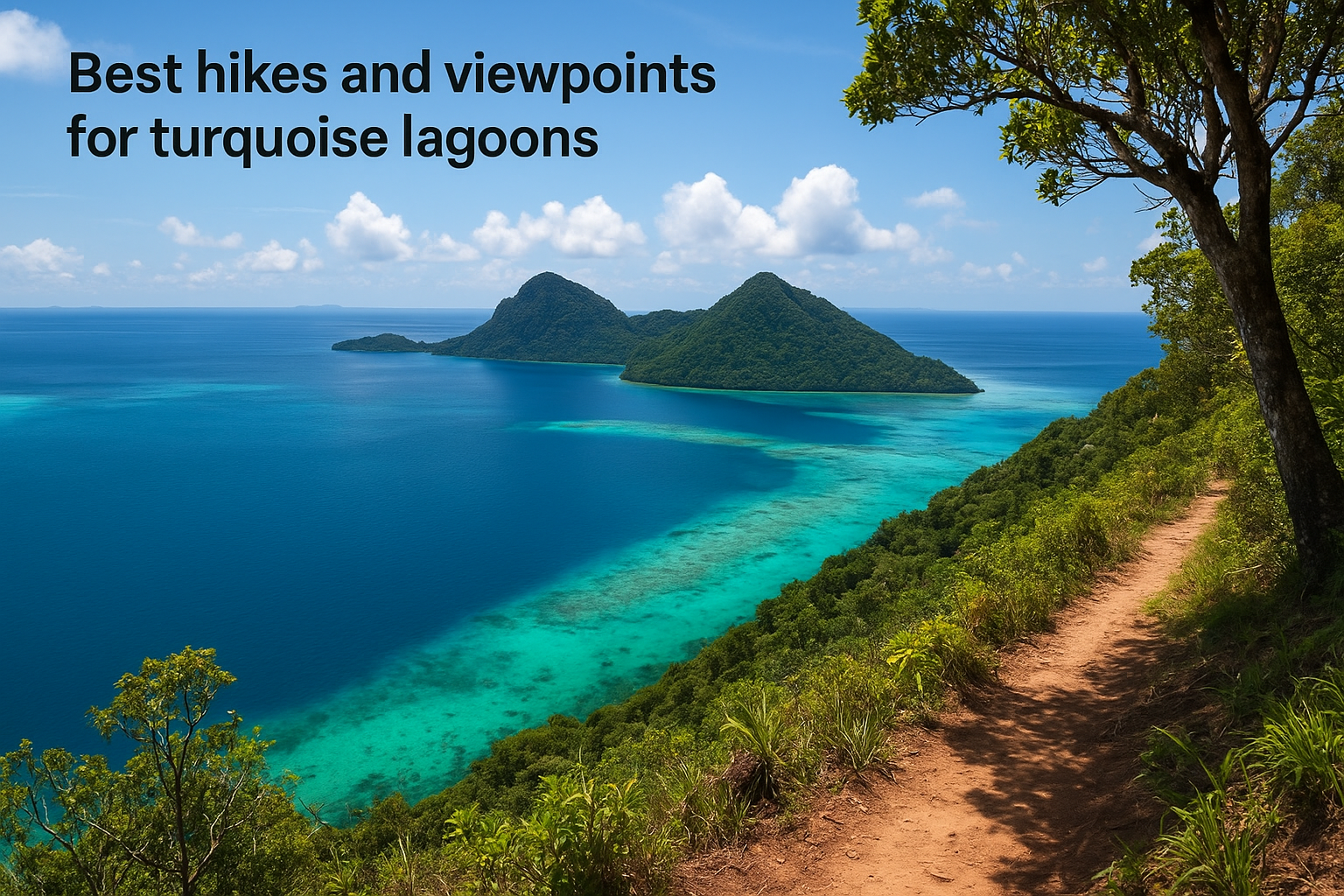
Best hikes and viewpoints for turquoise lagoons
Bohey Dulang, part of the Tun Sakaran Marine Park, offers a short but steep jungle trail that ends at a viewpoint overlooking a circular turquoise lagoon. The hike takes roughly 45 minutes and is suitable for most fitness levels.
Best time to visit and day-trip planning
Visit between April and September for calm seas and clear water. Arrange all boat transfers through your accommodation or a licensed operator in Semporna town to avoid coordination issues on the day.
Where to stay and what it costs
Budget guesthouses in Semporna town run RM 60 to RM 150 per night. Staying on Mabul island offers a better experience for snorkelers, with mid-range resorts costing RM 400 to RM 900 per night, often bundled with meals and snorkeling equipment. Semporna gives you access to some of the best islands to visit in Malaysia if you're willing to organize the logistics from a working-town base rather than a polished resort.
8. Tunku Abdul Rahman Marine Park
Tunku Abdul Rahman Marine Park sits just a short boat ride from Kota Kinabalu in Sabah, making it one of the most accessible marine parks in Malaysia. For travelers who want clear water and coral reefs without committing to a long journey, this park delivers a solid half-day or full-day experience.
Why this park makes the easiest island day trip
The park covers five islands: Gaya, Sapi, Mamutik, Manukan, and Sulug, all reachable within 15 to 20 minutes by speedboat from Kota Kinabalu's waterfront jetty. You don't need to plan days in advance or arrange complicated transfers. Most visitors book a boat on the morning of their trip and are snorkeling within the hour.
Mamutik and Manukan consistently receive the highest marks for coral quality and are the two islands most recommended for first-time snorkelers visiting the park.
Best islands for snorkeling and beach time
Mamutik is the smallest island in the park and holds the healthiest reef, with good fish diversity and coral coverage close to shore. Manukan is the most developed, offering beach facilities, a restaurant, and clean changing rooms, which makes it the most comfortable option for families.
Best time to visit and crowd strategy
Visit between April and August for calm seas and strong underwater visibility. Arriving at the jetty before 9:00 a.m. puts you on the water ahead of the main crowd, giving you quieter reef access during the first snorkeling session of the day.
How to get there from Kota Kinabalu
Boats depart from Jesselton Point Ferry Terminal in central Kota Kinabalu throughout the morning. Return tickets cost roughly RM 23 to RM 35 per person, and boats run until mid-afternoon.
Where to stay and what it costs
Most visitors stay in Kota Kinabalu city and treat the park as a day trip, which keeps accommodation costs flexible. If you want to stay overnight, Manukan Island Resort is the only option inside the park, with rooms starting around RM 500 per night. For travelers exploring the best islands to visit in Malaysia without a large travel budget, basing yourself in Kota Kinabalu and making a day trip to the park is the most practical approach.
Wrap-Up and Next Steps
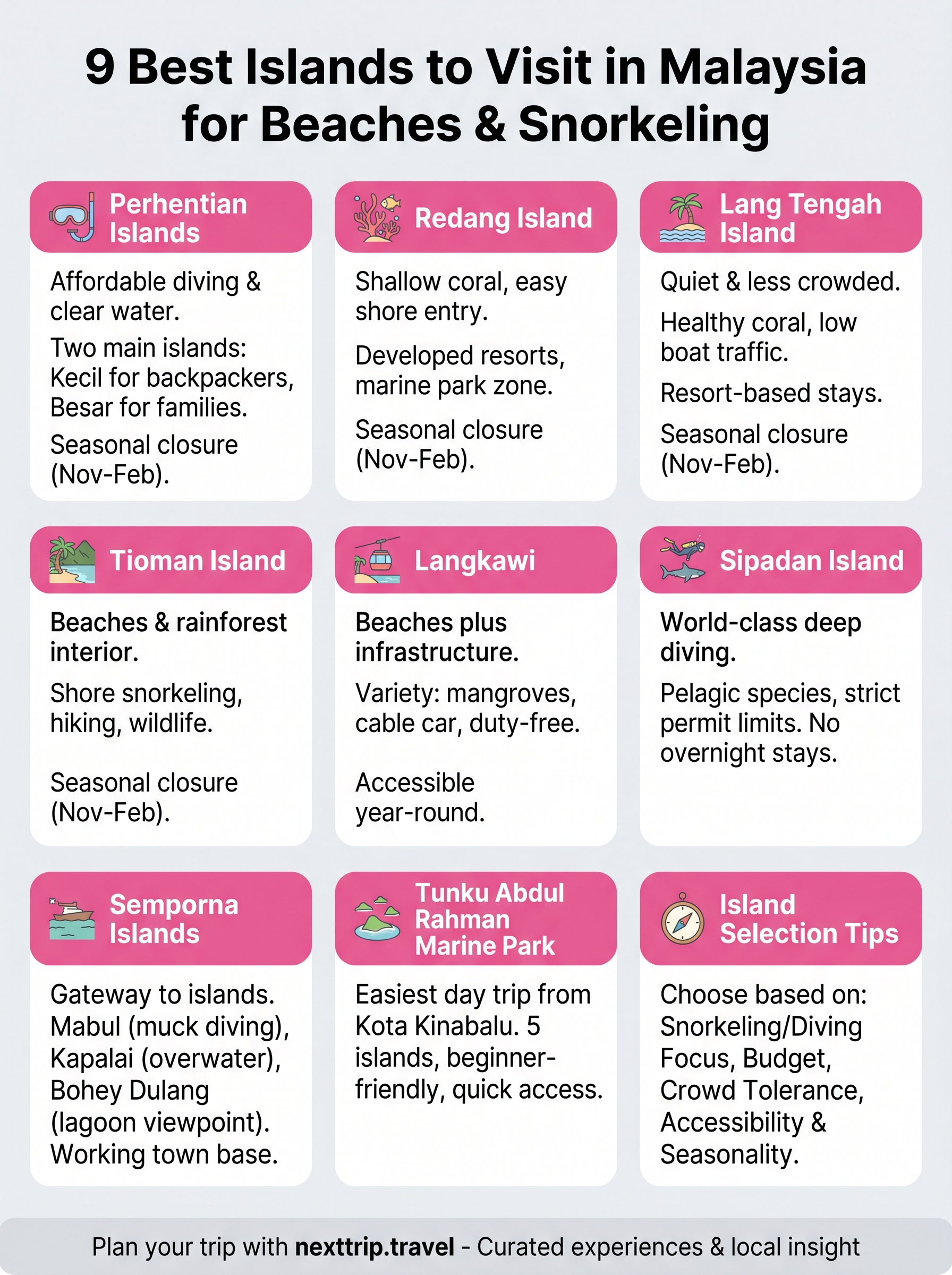
Malaysia's islands cover a wide range, from busy beach resorts with full infrastructure to remote coral-fringed spots that still feel untouched. Each of the best islands to visit in Malaysia on this list serves a different type of traveler, so the right pick depends on how you want to spend your days, what you're willing to spend, and how much planning you're ready to do before you arrive.
Choosing between them doesn't have to be complicated. If you want world-class diving, head to Sipadan. For affordable snorkeling and a low-key pace, the Perhentians or Lang Tengah suit you well. Langkawi works best when you want variety alongside beach time, and Tunku Abdul Rahman fits neatly into a Kota Kinabalu itinerary without extra travel days.
When you're ready to stop comparing and start booking, plan your Malaysia island trip with Nexttrip.Travel and get a curated itinerary built around your travel style and timeline.